
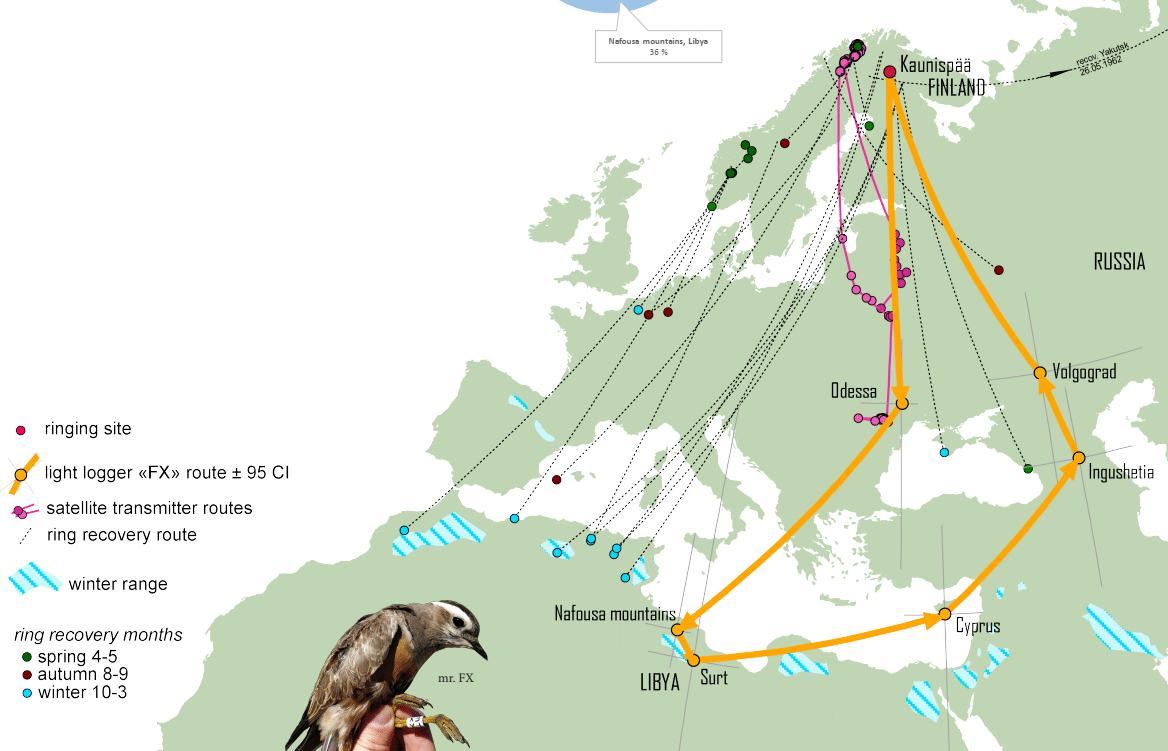
Researchers in Norway have successfully deployed a nationwide passive acoustic monitoring system to track avian migration patterns, collecting 37,429 hours of audio data across 28 networked sensors. The study, which took place during the spring migration season from April through June, provides a high-precision methodology for mapping bird vocalizations and species arrival curves.
Acoustic Monitoring of Avian Phenology
Traditional biodiversity surveys often struggle to capture the scale of massive, seasonal biological events. To address this, a team of researchers utilized a passive acoustic monitoring (PAM) system across forests in Norway to record avian vocalizations. By deploying 28 networked sensors, the project generated a massive dataset of 37,429 hours of audio during the spring migration period. This approach allows for the observation of phenology—the timing of biological events—at a spatiotemporal scale that manual, human-led surveys simply cannot match.
As reported in Nature, the data collection focused on the critical window between April and June. The primary challenge for any large-scale audio project is the signal-to-noise ratio and the difficulty of identifying specific calls within hours of forest ambient noise. The researchers overcame this by applying an open-source detection algorithm designed to automatically classify bird vocalizations. The study utilized AudioMoth acoustic loggers, a low-cost, open-source hardware solution developed by the University of Oxford and Open Acoustic Devices. Each unit was configured to sample at 48 kHz, providing sufficient frequency resolution to capture high-pitched avian vocalizations while minimizing power consumption for extended field deployment.
Validating Automated Detection and Species Distribution
The efficacy of the automated system was confirmed through rigorous expert validation. The algorithm successfully classified 57 distinct species, including 14 full migrants, achieving at least 80% precision. This level of accuracy is essential for researchers attempting to build reliable distribution models. By mapping the probability of vocalizations across different regions of Norway, the team created regional arrival curves for three common migratory passerines: the Willow Warbler, the Common Chiffchaff, and the Spotted Flycatcher.
Lead researcher Dr. Inger Hansen, affiliated with the Norwegian Institute for Nature Research (NINA), noted that the project utilized a convolutional neural network (CNN) architecture trained on the xeno-canto database. To mitigate the risk of false positives—a common limitation in automated bioacoustics—the team implemented a two-stage verification process. First, the CNN filtered for high-probability candidates; second, a subset of 1,200 hours was manually audited by ornithologists to calibrate the recall rate. The findings indicate that the arrival of the Common Chiffchaff (Phylloscopus collybita) occurred approximately four days earlier in southern coastal sites compared to inland boreal forests, a nuance captured through the high-density sensor grid that would likely have been missed by traditional, less frequent site visits.
The ability to train audio species distribution models represents a significant shift in how conservationists might approach biodiversity monitoring. Rather than relying on sporadic, localized observations, this automated framework enables the consistent mapping of species movement. The researchers suggest that these PAM detections are not intended to replace manual surveys but rather to complement them, providing a foundation for more effective policy and conservation measures. Unlike previous studies that relied on manually annotated spectrograms, this project represents the first time a nationwide network has been used to calculate “arrival curves” with a temporal resolution of less than 24 hours.
Logistical Infrastructure and Travel Implications
While the scientific community focuses on the environmental data emerging from Norway, the broader logistical landscape for travel remains a separate, high-volume endeavor. For those traveling to participate in field research or environmental monitoring projects, the availability of reliable transportation is a necessity. National Car Rental maintains a network of over 1,500 locations worldwide, facilitating the movement of researchers and professionals across diverse regions, including the United States, Canada, and Europe. In North America, the company has integrated its fleet with major transit hubs, serving 95% of the top 50 U.S. airports by passenger volume.
For researchers operating in remote field stations, the ability to secure a vehicle efficiently is a critical component of project management. According to National Car Rental Canada, the company emphasizes a streamlined rental experience, specifically for those transiting through major airports. Their loyalty program, the Emerald Club, allows members to bypass the rental counter and choose their own vehicle from the Emerald Aisle, a feature designed to save time during high-pressure field deployments. For academic teams transporting sensitive equipment, the availability of mid-to-full-size SUVs at major regional hubs allows for the secure transit of sensitive sensor arrays and batteries from urban processing centers to remote forest research sites.
Future Directions for Acoustic Conservation
The integration of passive acoustic monitoring into national-scale biodiversity datasets marks a transition toward more data-driven conservation. As climate change continues to alter ecoclimatic drivers, the timing of avian migration is shifting, making real-time, automated monitoring more valuable than ever. The success of the Norwegian project demonstrates that high-volume audio analysis can be both inexpensive and reliable. Previous attempts at large-scale monitoring were often hampered by data storage limitations; however, the NINA team utilized compressed FLAC file formats, reducing storage requirements by 40% without compromising the fidelity of the audio signatures required for species identification.

Independent reviewers from the Max Planck Institute for Ornithology have noted that while the 80% precision threshold is robust, the model currently shows limitations in distinguishing between species with overlapping vocal frequency ranges, such as certain subspecies of warblers. To address this, the next iteration of the project—slated for the 2027 spring season—will incorporate multi-microphone arrays to allow for spatial triangulation of calling individuals, thereby reducing atmospheric interference. Looking ahead, the scalability of this technology suggests that similar networks could be deployed across other geographic zones to track migratory pathways on a global scale. By combining the precision of automated classification with the logistical support of modern travel infrastructure, the scientific community is better positioned to respond to the rapid environmental changes affecting migratory species.
