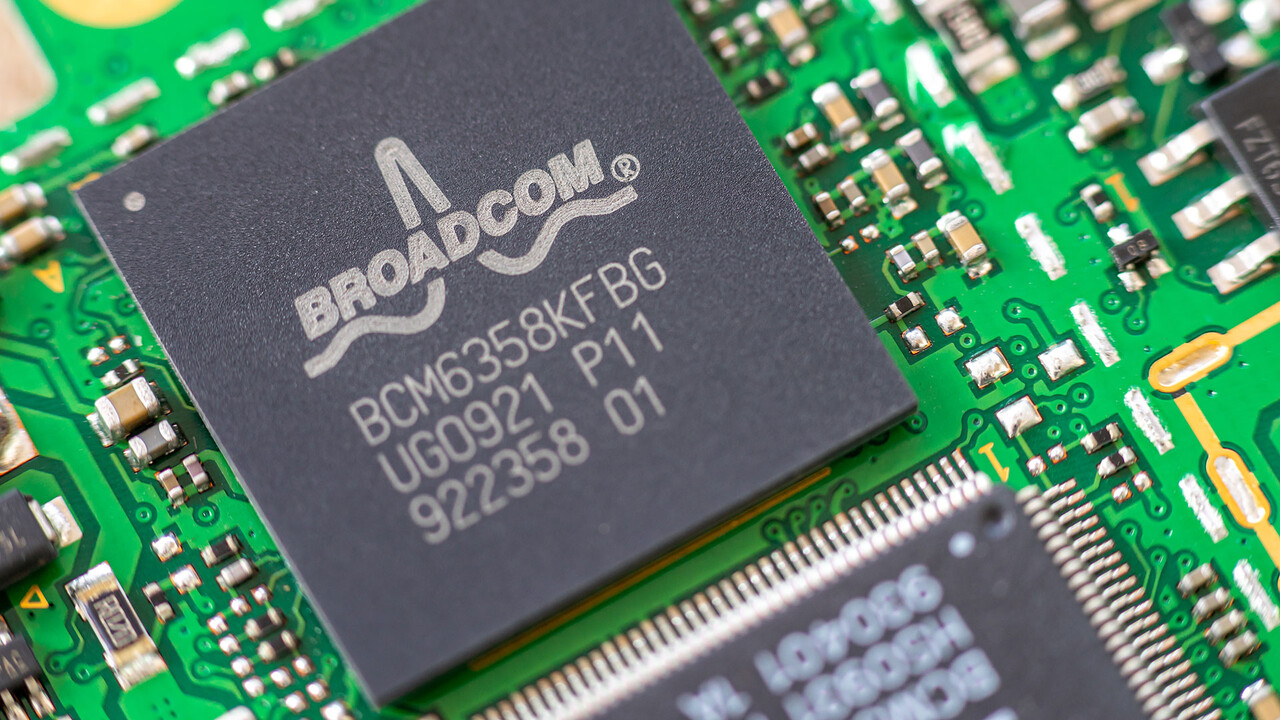
Tech-heavy indices and semiconductor stocks faced significant volatility this week as investors grappled with the massive capital expenditures pouring into artificial intelligence. Amid concerns of a potential market bubble, chip manufacturers like Broadcom, Marvell, and Micron saw sharp declines following the release of stronger-than-expected U.S. labor market data.
The Scale of Infrastructure Investment
The current investment cycle is defined by historic levels of spending on the physical backbone of AI. The four major hyperscalers—Amazon, Alphabet, Meta, and Microsoft—are projected to invest nearly 700 billion dollars in AI infrastructure throughout 2026, according to recent financial estimates. Projections from Morgan Stanley suggest this trend will accelerate, with the five largest technology companies potentially increasing their combined spending to over one trillion dollars in 2027.
cluster (priority): Der Aktionär
These figures have reignited comparisons to the dot-com era of 2000. However, market analysts point to a critical distinction: unlike the speculative environment of the late 90s, today’s major technology firms are largely financing their expansion through current earnings rather than relying on heavy debt. Nvidia, currently the world’s most valuable company with a market capitalization of 5.4 trillion dollars, serves as the primary benchmark. Analysts at Dow Jones Market Data estimate that Nvidia could generate over 190 billion dollars in annual profit during 2026, marking what would be the highest annual profit ever recorded by a single corporation.
cluster (priority): Handelsblatt
The capital expenditure trajectory is further underscored by the recent 10-K filings and investor day disclosures from the hyperscaler cohort, which indicate that the bulk of this spending is allocated toward high-density GPU clusters and specialized data center cooling systems. Financial officers at these organizations have signaled in recent earnings calls that these expenditures are viewed as essential “table stakes” to maintain competitive parity in cloud services. Despite this, the sheer volume of cash outlays has forced institutional investors to re-evaluate the timelines for return on invested capital (ROIC) for AI-integrated cloud platforms.
Market Turbulence and the “Dot-Com” Comparison
Despite the underlying earnings strength, skepticism remains high. Tech analyst Ed Zitron has publicly cautioned that the current AI build-out may be more precarious than the internet expansion of the early 2000s. In a recent market commentary, Zitron argued that while the dot-com crash left behind durable infrastructure like fiber-optic networks, the hardware-intensive nature of AI—requiring massive electricity consumption and constant chip upgrades—could leave investors with less residual value if AI services fail to generate sufficient revenue.
Wall Street Closes Mixed; Nvidia Boosts Nasdaq Amid Market Volatility | DRM News | AF1Z
Ed Zitron, Tech Analyst, via Wallstreet Online
This anxiety manifested in the Nasdaq, which experienced significant point losses as technical strategists, such as John Kolovos of Macro Risk Advisors, highlighted that the index falling below the 7,500-point mark could signal the start of a summer downturn. Kolovos noted in an interview with CNBC that a slide below 7,300 points would serve as further confirmation of a bearish trend. The technical breakdown observed by Macro Risk Advisors is predicated on the breach of key support levels that have held firm since the beginning of the Q1 rally. Market breadth data further suggests that the recent sell-off is not limited to a few underperformers but is affecting a broader swath of the technology sector, complicating the “rotation” narrative often cited by bullish strategists.
Semiconductor Sector Performance
The semiconductor sector, which has been the primary engine of the AI rally, faced a sharp correction at the close of the week. Der Aktionär reported that Broadcom, Marvell, and Micron all experienced notable pullbacks. Broadcom shares fell by 5% on Friday following a 12% decline on Thursday, while Marvell and Micron both saw losses of approximately 6% and 5%, respectively.
cluster (priority): Wallstreet Online
The catalyst for this sell-off was the latest labor report from the Bureau of Labor Statistics, which showed the U.S. economy added 172,000 jobs in May, far exceeding analyst expectations of 80,000. While the data reflects an extremely resilient U.S. economy, it has heightened fears that the Federal Reserve may maintain high interest rates for a longer period. High rates increase the cost of financing for large-scale data center projects, which are essential for the ongoing AI boom. Market participants are now pricing in a lower probability of near-term rate cuts, a shift that directly impacts the valuation models for growth-oriented semiconductor firms that rely on discounted cash flow projections.
Looking Ahead: Growth or Correction
For investors, the immediate challenge is distinguishing between healthy profit-taking and a systemic bubble. The Wallstreet Online editorial team emphasizes that despite the recent volatility, many of these stocks have seen massive appreciation since the start of the year, with some chip-related equities having tripled in value. Market observers are now watching to see if the support levels—such as the 50-day moving average for companies like Broadcom—will hold as the market balances strong growth forecasts against the reality of high capital costs and interest rate uncertainty.
Regulatory scrutiny also remains a variable. With the Federal Trade Commission (FTC) and the European Commission stepping up oversight of AI partnerships and hardware supply chains, analysts are factoring potential antitrust headwinds into their long-term outlooks. While recent regulatory filings have not yet resulted in material operational changes for the major chipmakers, the increased frequency of information requests from government bodies has introduced a new layer of risk premium to the semiconductor sector. As the market enters the second half of 2026, the convergence of high-interest rates, record-breaking capital expenditure, and regulatory oversight will likely dictate the next phase of the AI market cycle.
Bio:
Michael Brown is the Business Editor at Headlinez.News, specializing in financial markets, economic policy, and corporate developments. A seasoned business journalist with more than 14 years in the field, Michael has covered Wall Street, global trade, and the evolving tech-economy interface. His data-driven approach and accessible analysis help readers understand complex economic issues with clarity and depth.
Expertise: Financial markets, economic poli