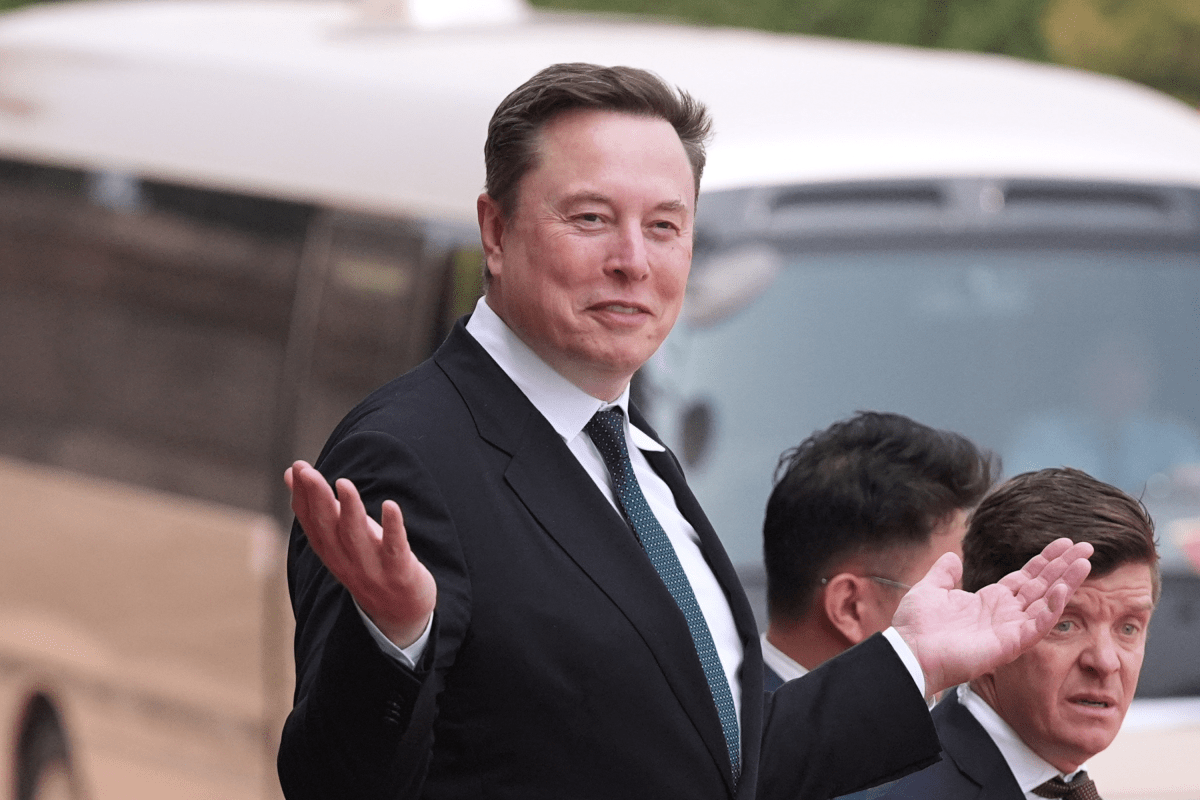
Elon Musk became the world’s first trillionaire on June 12, 2026, following the initial public offering of his aerospace and artificial intelligence company, SpaceX. The company’s Nasdaq debut at $150 per share pushed Musk’s net worth to approximately $1.1 trillion to $1.2 trillion, according to data from Forbes and Bloomberg.
SpaceX IPO Valuation and Market Debut
Photo: newsweek.com
SpaceX began trading on the Nasdaq under the ticker “SPCX” on Friday, June 12, 2026, with an opening price of $150 per share. The offering, which raised a record $75 billion, valued the company at nearly $2 trillion, according to reporting from Fox Business. This valuation surpassed the $29 billion IPO of Saudi Aramco in 2019, marking the largest initial public offering in history.
Investor demand for the debut was significant. Reuters reported that SpaceX attracted more than $250 billion in orders, while Bloomberg noted that retail investors submitted over $70 billion in requests for shares. The company allocated roughly 20 percent of the offering to individual investors, a distribution that Fox Business described as unusually large for a deal of this scale.
Calculation of the First Trillionaire’s Net Worth
Photo: foxbusiness.com
Estimates of Musk’s total fortune varied slightly by source due to differing valuation methodologies. Forbes reported Musk’s net worth reached an estimated $1.1 trillion as of Friday morning, noting that his fortune grew by $188 billion to $982 billion on Thursday evening when the IPO was priced at $135 per share. Newsweek, citing data from Bloomberg and Forbes, confirmed that the $150 trading price pushed Musk above the 13-digit mark.
Musk’s wealth is largely tied to his ownership stake in SpaceX. According to Forbes, he owns 4.8 billion shares of the company, valued at $715 billion, along with 350 million stock options worth $50 billion. These holdings give him a 38 percent stake in the aerospace firm.
The historical context of this wealth accumulation is substantial. As Forbes noted, Musk first appeared on its World’s Billionaires list in 2012 with a fortune of $2 billion. He became the world’s wealthiest person in January 2021 as Tesla shares surged. Matt Durot, Deputy Editor of Wealth at Forbes, stated:
“Elon Musk’s ascent to a $1 trillion fortune represents a milestone once considered unimaginable, highlighting how rapidly wealth can be created in an increasingly interconnected and technology-driven world.” Matt Durot, Deputy Editor, Wealth at Forbes
Political and Economic Reaction
Elon Musk becomes world's first trillionaire as SpaceX begins trading on the Nasdaq
The milestone prompted immediate debate regarding wealth inequality and tax policy. On the platform X, New York City Mayor Zohran Mamdani posted: “Reason #1,000,000,000,000 why we should tax the rich,” as reported by The New York Times. Senator Elizabeth Warren also commented on social media, highlighting the disparity between Musk’s wealth and the earnings of the average U.S. household.
Senator Bernie Sanders further criticized the current tax structure, noting that as a trillionaire, Musk pays the same amount into Social Security as an individual earning $184,500. Conversely, writing for The Wall Street Journal, contributor Novi Zhukovsky defended the achievement, arguing that Musk’s companies have kept the U.S. at the forefront of technology and provided ordinary Americans with opportunities to share in economic success through public offerings.
Future Outlook for Musk and SpaceX
Musk remains focused on the operations of his companies. Speaking on his priorities, he noted: “The most important part of my job is to keep my now-23,000 employees focused on the great work we do every day. I feel like we put our heads down, we plow through our very difficult jobs. Maybe my best contribution…would be keeping everyone focused, not listening to the noise.”
Looking ahead, Musk has made bold predictions regarding the integration of artificial intelligence. In a virtual conversation hosted by Forbes’ Chief Content Officer Randall Lane, Musk suggested that digital intelligence will exceed the sum of all human intelligence within five years. He further projected that the economy could double in size within five to six years, driven by advancements in humanoid robotics and AI.
For now, the dual-class share structure of SpaceX ensures that control remains with Musk, as Class B shares carry 10 votes each compared to the single vote per share for the publicly traded Class A stock. Market watchers are now observing how the stock stabilizes in the coming weeks following the initial surge.
Bio:
Michael Brown is the Business Editor at Headlinez.News, specializing in financial markets, economic policy, and corporate developments. A seasoned business journalist with more than 14 years in the field, Michael has covered Wall Street, global trade, and the evolving tech-economy interface. His data-driven approach and accessible analysis help readers understand complex economic issues with clarity and depth.
Expertise: Financial markets, economic poli