
Forget protein powders and bars-a surprising new source of protein is gaining traction in the health and fitness world: Parmesan cheese. From TikTok trends showing pairings with fruit to nutritionists highlighting its benefits, the hard Italian cheese is being touted as a flavorful and convenient way to boost protein intake. While a longtime kitchen staple, Parmesan is now being recognized for offering a complete protein profile with roughly 10 grams per ounce, alongside essential amino acids-but experts caution moderation due to its sodium and saturated fat content.
New You can now listen to this Fox News article!
A new, protein-rich contender is entering the health and fitness space – and it comes straight from the dairy aisle.
Parmesan cheese is quickly gaining popularity among fitness enthusiasts and health influencers seeking whole-food protein sources, with some creators researching it directly on their blogs.
Videos of people biting into wedges of apple paired with Parmesan have garnered millions of views on TikTok and Instagram. Some users are claiming they’ve “grown tired of my protein bars,” citing Parmesan as a protein source free of additives.
Debate erupts over protein shake safety following reports of lead in popular products
“Parmesan cheese is a surprisingly high-quality protein source, offering about 10 grams of protein per ounce, along with essential amino acids,” Denise Chacoian, a certified personal trainer from Rhode Island, told Fox News Digital.
“It’s particularly useful in small portions. Because of its rich flavor, you can increase your protein intake without significantly adding volume or calories,” she added.
Parmesan cheese is emerging as an unlikely new protein star. (iStock)
Parmesan provides all nine essential amino acids the body cannot produce on its own, making it a complete protein.
True Parmesan cheese, aged for at least 12 months through a lengthy fermentation process, naturally breaks down much of its lactose, making it easier to digest, experts say.
Cheese is “nutrient-dense.”
While protein bars can offer around 20 grams of protein, and powders often come in 30-gram servings, an 80-gram, palm-sized portion of Parmesan can deliver 25 to 30 grams of protein.
Italian cheese can be a smart, natural food choice when consumed in moderation, agrees Tina Marinaccio, a registered dietitian and owner of Health Dynamics LLC in New Jersey.
Experts say eating for pleasure can improve health. Here are 6 foods to try.
“Parmesan is a great alternative to ultra-processed protein bars, which are often stripped of their key nutrients and loaded with synthetic fibers and sweeteners,” she told Fox News Digital, adding that cheese is “worth the investment, nutritionally speaking.”
Marinaccio has been reporting on the cheese trend on Instagram videos since May, praising Parmesan as “rich, savory, complex, and nutty” compared to protein bars.
Fans praise Parmesan for offering 10 grams of protein per ounce and being free of additives or sweeteners. (iStock)
She added that opting out of pre-packaged options is best, as many scraping choices contain cellulose, an anti-caking agent made from powdered wood pulp.
“I call it ‘ant food,’” she said.
Marinaccio also noted that cheese supports muscle protein synthesis due to its slow-digesting casein, “both at rest and during recovery after exercise.”
Take our latest lifestyle quiz to test your knowledge.
She cautioned that exaggerated protein messaging and influencer input can sometimes push people toward unnecessary extremes. “We need a moderate amount of protein. It’s not a ‘more is better’ situation,” she said.
Experts acknowledge there are limitations to consider.

Experts say Parmesan provides slow-release protein, supporting muscle repair for extended periods after exercise. (iStock)
While Parmesan offers a more natural protein source than many powders, it is high in calcium and sugar-free, sweetener-free, and optional emulsifiers, but comes at the cost of being high in sodium and saturated fat. Rhian Stephenson, a London-based nutritionist and naturopath, and founder of Artah, recently told Vogue.
Click here to subscribe to our lifestyle newsletter.
A serving of Parmesan comparable to a protein bar contains approximately 330 to 400 calories, 12 to 16 grams of saturated fat, and 540 to 720 milligrams of sodium.
Health experts recommend limiting saturated fat intake to around 11 to 13 grams per day for heart health. The American Heart Association and U.S. Dietary Guidelines recommend limiting sodium intake to 1,500 to 2,300 milligrams.
Experts advise caution for individuals with hypertension, milk allergies, kidney disease, and other health conditions, suggesting Parmesan consumption should be moderated.
Click here for more lifestyle stories.
Marinaccio also suggests pairing cheese with fruit.
“Consider having some Medjool dates, apples, pears, or other fruits to get a healthy dose of carbohydrates and fiber,” she said.
Added carbohydrates help the body utilize protein more effectively for muscle repair, while dietary fiber can help stabilize blood sugar levels for sustained energy.
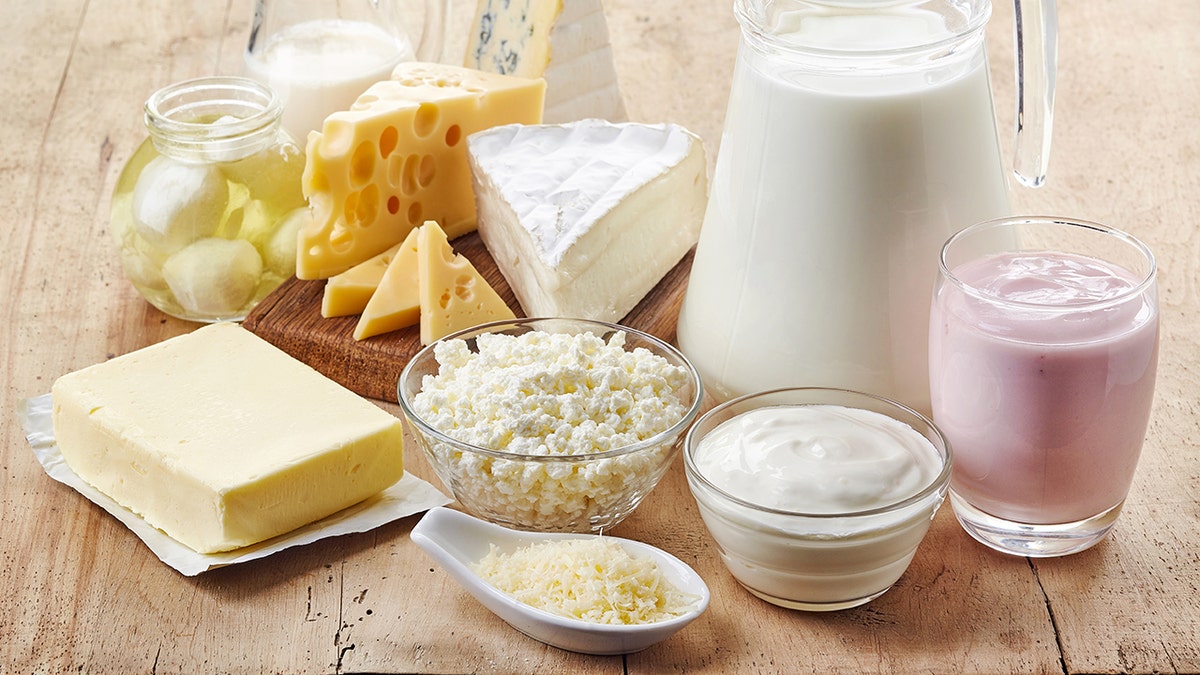
Other dairy options, such as cottage cheese, Greek yogurt, and Swiss cheese, also contain protein. (iStock)
Experts note that other high-protein cheeses, such as Romano, Gruyère, and Swiss, offer about 7 to 9 grams of protein per ounce, while Pecorino Romano and part-skim mozzarella provide around 6 to 7 grams.
Click here to download the FOX News app.
Other dairy choices include cottage cheese, offering 13 to 15 grams per half-cup, or Skyr or ultra-filtered Greek yogurt, with 18 to 20 grams per 200-gram serving.
