
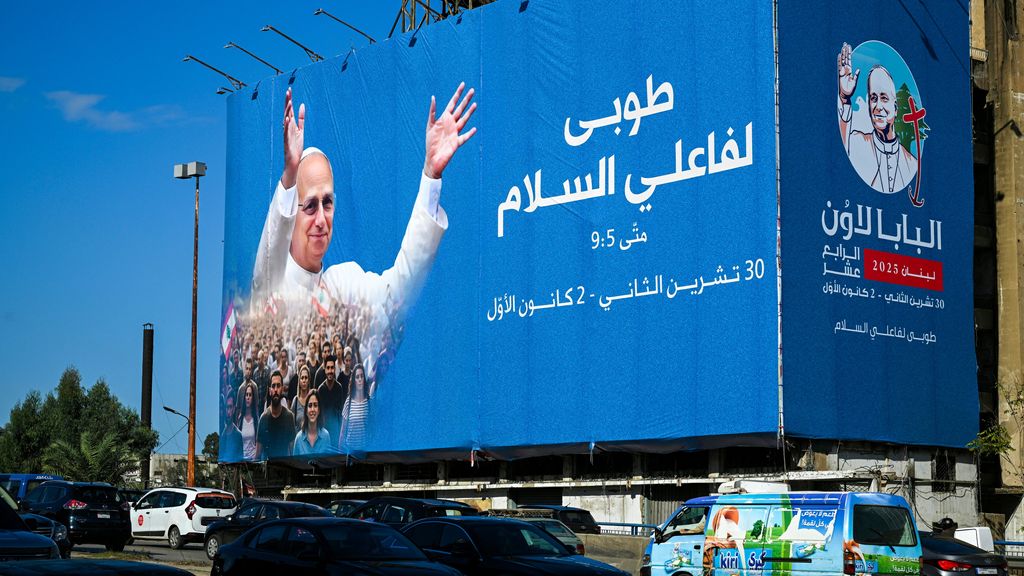
Just over six months into his papacy,Leo XIV is embarking on his first international trip,a journey that underscores the Vatican’s focus on interfaith dialog and regional stability.[1] The Pope’s four-day visit will begin in Turkey, where he will commemorate the 1700th anniversary of the First Council of nicaea, before continuing to Lebanon with a message of peace for a nation facing ongoing political and economic challenges.[2, 3] The trip, originally slated for his predecessor Pope Francis, is already drawing important attention, with journalists from around the world vying for access.
-

Andrea Vreede
Vatican Correspondent
-
Andrea Vreede
Vatican Correspondent
Just over six months after his election, Pope Leo XIV is embarking on his first foreign trip. All eyes are on Robert Francis Prevost, the United States-born and Peru-trained pontiff. Interest from journalists hoping to travel with the Pope was so high that a waiting list quickly formed for seats on the papal plane.
Pope Leo will first travel to Turkey for an extensive program encompassing ecumenical, interreligious, and political elements. The trip was originally planned for Pope Francis, but now his successor will visit Turkey to commemorate a significant milestone in early Christianity: the Council of Nicaea in 325, which this year marks its 1700th anniversary.
That was a gathering of bishops from the Roman Empire, convened under the leadership of Emperor Constantine the Great, to resolve disagreements over the fundamental principles of the faith. The major point of contention was whether Jesus was a man with special gifts, or whether he was God.
In Nicaea, it was determined that he was of the same substance as God. This established the creed that is still in effect in almost all churches today. The bishops also decided how the date of Christian Easter should be determined.
Pope Leo will commemorate the Council in Nicea, now known as Iznik, alongside his Orthodox counterpart, Bartholomew, the Patriarch of Constantinople. The meeting underscores the strong relationship between the Catholic and Orthodox churches.
Christians are a small minority in the predominantly Muslim country of Turkey and face numerous challenges. The Pope is expected to advocate for greater religious freedom and speak out against the persecution of Christians in a region that was once the birthplace of Christianity.
Dialogue with Islam is also a high priority on Pope Leo’s agenda. Like his predecessors Benedict XVI and Francis, he will visit the Blue Mosque in Istanbul. Attention will also be focused on his reception by President Erdoğan in Ankara and his address to Turkish authorities.
On to Lebanon
It is no secret that the Vatican would like to promote itself as a neutral venue for peace negotiations. Erdoğan is also positioning himself as a mediator in international conflicts. Pope Leo himself has stated that peace and reconciliation are at the heart of his message, and he advocates for more dialogue and disarmament, from Ukraine to the Middle East.
On Sunday, Leo will travel to Lebanon with the same message of peace, at the invitation of Lebanese bishops and on his own initiative. He is scheduled to return to Rome on Tuesday afternoon.
