Riyadh – Prince William embarked on a significant diplomatic visit to Saudi Arabia on Monday, signaling a renewed effort by the United Kingdom to strengthen ties with the influential Middle Eastern nation. The three-day trip commenced with a private tour of the UNESCO World Heritage Site at At-Turaif, led by Saudi Crown Prince Mohammed bin Salman.
Read also: Prince William welcomed to Saudi Arabia at the start of sensitive diplomatic trip
Heirs to the thrones of the UK and Saudi Arabia meet at the former emirate of Dariya
The Prince of Wales, 43, arrived in Riyadh on Monday, February 9, 2026. He was dispatched by the British government to bolster relations with the Saudi royal family, according to a Kensington Palace spokesperson. “This is a further example of the Prince representing the UK at the highest level on the world stage,” the spokesperson said. The visit is considered the most sensitive diplomatic mission Prince William has undertaken to date.
Read also: The modern Archbishop of Canterbury pledges allegiance to King Charles III
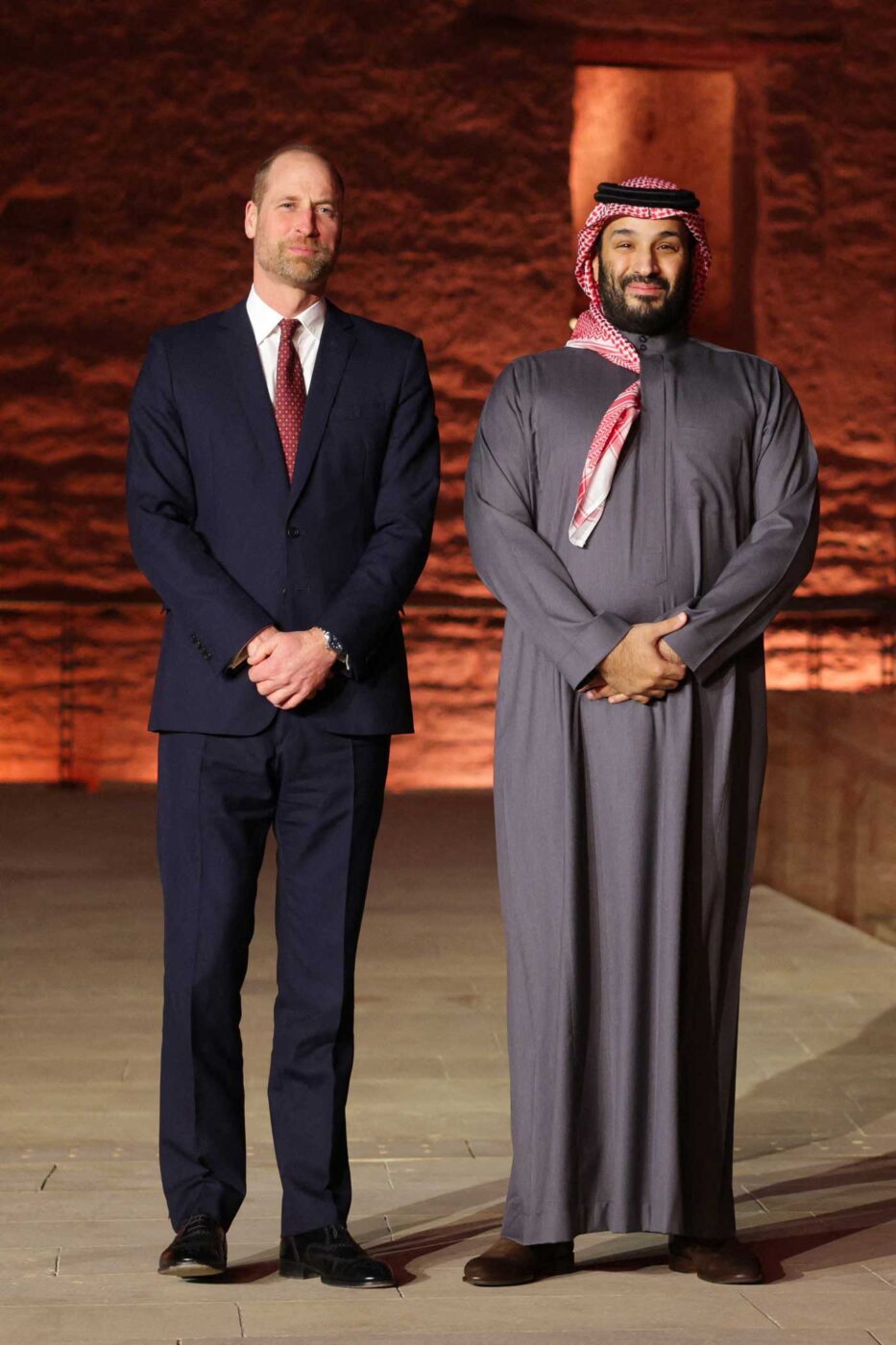
Prior to the site visit, Prince William met with his Saudi counterpart, Crown Prince Mohammed bin Salman, on Sunday. The 40-year-old Crown Prince is the de facto ruler of the country, as his father, King Salman, is 90 years old and has been largely absent from public life in recent years. He also serves as Prime Minister, having assumed the role in September 2022. During the initial meeting, Prince Mohammed bin Salman appeared enthusiastic, while Prince William maintained a more reserved demeanor, offering a slight smile as they posed for an official photograph.
Read also: King Charles III wears Windsor uniform to celebrate first birthday of Prince Rahim as Aga Khan V
A sensitive diplomatic encounter at the historic site of At-Turaif
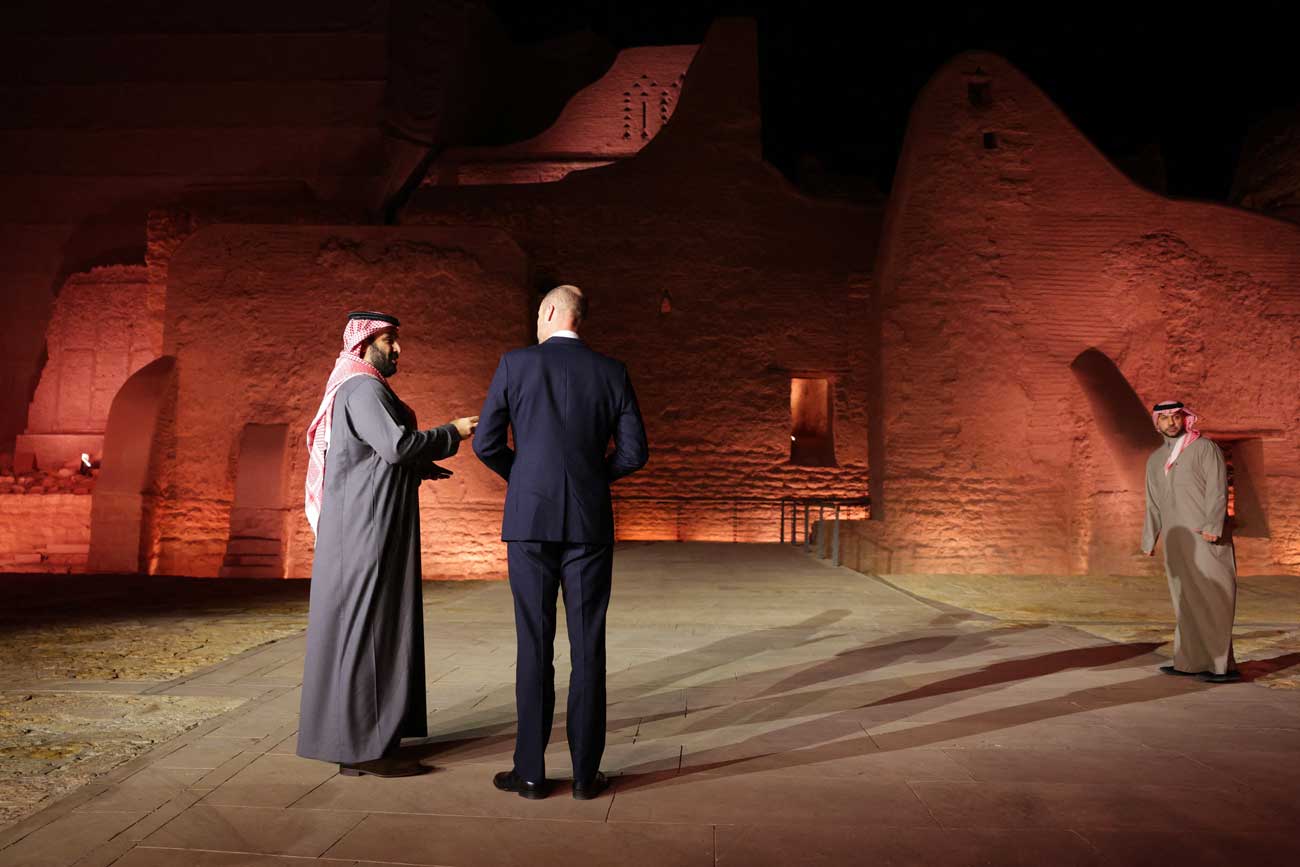
The Crown Prince chose the symbolically important site of At-Turaif for the meeting with the British heir. Prince William and Crown Prince Mohammed bin Salman visited the district of At-Turaif, located in Diriyah, on the outskirts of Riyadh. Founded in the 15th century, At-Turaif was inscribed on the UNESCO World Heritage list in 2010, recognized as an exceptional example of traditional human settlement in a desert environment.
Read also: Queen Sofia and Prince Abdulaziz reunite to present one million dollar award
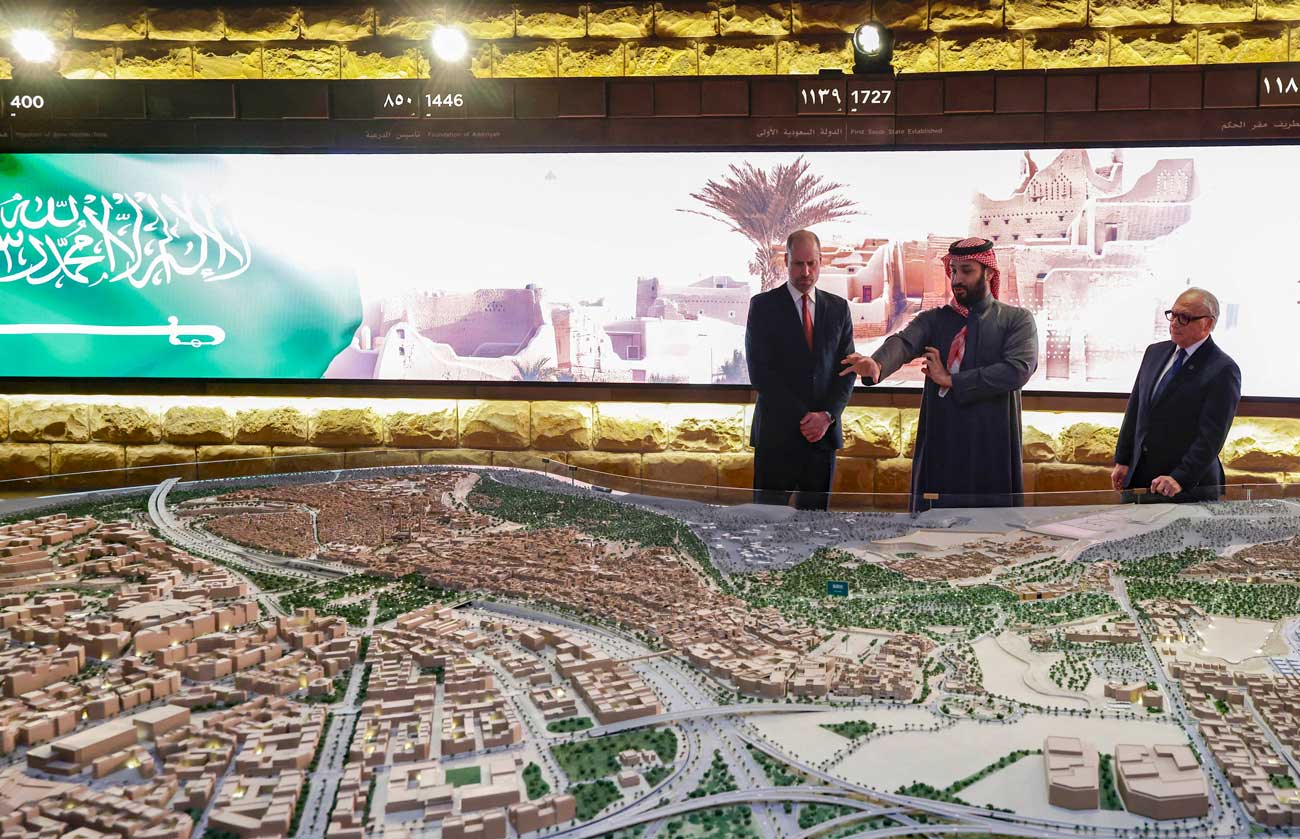
In 1727, Mohammed Ibn Saoud of the Al Mouqrin tribe became the emir of Diriyah, establishing dominance over the Watban. Ibn Saoud’s son and descendants expanded their power through conquests, eventually controlling the entire region of Najd, which became an emirate and then a sultanate. In 1925, Abdelaziz Al Saoud, ruler of Najd and descendant of the founder of the Al Saoud dynasty, seized the Kingdom of Hejaz, ruled by King Ali of the Hashemite dynasty. The Hejaz was highly coveted for its two holy cities, Mecca and Medina. The new kingdom took the name of the ruling family, Saudi Arabia, in 1926. The first King Abdelaziz died in 1953, and the six subsequent kings have all been his sons. The current King Salman is his twenty-fifth son. When Mohammed bin Salman succeeds his father, he will be the first grandson of the country’s founder to reign over Saudi Arabia.
Saudi Arabia was once known solely as a wealthy oil nation and has frequently been criticized by human rights organizations. In recent years, Crown Prince Mohammed bin Salman has sought to modernize the country’s image and open it to the world, granting greater rights to women and promoting tourism through cultural development. Saudi Arabia is also becoming a host nation for major international sporting competitions, including the 2034 FIFA World Cup. However, the country has faced accusations of “sportswashing,” using sports to divert attention from its human rights record.
Diplomatic relations between the West and Saudi Arabia cooled following the 2018 assassination of journalist Jamal Khashoggi at the Saudi consulate in Turkey. U.S. Intelligence services determined that Crown Prince Mohammed bin Salman was involved in the journalist’s execution, allegations Saudi authorities formally deny. The United Kingdom is now attempting to rebuild trust with the Kingdom, despite disagreements and caution. Prince William is seen as the most suitable envoy for this task, due to his duty of neutrality and the historical friendship between the royal families. The visit underscores the importance of the UK-Saudi relationship amid evolving geopolitical dynamics.