

The Quina lottery’s latest draw on June 3, 2026, left millions of Brazilian players empty-handed after no one matched all five numbers—but the R$17.4 million ($3.4 million) jackpot now sits untouched for the next round, where it’s projected to swell to R$20 million ($4 million). With 101 players winning R$6,354 ($1,250) each for four correct numbers and thousands more collecting smaller prizes, the game’s unpredictable odds and escalating jackpots continue to fuel its popularity despite the financial risks.
Why This Draw Matters: The Jackpot’s Unprecedented Growth
The Quina’s R$17.4 million jackpot—already a record for this lottery—now faces a critical juncture. According to Estadão, the next draw on June 5 could push the prize to R$20 million ($4 million), making it the largest in the lottery’s history. This surge reflects a broader trend: Brazil’s lotteries have seen jackpots balloon as participation remains steady, even as economic pressures mount. The Caixa Econômica Federal, which operates the Quina, reports that 43.79% of ticket sales fund prizes, with the rest split between operational costs and government funds—meaning the lottery’s financial sustainability hinges on balancing jackpot growth with player engagement.
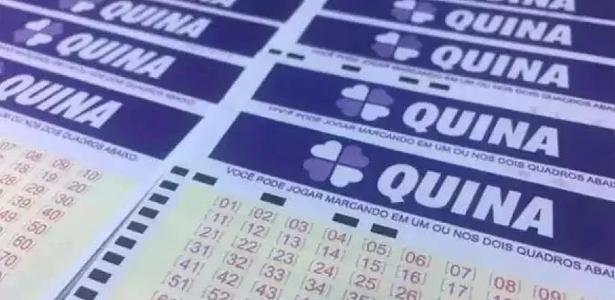
Yet the risks are clear. While 101 players won R$6,354 ($1,250) each for four correct numbers, the odds of hitting the jackpot remain astronomical: roughly 1 in 27 million. For context, the average Brazilian spends around R$50 ($10) per month on lotteries—a gamble that pays off for fewer than 0.0000037% of players. The psychological pull of life-changing wins, however, outweighs the mathematics for many.
The Numbers Behind the Draw: What Went Wrong
The June 3 draw’s numbers—10, 13, 25, 36, and 60—proved elusive, with no player matching all five. But the real story lies in the distribution of smaller prizes. Olhar Digital’s breakdown shows that 7,334 players won R$83.33 ($16.50) for three correct numbers, while 157,696 earned R$3.87 ($0.77) for two. These “consolation” wins—while modest—keep players hooked, as the cumulative value of small prizes often exceeds the jackpot’s long-term odds.

| Correct Numbers | Winners | Prize per Winner (R$) | Prize per Winner ($) |
|---|---|---|---|
| 5 (Jackpot) | 0 | 17,400,000 | 3,450,000 |
| 4 | 101 | 6,354.06 | 1,250 |
| 3 | 7,334 | 83.33 | 16.50 |
| 2 | 157,696 | 3.87 | 0.77 |
The data reveals a critical dynamic: while the jackpot dominates headlines, the lottery’s profitability relies on the sheer volume of small wins. For the Caixa, this means a delicate balance—too many jackpot wins deplete the prize pool, while too few leave players disillusioned. The June 3 draw’s accumulation suggests the latter may be happening, setting the stage for a potential record-breaking R$20 million jackpot next week.
How to Claim Your Winnings (If You’re Lucky)
For the rare player who does win, the process varies by prize size. InfoMoney’s guide clarifies that prizes under R$2,428.80 ($480) can be claimed at any authorized lottery outlet or via Mercado Pago transfer. Larger sums require a visit to a Caixa Econômica Federal branch, where winners must present their CPF (tax ID) and original ticket. Prizes over R$10,000 ($2,000) take up to two business days to process.
Yet urgency is key: winners have only 90 days to claim their prize, or the money reverts to the national treasury. This rule, highlighted by Estadão, underscores the lottery’s financial tightrope—unclaimed funds don’t just disappear; they’re repurposed for education and public safety, further tying the game’s fate to government priorities.
The Next Draw: What’s at Stake for Players and the Caixa
The June 5 draw promises to be a turning point. With the jackpot poised to hit R$20 million ($4 million), the pressure is on for players to strike while the iron is hot. But the Caixa faces its own challenges: sustaining player interest without depleting its financial reserves. Historically, lotteries like the Quina thrive when jackpots grow—but if they grow too quickly, they risk alienating players who feel the odds are rigged against them.

For context, the previous draw’s R$15.96 million ($3.17 million) jackpot was also unclaimed, a trend that suggests players may be waiting for an even bigger prize. Meanwhile, the Caixa’s revenue model—where 43.79% of ticket sales fund prizes—means that every unclaimed jackpot is a double-edged sword: it inflates future prizes but also signals waning player confidence.
What’s certain is that the Quina’s next draw will be watched more closely than ever. For players, it’s a chance to win big—or walk away with a few hundred reais. For the Caixa, it’s a test of whether Brazil’s love affair with lotteries can survive the math.
Why This Story Matters Beyond the Numbers
At its core, the Quina is more than a game of chance—it’s a cultural phenomenon that reflects Brazil’s economic realities. In a country where inflation remains a concern and wage growth lags, lotteries offer a fleeting fantasy of financial freedom. The June 3 draw’s outcome—no jackpot winner, but thousands of small wins—mirrors this tension: the allure of a life-changing windfall coexists with the cold reality that the odds are stacked against players.
For the Caixa, the challenge is ensuring the lottery remains profitable without exploiting players’ hopes. The upcoming R$20 million jackpot could either draw in a new wave of bettors or push the system to its breaking point. One thing is clear: the Quina’s future hinges on striking the right balance between spectacle and sustainability—a gamble as high-stakes as the lottery itself.
For now, players will watch the June 5 draw with bated breath. And if the jackpot holds, the real question won’t be who wins—it’ll be whether anyone dares to play.
