
Resident Evil Requiem delivers a chilling, though somewhat uneven, survival horror experience. Even as not initially anticipating the game due to a general disinterest in the horror genre, the title successfully created a compelling sense of fear and satisfaction upon overcoming challenging encounters with terrifying creatures.
The Story of Resident Evil Requiem
The narrative begins with the discovery of a body in an abandoned hotel in the American Midwest – a victim of an unidentified illness. The FBI dispatches analyst Grace Ashcroft to investigate, leading her back to the Wrenwood Hotel, the site of her mother’s murder eight years prior.
The game’s opening evokes the atmosphere of the film Seven, though this influence diminishes as the story progresses. A deeper focus on police investigation would have been welcome, but perhaps would have strayed from the core Resident Evil experience.
Grace Ashcroft represents a departure for the Resident Evil series, described by developers as “the most frightened character in Biohazard history.” This fresh perspective, coupled with the player’s own unfamiliarity with the horror genre, heightened the sense of fear throughout the game.

The investigation unravels the truth behind the biological disaster in Raccoon City. Simultaneously, Leon S. Kennedy investigates a series of suspicious deaths among Raccoon City survivors, tracking former Umbrella scientist Victor Gideon. This parallel investigation ultimately leads to a convergence between Grace and Leon’s paths.
For the first time in a long time, the Resident Evil series returns to Raccoon City. The iconic city, previously destroyed by a thermobaric missile strike at the end of RE3, remained unexplored in subsequent installments. Requiem brings those ruins back into focus, offering a nostalgic yet unsettling setting for players.
Resident Evil Requiem weaves together the story of Grace’s mother’s death, the protagonist’s past, and the narrative of Leon S. Kennedy. While the experience may differ for series veterans, the story unfolds smoothly, allowing players to understand the narrative even without prior knowledge of the characters. Following the game’s completion, further research into the characters revealed deeper connections and lore.
Gameplay: Two Characters, Two Philosophies
Previous titles, RE7 and Village, focused on a single protagonist and a more isolated structure. Requiem revisits the concept of two characters with parallel narratives, reminiscent of Revelations and Revelations 2, but with a significant difference: the gameplay experiences are vastly distinct. This design choice demonstrates a commitment to diversifying gameplay mechanics within the established horror framework.

The game is divided roughly 50/50 between Grace and Leon, and their opposing playstyles are a major strength.
A common frustration with survival horror games is the overwhelming intensity. Requiem balances moments of intense fear with periods of relative calm, offering a more approachable experience.
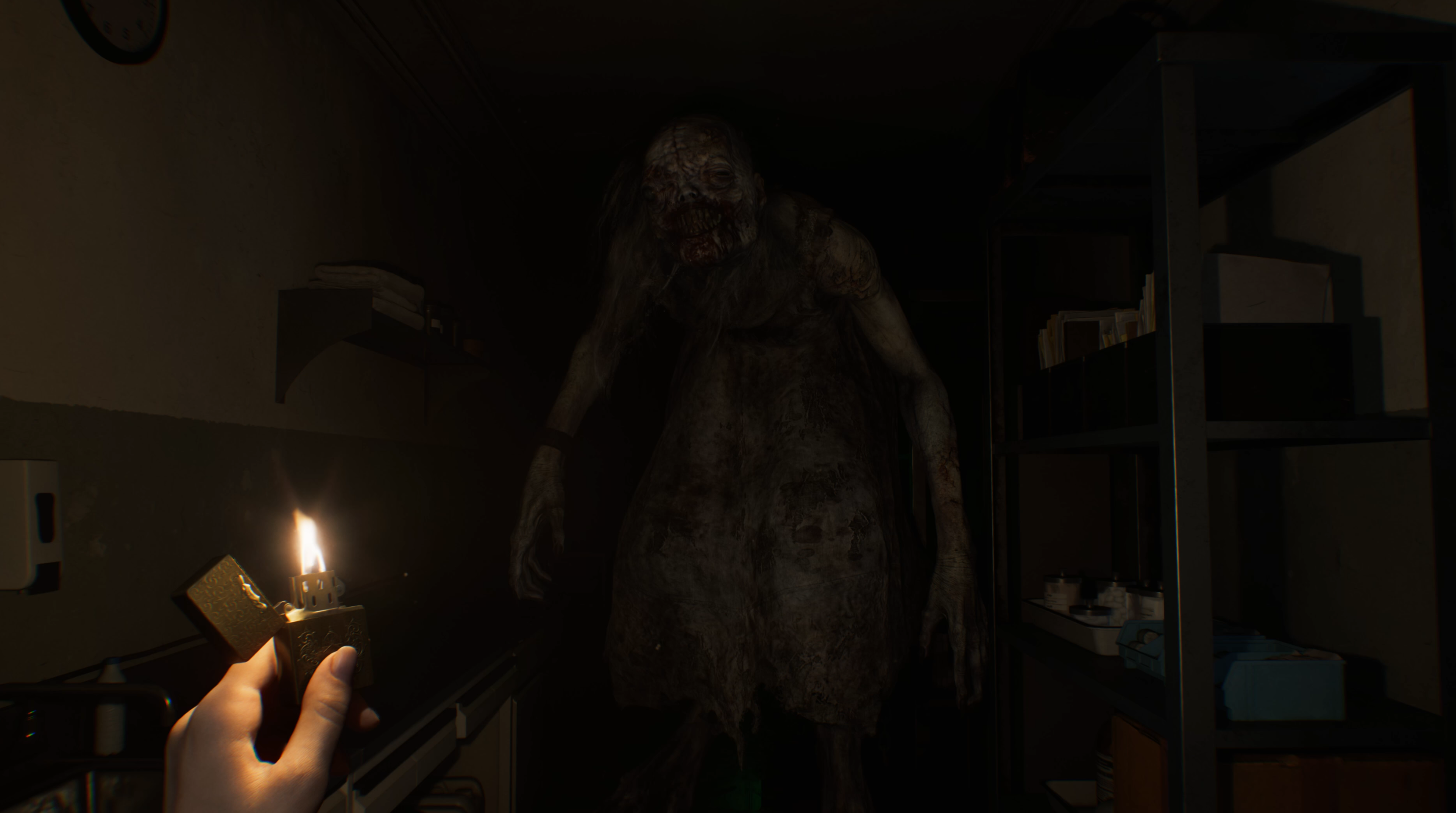
Grace’s sections embody pure survival horror. Lacking weapons and ammunition, she relies on stealth and resourcefulness. While she has access to a pistol, ammunition is scarce, creatures are resilient, and evasion is often the best strategy. She can utilize bottles as distractions. The initial chapter with Grace is particularly well-executed, as she is relentlessly pursued by a massive creature vulnerable to light. Unfortunately for the player, darkness pervades the hallways and rooms. Grace can similarly craft weapons and tools using blood collected from infected individuals through a specialized device.
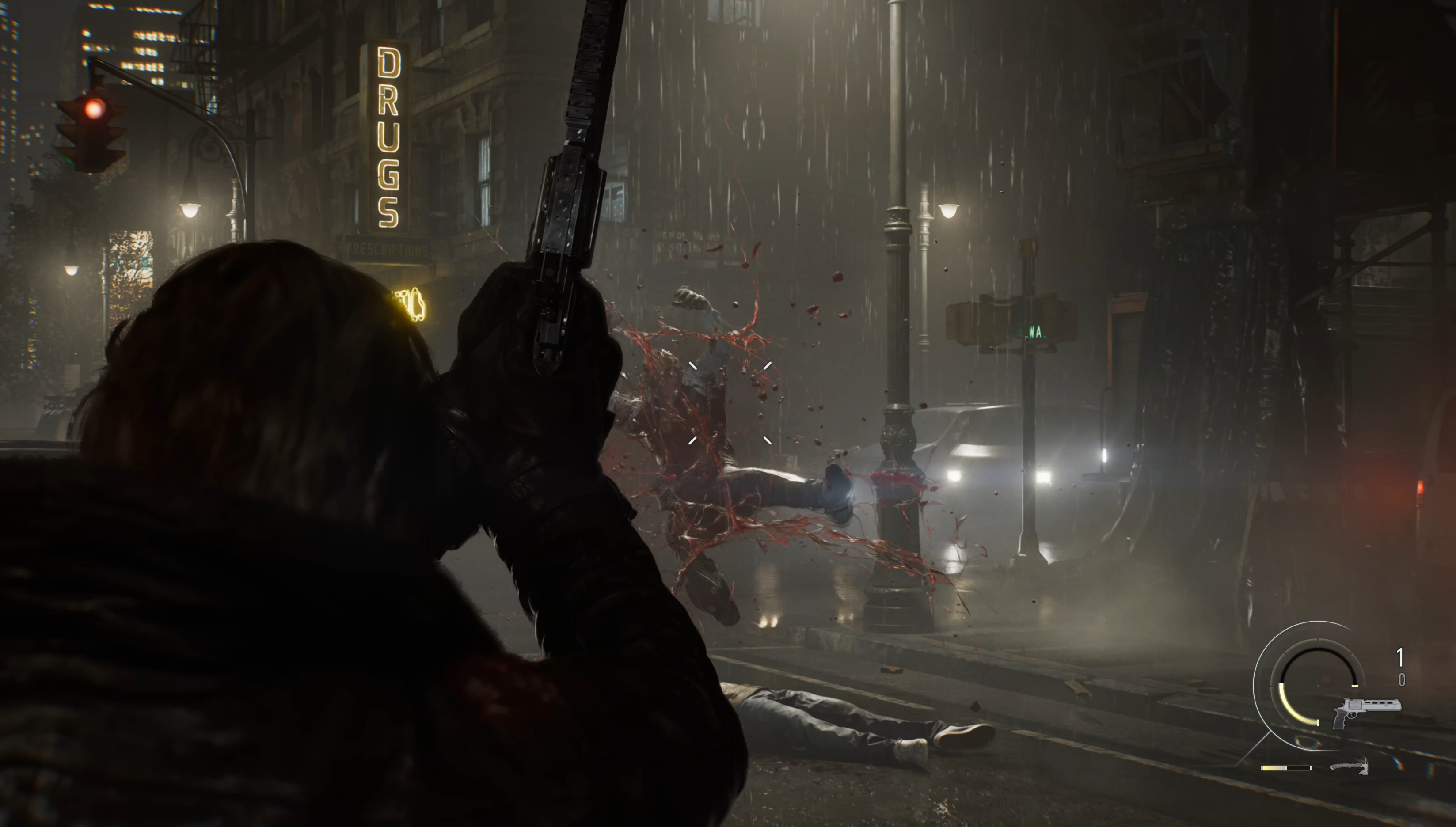
Leon, in contrast, offers a more action-oriented experience. He is equipped with a variety of firearms, axes, and can perform close-quarters combat.
A notable technical innovation: players can seamlessly switch between first-person and third-person perspectives, a first for recent entries in the series that previously opted for one or the other exclusively. The standard mode features Grace in first-person for maximum immersion and tension, and Leon in third-person for dynamic combat and action.
Gameplay alternates between characters, with extended sequences dedicated to each. The shift from the intense tension of Grace’s gameplay to the more aggressive action with Leon provides a welcome change of pace.
The puzzle mechanics, however, grow somewhat repetitive towards the end of the game. Frequently, reaching location X requires completing task Y, which in turn necessitates collecting three items to deliver to Z. While this repetition can become tiresome, the game’s overall length – approximately 10 hours – mitigates the issue.
A Horror Spectacle with Path Tracing
Like all Resident Evil games since 2017, Requiem runs on the RE Engine – but in its most advanced iteration to date. Requiem is the first title in the series to natively support path tracing, a significant upgrade from Village’s limited RTGI and ray-traced reflections. This technology represents a leap forward in rendering realism for the franchise.
This technology addresses several visual challenges previously faced by the RE Engine, particularly regarding reflections and shadows. Shadows are now rendered with high fidelity through path tracing, a first for the RE Engine. The result is precise and detailed shadows, even from the smallest objects, regardless of the light source. Shadows are significantly more realistic. All light sources in the game, including the player’s lighter, generate accurate shadows in real-time, and players can turn lights on and off in the environment, immediately observing the resulting illumination changes.
Path tracing also significantly improves global illumination, the light that reflects from one surface to another. Reflections are stable and accurate on a much wider range of surfaces. Glass panels, for example, now convincingly reflect the surrounding environment.
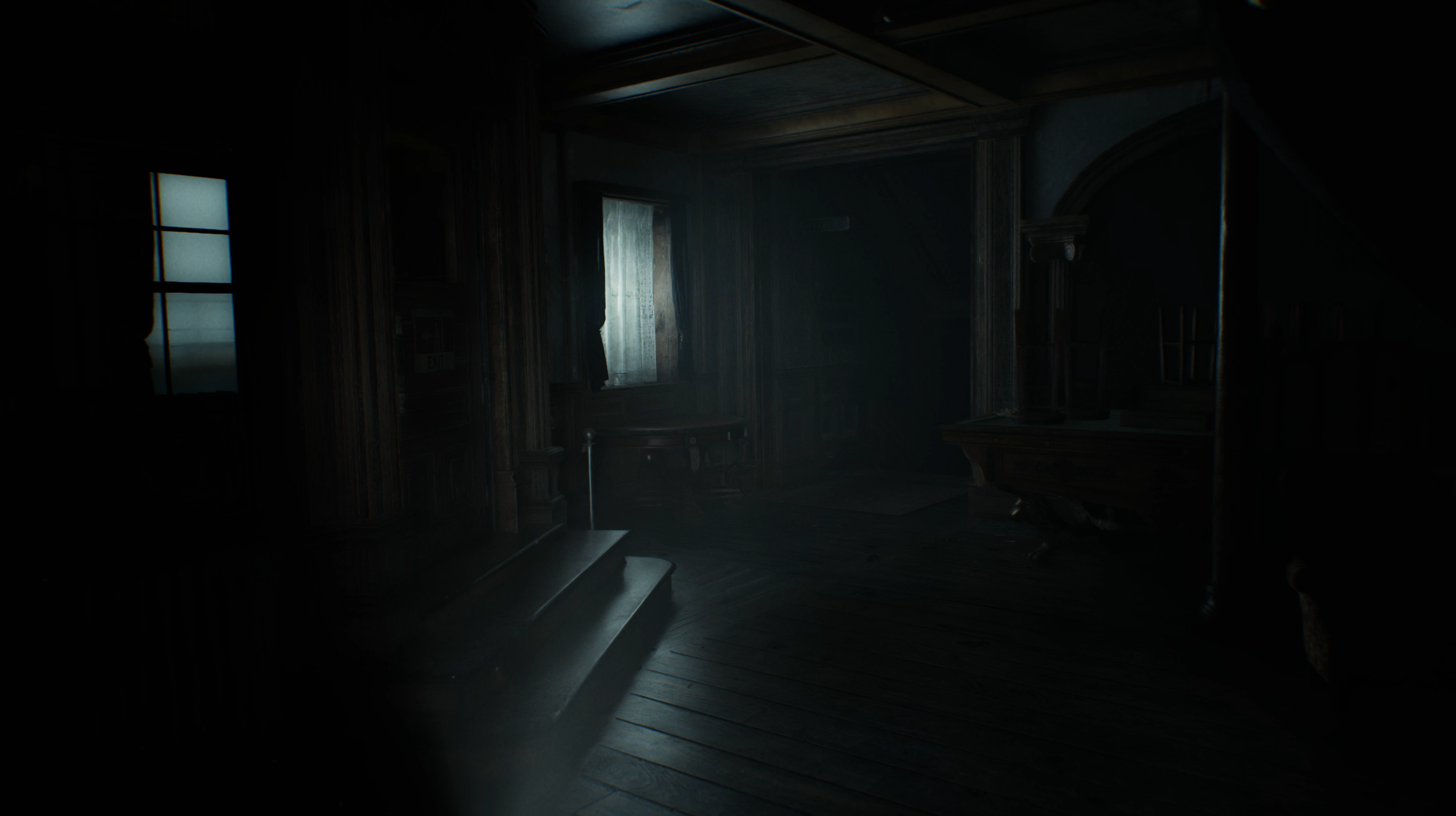
Many areas of the game are almost completely dark, with minimal ambient light, showcasing the quality of the shadows and subtle reflected light. What we have is particularly impressive on OLED screens, which offer true blacks. The game was tested on a laptop with an IPS panel and an external OLED monitor, with the OLED display providing a superior visual experience.
Darkness and light are beautifully rendered and become characters in the game. The lighting system integrates organically with the game’s stealth and horror mechanics. Realistic darkness and subtle illumination amplify tension, especially in first-person mode, where precise reflections and shadows contribute directly to immersion.
The implementation isn’t without imperfections. In darker areas, illuminated indirectly, some visual noise and instability are noticeable, with light appearing to “swim” or flicker slightly.
On PC, the game also benefits from NVIDIA’s DLSS 4 and path-traced effects that accelerate performance and improve image quality.
The game was tested on a Lenovo Legion 9 with an RTX 5090 graphics card, an Intel Ultra 9 275HX processor, and 192 GB of RAM. With path tracing enabled, the game automatically activated DLSS, selecting high graphics settings, DLSS Performance, Path tracing, and ray reconstruction, resulting in frame rates between 180 and 200 FPS for the majority of the gameplay. Disabling MFG 4x yielded frame rates of 80-100 FPS. No bugs, performance issues, stuttering, or other problems were encountered.
For hair rendering, Requiem utilizes the hair strand system from the RE Engine – a physical simulation that renders each strand individually, resulting in a highly realistic appearance.
The 3D audio technology creates a truly immersive experience, with sound cues providing both atmospheric horror and essential gameplay information. The creature sounds are realistic and well-executed, and the music is expertly chosen to enhance key moments.
Conclusion
Resident Evil Requiem is a recommended title, appealing to both long-time fans and latest players. While the game may be relatively short, at around 10-15 hours depending on exploration, the quality of the experience justifies the 70 euro price tag.
The game will be available on February 27, 2026, for PS5, Xbox Series X|S, PC (Steam and Epic Games Store), and Nintendo Switch 2.
