
A recent analysis explores which dinosaur species would likely present the least risk to humans if they were alive today. While the idea of coexisting with dinosaurs remains firmly in the realm of speculation, paleontologists are increasingly able to infer temperament and behavior from fossil evidence. The assessment, published November 16, 2025, identifies five herbivorous dinosaurs – Hypsilophodon, Pachycephalosaurus, Maiasaura, Stegosaurus, and Diplodocus – as potentially the most docile, though experts caution any encounter with a prehistoric reptile would carry inherent dangers.
November 16, 2025 7:30 PM WIB
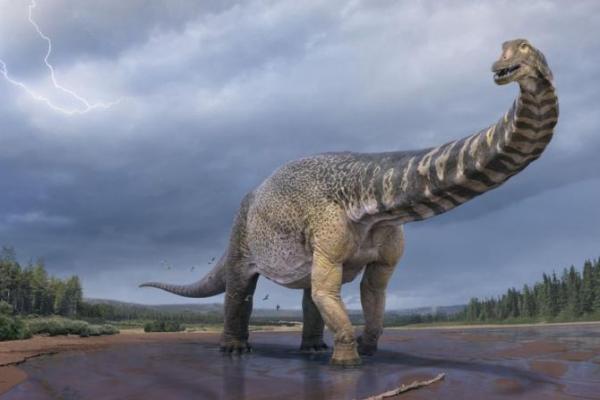
The largest dinosaur depiction in Australia (Photo: BBC)
The enduring fascination with dinosaurs stems from their immense size and unique characteristics. As paleontological research advances, a recurring question arises: if dinosaurs still roamed the Earth, which species would pose the least threat to humans? Several dinosaur species are believed to have exhibited relatively docile and non-aggressive behaviors.
Hypsilophodon is considered among the safest. This small, herbivorous dinosaur possessed a slender and agile build, weighing only around 44 pounds. Its physique more closely resembled a small kangaroo than a fearsome predator.
Pachycephalosaurus, despite its thick, domed skull, is also thought to be relatively safe. This herbivore likely used its dome in intraspecies combat rather than attacking prey. If it existed today, it would likely exhibit defensive rather than aggressive behavior towards humans.
Maiasaura, often referred to as the “mother dinosaur,” is another species considered low-risk. This herbivorous dinosaur lived in herds and fossil records indicate a high level of parental care, suggesting a generally peaceful social behavior. This highlights the growing understanding of dinosaur social structures.
Stegosaurus, recognizable by the large plates along its back, is also categorized as a passive herbivore. While its spiked tail could be used for defense against predators, it wasn’t an active weapon of aggression.
Finally, Diplodocus, one of the most well-known long-necked dinosaurs, is considered a “gentle giant.” This massive creature was a leaf-eater and generally avoided conflict. Its large size combined with a mild temperament would likely make it non-threatening to humans in a modern setting.
While these dinosaurs appear relatively safe, it’s important to remember they are still wild animals. The modern environment may also not be suitable for their survival. However, based on their observed behaviors, these five species are considered less likely to pose a danger to humans if they were to reappear.
Scientific studies of dinosaur behavior typically rely on bone structure, fossilized footprints, and comparisons to modern reptiles and birds. Therefore, these interpretations are scientifically informed but inherently limited. Nevertheless, there is considerable consensus that some dinosaurs did not actively hunt or attack.
From an ecological perspective, herbivorous dinosaurs generally exhibited more peaceful tendencies. They focused on foraging for food and avoiding predators, making them potentially safer from a behavioral standpoint.
Human interest in dinosaurs has spurred modern research into these ancient creatures. Utilizing technologies like biomechanical simulations and digital fossil analysis, scientists are able to assess how dinosaurs moved and behaved. This data supports the conclusion that certain species were not aggressive.
KEYWORD :
dinosaurus jinak dinosaurus aman dinosaurus herbivora dinosaurus modern
