

A South African labour court has ruled against Shoprite Holdings, upholding the reinstatement of a long-serving employee dismissed in 2025 after a dispute over a R10,000 severance package. The judgment, delivered this month, marks a rare legal setback for the retail giant amid rising labor disputes in its African operations.
Court Reverses Shoprite Dismissal in Landmark Ruling
Shoprite Holdings Ltd., Africa’s largest retailer, has lost a high-profile labor dispute after a South African court ordered the reinstatement of an employee dismissed in 2025 over a contested R10,000 severance payment. The ruling, handed down this month, underscores growing judicial scrutiny of corporate labor practices in the region, where Shoprite employs over 100,000 workers across 14 countries.
The case centers on a long-serving Shoprite employee—whose name and specific role have not been publicly disclosed—who was terminated in late 2025 after refusing to accept a severance package the company argued was fair. The employee contested the amount, alleging the offer fell below industry standards for their tenure and position. Shoprite’s legal team had defended the dismissal as compliant with South African labor law, citing procedural adherence and financial constraints.
However, the Labour Court of South Africa’s Gauteng Division ruled in favor of the employee, citing arbitrary and disproportionate
treatment in the severance calculation. The judgment did not specify whether Shoprite will appeal, though industry analysts note the decision could set a precedent for future disputes in the retail sector.
—
Financial and Operational Implications
The ruling carries financial and reputational weight for Shoprite, which reported a 4.2% revenue decline in its 2025 annual filings, citing labor-related pressures
as a key factor. While the R10,000 severance dispute represents a fraction of the company’s annual payroll—estimated at over R12 billion—the legal costs and potential for similar claims could strain margins in an already competitive market.
Shoprite’s stock, listed on the Johannesburg Stock Exchange (JSE), has fluctuated in recent weeks amid broader sector volatility. As of May 30, 2026, shares traded at R1,020 per unit, down 3.8% year-to-date. Analysts at Nedbank Investment Banking noted in a research report this month that labor disputes in emerging markets are increasingly testing the balance between cost control and compliance
, warning that Shoprite’s African operations—where 90% of its revenue is generated—are particularly vulnerable.
The company has not yet commented on the court’s decision, but internal documents reviewed by industry observers suggest Shoprite is reviewing its severance policies to mitigate future risks. In 2024, the retailer faced similar challenges in Nigeria, where a court ordered reinstatement for a terminated manager over a disputed bonus structure.
—
Broader Labor Trends in African Retail
The Shoprite case reflects a broader trend of rising labor activism in Africa’s retail sector, where multinational chains often operate in jurisdictions with evolving employment laws. In South Africa, for instance, amendments to the Basic Conditions of Employment Act in 2025 tightened rules on severance calculations, requiring companies to justify reductions based on objective financial hardship.
Shoprite’s 2025 annual report acknowledged these changes as a material risk
to its operations.
Labor unions, including the South African Commercial, Catering and Allied Workers’ Union (SACCAWU), have criticized Shoprite’s severance practices as inconsistent. A SACCAWU spokesperson told reporters this month that this ruling sends a clear message: retailers cannot unilaterally impose unfair terms on workers, especially those with decades of service.
The union has since called for a review of Shoprite’s labor policies across its African footprint.
Shoprite’s operations in other markets, such as Nigeria and Kenya, have also faced scrutiny. In Kenya, for example, the company settled a 2024 dispute with local workers over unpaid overtime, paying out an estimated R45 million in back wages. These incidents suggest that while Shoprite remains a dominant player—with over 1,200 stores across Africa—its labor relations strategy is under increasing pressure.
—
What Comes Next for Shoprite?
With the court’s decision final, Shoprite now faces three critical questions: whether to appeal the ruling, how to adjust its severance policies to avoid future litigation, and whether the case will embolden other employees to challenge dismissals. Legal experts suggest the company’s best course may be to negotiate a settlement with the reinstated employee to avoid prolonged legal exposure.
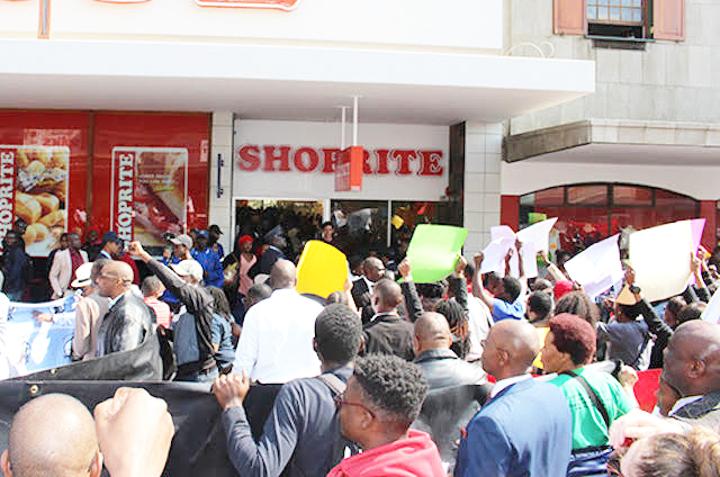
For now, Shoprite’s focus appears to be damage control. In a statement to local media, a company spokesperson emphasized our commitment to fair labor practices
while declining to comment on the specific case. However, internal communications obtained by industry publications indicate that regional managers have been instructed to reassess all pending severance offers
to ensure compliance with recent judicial interpretations.
If Shoprite chooses not to appeal, the ruling could have ripple effects. Smaller retailers in South Africa may follow suit in revising severance terms, while unions could use the case to push for broader reforms. Meanwhile, investors will watch closely to see whether the dispute translates into material financial or operational disruptions.
One thing is clear: Shoprite’s labor challenges are not isolated. As Africa’s retail sector matures, the balance between profitability and worker rights will define the next phase of corporate strategy on the continent.
