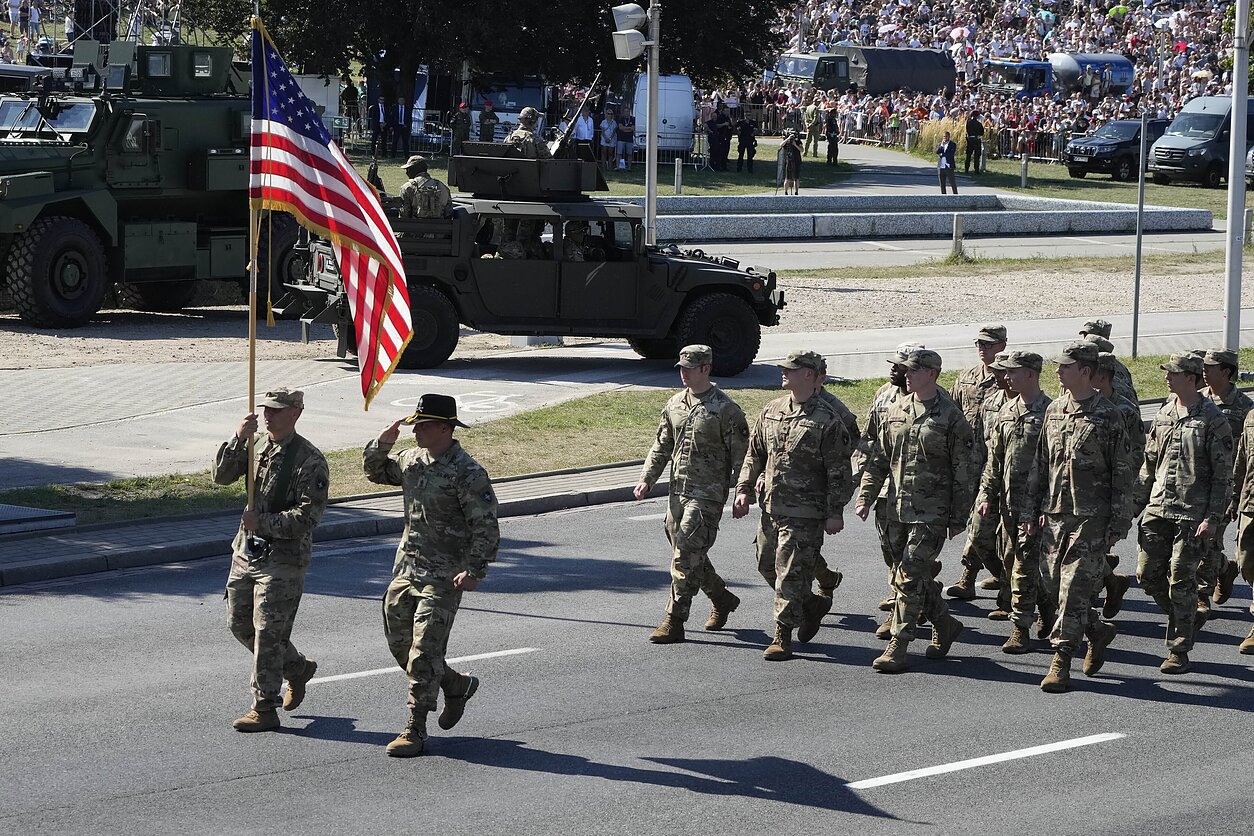
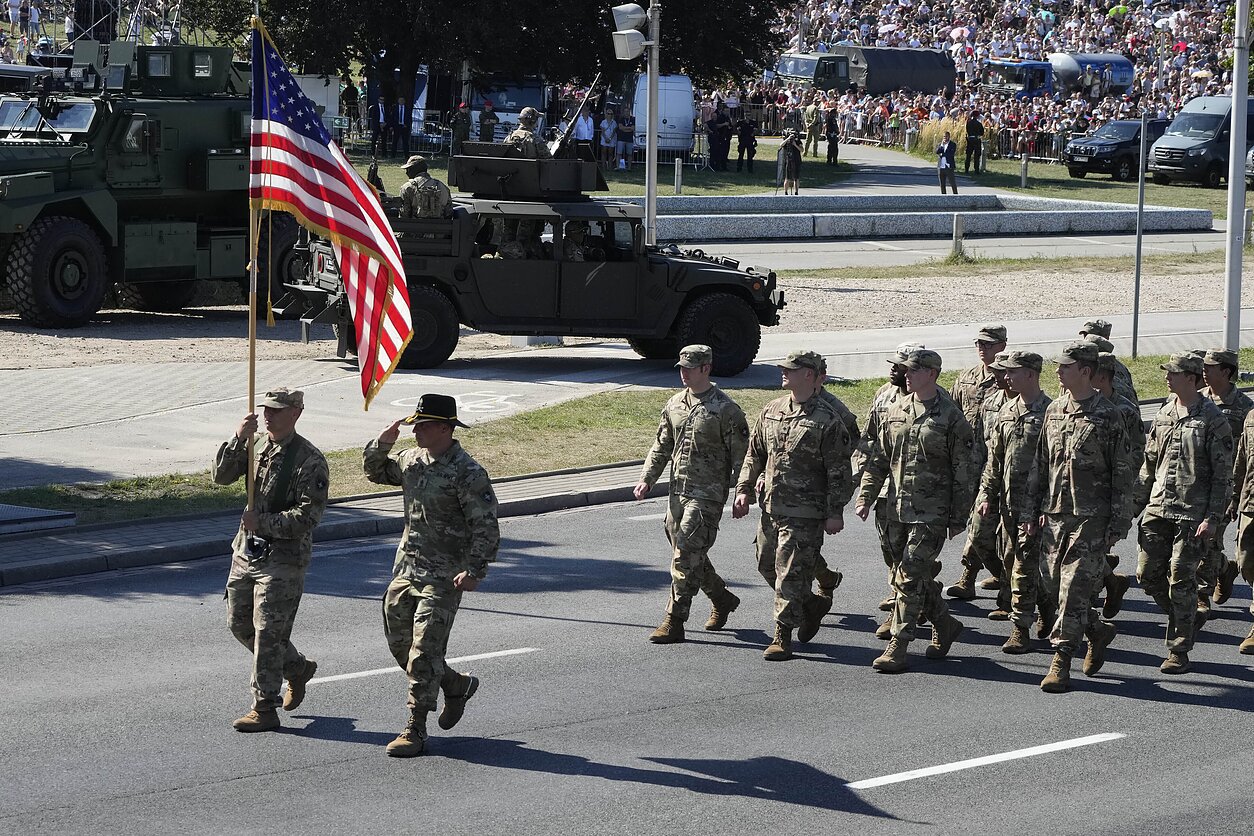
The United States is preparing to accelerate the withdrawal of military forces from European bases, with official plans expected to be presented to NATO allies next month. This shift, which includes reductions in aircraft and naval assets, follows recent signals from the Pentagon regarding a strategic pivot toward other global threats.
Pentagon Signals Shifts in European Force Posture
cluster (priority): 15min.lt
The U.S. military is moving to expedite the removal of personnel and equipment from European installations, a decision that has sparked significant discussion among NATO member states. According to reporting by the German publication Welt am Sonntag, which cited a Pentagon source, the United States intends to present detailed proposals regarding these reductions at the upcoming NATO force-generation conference.
The scope of this drawdown is extensive. Intelligence obtained by the German outlet Spiegel indicates that the United States plans to reduce its contribution of core military capabilities, specifically targeting air and naval assets. The planned reductions reportedly include a 50% decrease in strategic bombers and a one-third reduction in the number of fighter jets committed to the alliance. Furthermore, the U.S. may cease providing submarines for NATO operations, while European allies are expected to assume greater responsibility for intelligence-gathering drone operations.
This structural change comes as the U.S. Department of Defense faces pressure to reallocate resources to address evolving threats in other regions. In May, U.S. Secretary of State Marco Rubio indicated that the administration is actively narrowing its focus, citing the necessity of addressing other security challenges while emphasizing that European nations are expected to bolster their own domestic defense capabilities.
Pressure on NATO Allies to Increase Defense Spending
The reduction in U.S. presence is being framed by Washington as a consequence of long-standing fiscal imbalances within the alliance. During the recent Shangri-La Dialogue in Singapore, U.S. Secretary of Defense Pete Hegseth delivered a sharp message to European partners: those who fail to meet collective defense responsibilities will face tangible changes in how the United States manages security cooperation.
“Polite requests from our European allies to invest more in their own defense have gone unheard for too long. Finally, they are beginning to catch up. Allies who refuse to step up and take their share of the burden for our collective defense will face a clear change in how we do business.”
Pete Hegseth, U.S.
cluster (priority): LrytasPlan B: Europe accelerates NATO contingency plans amid fears of a US withdrawal
While NATO states pledged in 2025 to increase defense spending to 5% of their Gross Domestic Product (GDP), many nations have signaled that meeting this target remains a significant hurdle. Hegseth’s rhetoric underscores a transition toward a more transactional model of security, where the U.S. is less willing to subsidize the defense of partners who do not meet their financial commitments. The Secretary of Defense was notably blunt regarding these expectations, dismissing even moderate spending increases as insufficient in the current security environment.
Strategic Implications for Deterrence
cluster (priority): news.google.com
The reduction of U.S. military capabilities in Europe has drawn criticism from analysts who fear it weakens the established system of deterrence. Central to these concerns is the erosion of the U.S. ability to conduct rapid, high-precision strikes—a capability that has historically served as a primary check against Russian aggression.
Observers argue that the U.S. presence acts as an essential guarantee that any conflict involving NATO would be met with overwhelming force, rather than leaving European nations to manage an initial response in isolation. By drawing down these forces, the administration risks creating a scenario where, in the event of an escalation, the U.S. President may be faced with an increasingly narrow set of choices: either accept territorial losses or risk a direct nuclear confrontation.
The current shift is particularly sensitive given that some of Russia’s most advanced assets—including hypersonic missiles and specialized air power—have not been fully deployed in the conflict in Ukraine. These systems remain in reserve, and experts suggest that Moscow is closely monitoring the diminishing U.S. footprint as a potential signal of waning American commitment to the continent’s security.
Regional Security and the Global Pivot
Beyond Europe, the Pentagon is applying similar pressure to partners in the Indo-Pacific. Hegseth noted that regional security in Asia has long relied disproportionately on American military power, allowing many allies to let their own capabilities atrophy. However, he offered praise for countries like South Korea, which he described as being on the front lines and actively developing significant military power.
As the United States moves toward its goal of reducing troop counts in Germany—where approximately 35,000 active-duty personnel were stationed—the coming months will test the resolve of the NATO alliance. The upcoming conference will likely serve as the definitive venue for Washington to clarify exactly which assets are departing and how the burden of European security will be redistributed among the remaining member states.
ail: emily.johnson@headlinez.news
Bio:
Emily Johnson serves as News Editor at Headlinez.News, overseeing the publication’s coverage of national and breaking stories. She has worked in journalism for more than 12 years, building a reputation for precision, credibility, and rapid-response reporting. Emily’s editorial philosophy focuses on clear, fact-based writing that helps readers understand the full context behind the day’s most important events. Her expertise bridges traditional reporting and modern digital news strategies.
Expertise: Breaking news, political reporting, fact-checking, newsroom coordination, public affairs.
Location: Washington, D.C., USA