
Sony Opens Collaborative Hub ‘DMPC Japan’ at Headquarters in Minato Ward
A firsthand look inside Sony’s newly established Digital Media Production Center Japan (DMPC Japan), located within the company’s headquarters in Minato Ward, reveals a facility designed not just to showcase equipment, but to foster co-creation with video creators. As the third location globally, following facilities in Los Angeles and London, DMPC Japan represents a significant investment in the future of content creation.
Centered around the company’s Cinema camera “VENICE,” the facility integrates a “Crystal LED VERONA” powered VP stage and comprehensive editing and grading environments. This setup allows for complete verification of the entire production pipeline, from shooting to post-production.
 
.

.
From Equipment Provider to Collaborative Partner: Sony’s Vision for the Future of Filmmaking

During the launch event, Tatsuto Tabuchi, Business Unit Leader of Sony’s New Content Creation Business, outlined a far-reaching vision that extended beyond a simple facility introduction. Tabuchi referenced a “Creative Entertainment Vision” for the next decade, emphasizing the construction of a production system that transcends the physical and virtual realms. He positioned the role of DMPC Japan as building a collaborative environment starting from the verification stage, moving beyond the traditional relationship of equipment supplier, and creator.
Tabuchi’s discussion of “the fusion of physical and virtual” wasn’t merely a slogan, but a pointed observation of the shifting landscape of filmmaking. The industry is moving away from traditional studio set construction towards building objects in 3D spaces within a computer, and integrating real-time CG. The facility is designed to function as a verification hub for this evolving workflow.
The “New Content Creation Business,” established last year, integrates four functions: the Cinema Line of cameras, XR business-leading spatial content, VP technology including Crystal LED and the camera tracking system “OCELLUS,” and the production operations handled by Sony PCL Corporation. This integrated approach lends credibility to Sony’s vision.
As a location following facilities in Los Angeles and Pinewood Studios in the UK, DMPC Japan was established in Japan. Tabuchi described the Los Angeles location—where engineers and creators freely exchange ideas and young talent learns—and that spirit is strongly reflected in this new Japanese hub.

Kazuhiro Nakagawa, Director and Executive Officer, B2B Business Headquarters, followed, explaining the current state and potential of Japan’s content industry with specific numbers and examples. With films like “Godzilla -1.0” and “Shogun” receiving international acclaim, Japanese live-action content holds significant untapped potential. To accelerate this growth, Sony is powerfully instilling its group philosophy of “getting closer to creators” within this space.
Nakagawa emphasized that the essence of DMPC Japan lies in the “co-creation” of the production process itself. The facility is divided into four zones: “Virtual Production,” “Shooting Studio,” “Grading Room,” and “Spatial Content Production Solutions.” Notably, its comprehensive one-stop system allows creators to immediately edit footage and confirm quality, accelerating their creative process. This isn’t solely for top creators; it’s similarly expected to function as a “hub for industry co-creation,” involving next-generation talent from educational institutions and beyond.
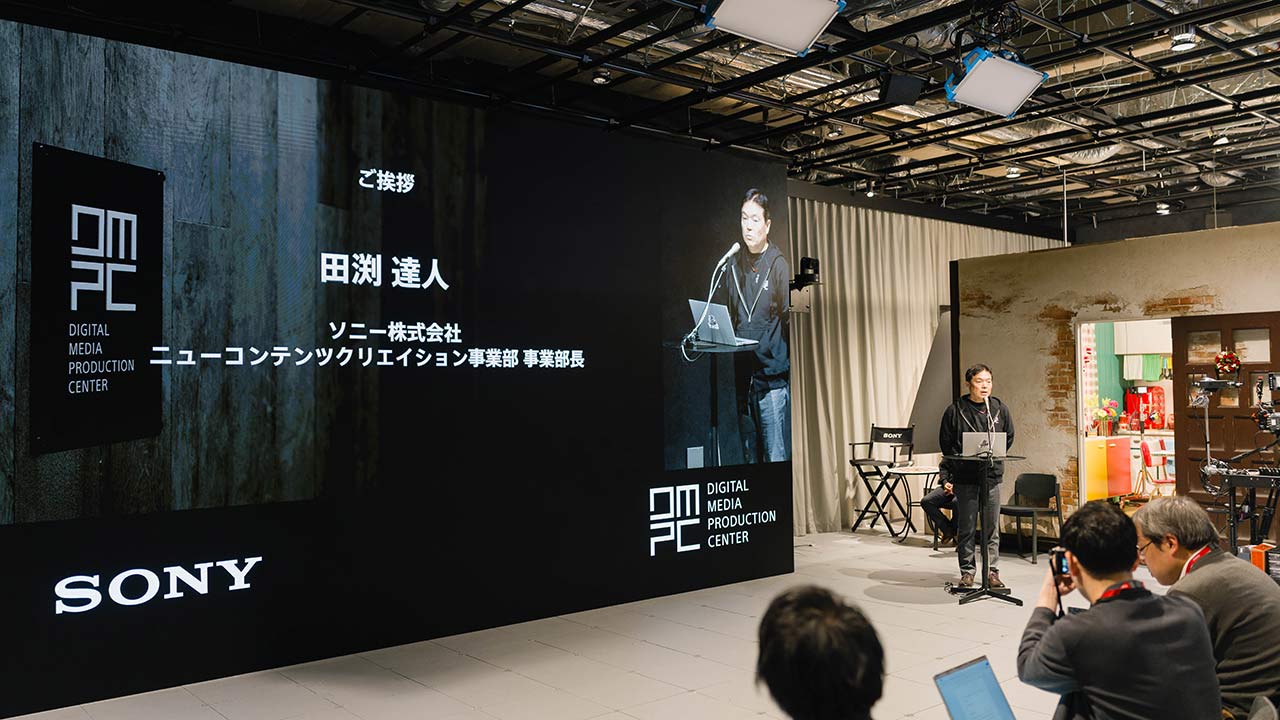
Nakagawa’s statement about wanting the facility to be “widely and freely utilized” conveyed a strong sense of commitment. Remarkably, Sony isn’t fixated on its own products, and is even open to accommodating equipment from other companies if needed.
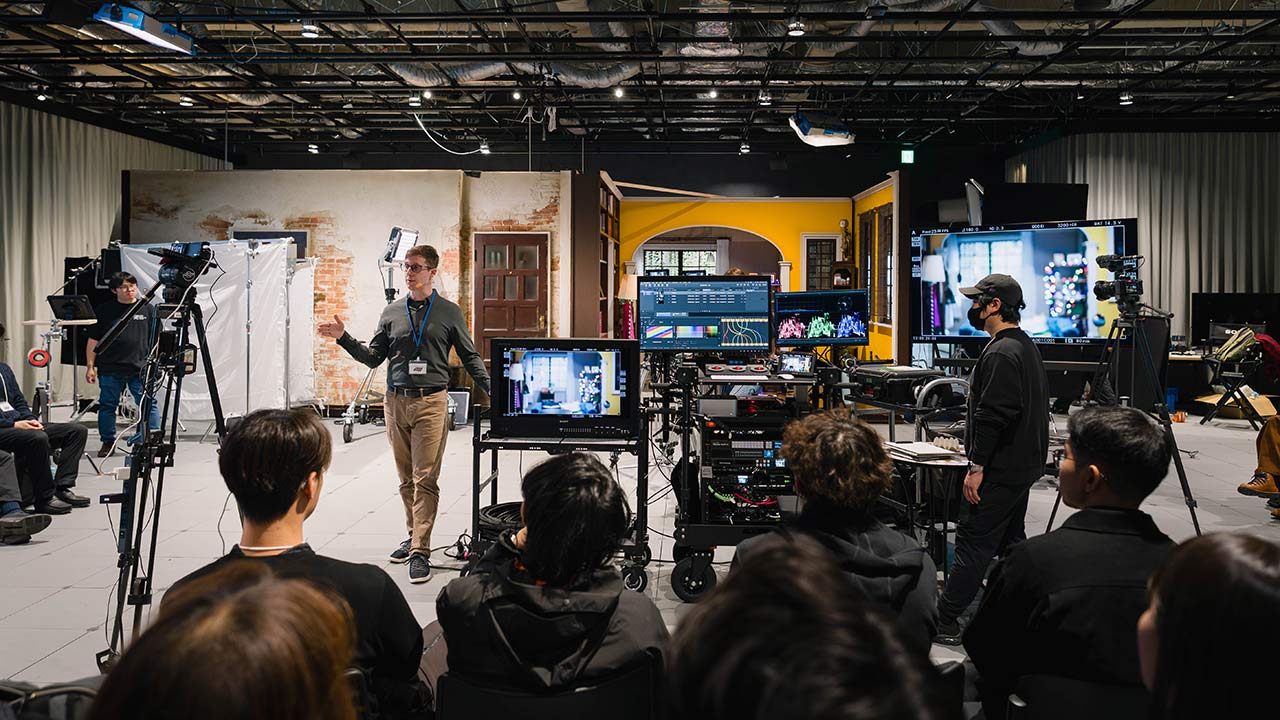
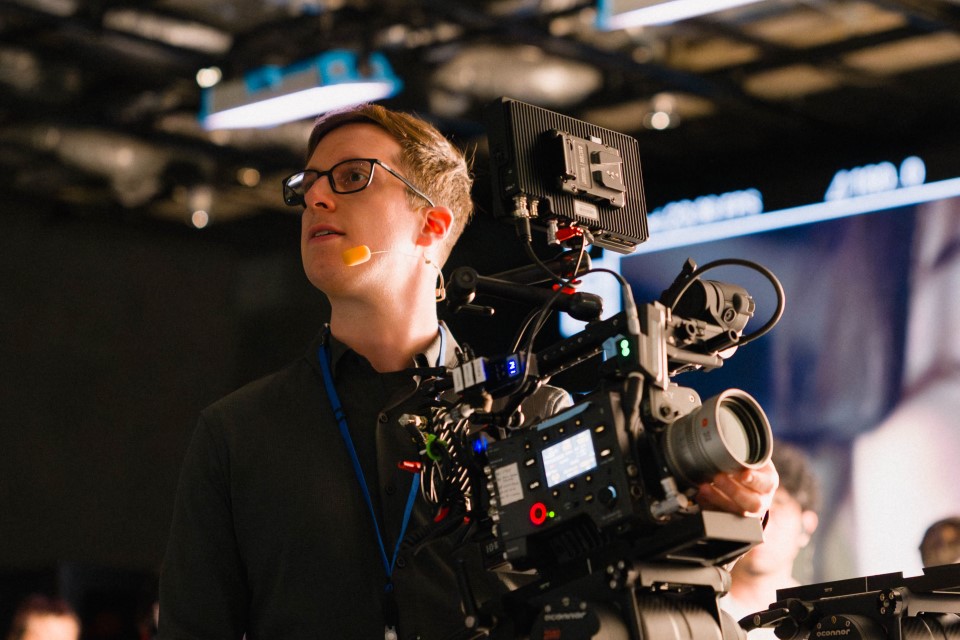
A masterclass hosted by the Japan Society of Cinematographers and the Agency for Cultural Affairs featured Oren Soffer, inviting approximately 40 participants to share their expertise. Rather than competing on equipment specs, the focus was on fostering dialogue and passing on advanced techniques. This demonstrated a concrete approach to developing the next generation of filmmaking.
DMPC Japan’s Advantage: “Verification and Improvement” in a Single Space
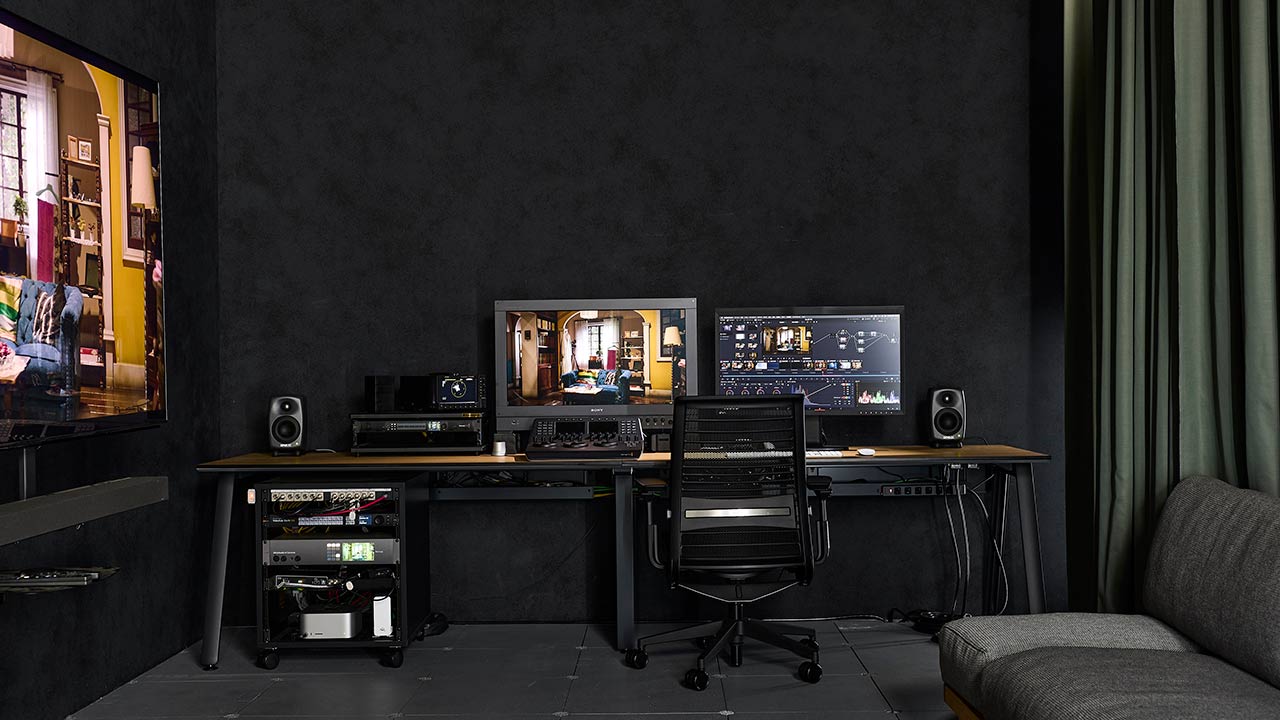
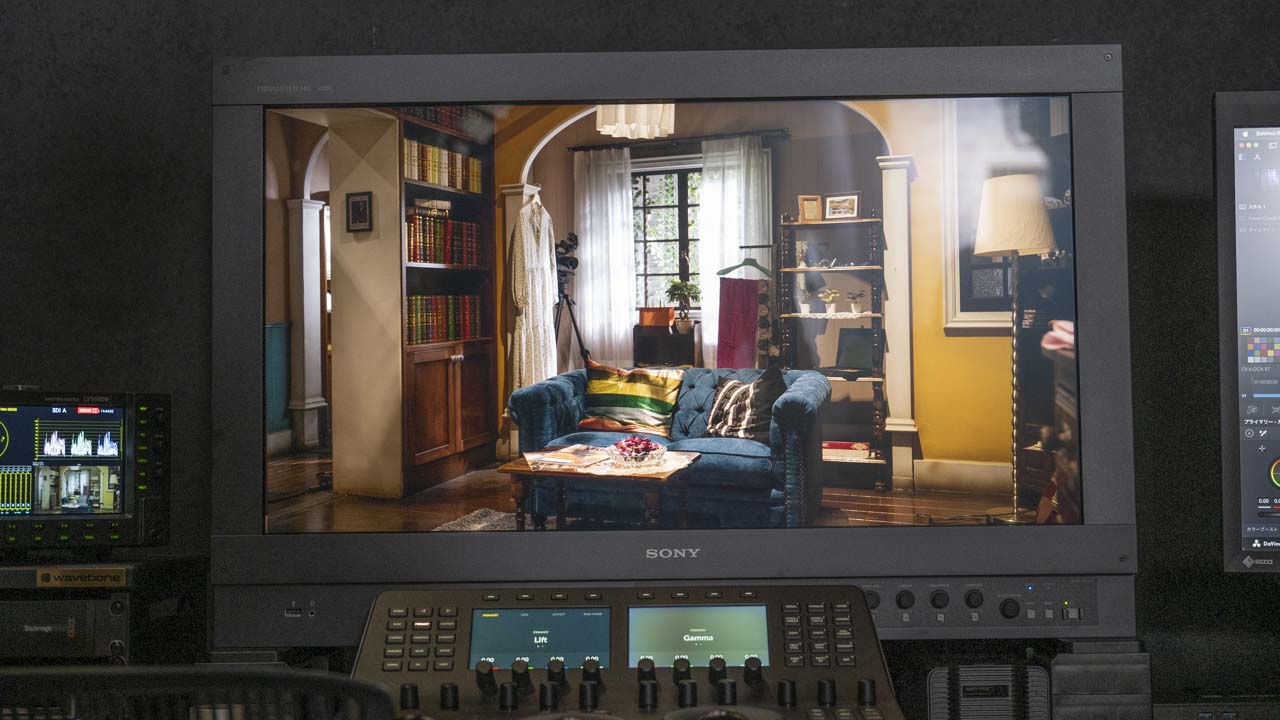
Examining the specific equipment reveals that the post-production booths are particularly noteworthy, reflecting the needs of professionals on set. This isn’t simply a space for post-processing, but a hub for immediately verifying footage shot in the studio and iterating on it—a place for “verification and correction.”
A master monitor “BVM-HX3110” sits at the center of each desk, and the environment is equipped with top-of-the-line specifications, supporting standard software like DaVinci Resolve as well as any applications creators bring with them. The ability to instantly transfer shooting data to a grading environment and view it on LED walls and client monitors enables a streamlined workflow, completing the shooting and finishing process within the same space.

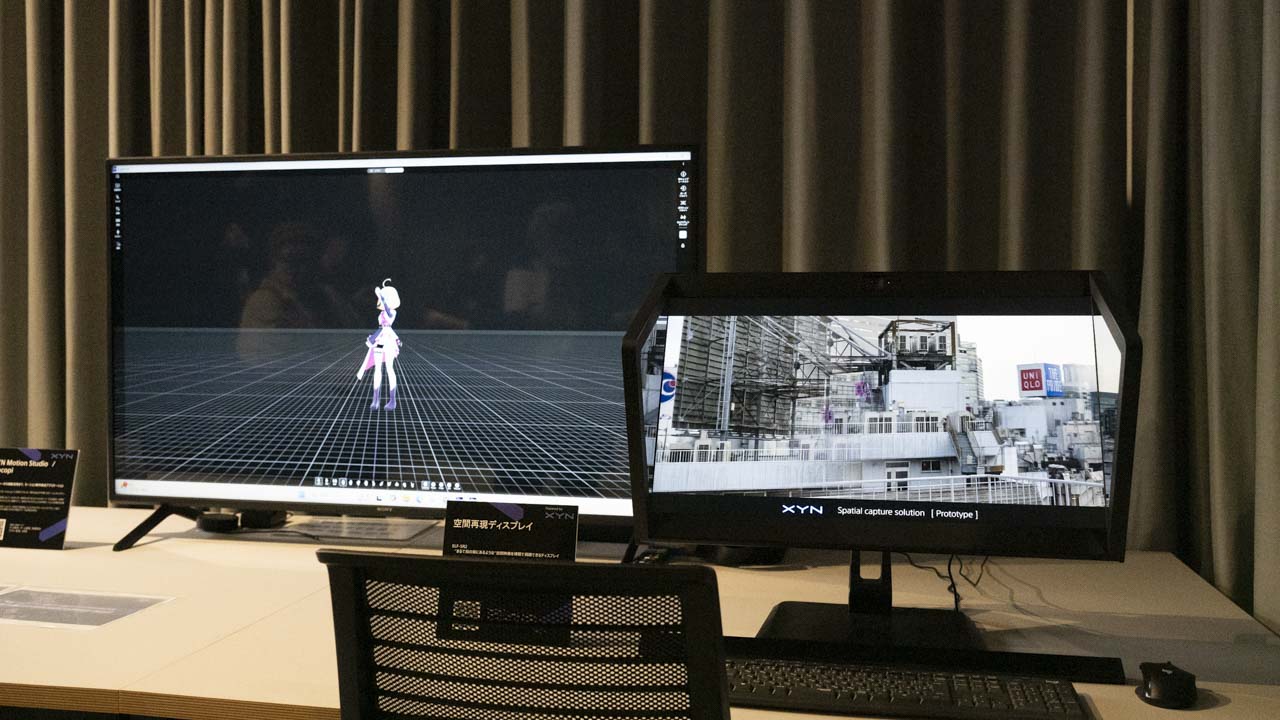
The “XYN” area, dedicated to supporting spatial content creation, was another highlight. Featuring spatial capture solutions and motion capture using the compact sensor “mocopi,” it’s a testing ground for next-generation technologies. The demonstration of the Sony Spatial Reality Display (ELF-SR2) 75-inch model was particularly impressive, offering a distinctly different experience from traditional 2D monitors through stereoscopic and parallax control. This showcased the concrete potential of spatial content creation and its verification environment.

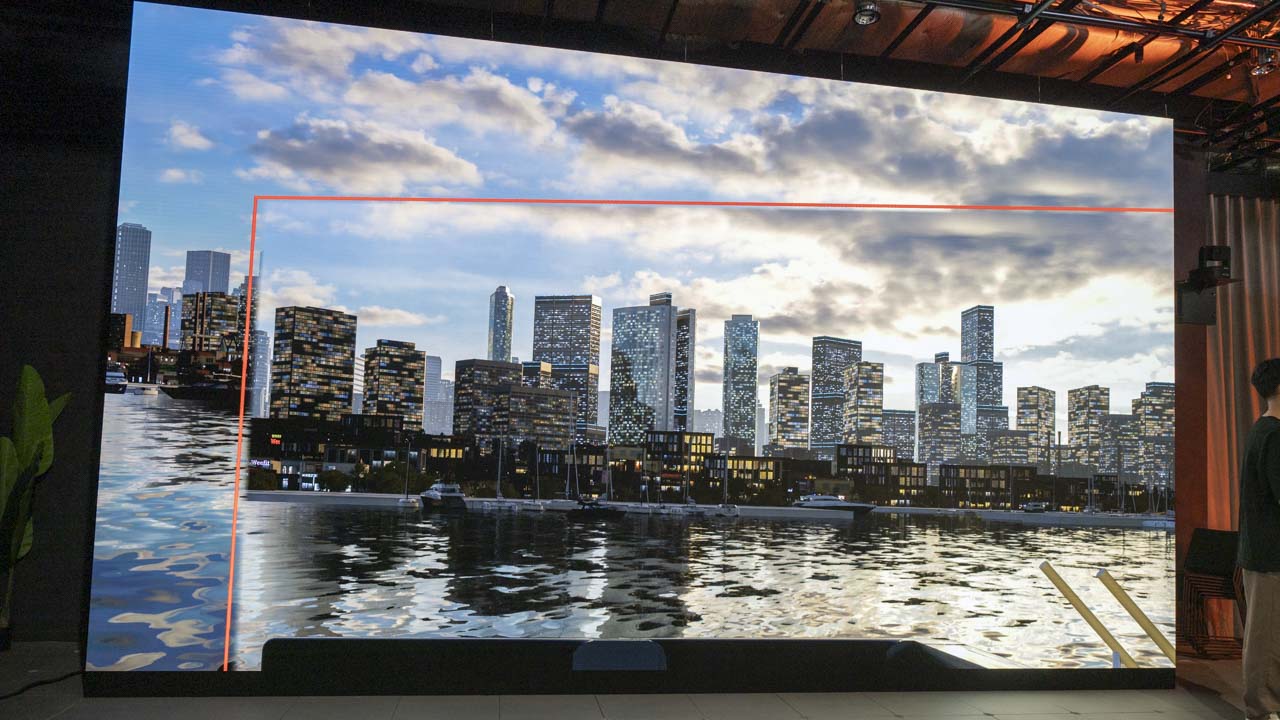
The VP stage features “Crystal LED VERONA,” distinguished by its special surface treatment that minimizes flare and delivers high contrast. Careful consideration was given to the reproduction of blacks and reflection control, which are crucial for lighting in shooting. The shooting system includes the “VENICE” camera, along with a multi-camera configuration of “HDC-5500” to support flexible operation.
Synchronizing camera movement with CG is enabled by the newly introduced camera tracking system “OCELLUS.” This markerless technology simplifies shooting in outdoor environments and confined spaces like car interiors. By adopting a markerless system, setup constraints are reduced, and stable operation is ensured even in dark environments through infrared sensing.

The adjacent shooting studio was also a professional space, encapsulating the essence of film production. A wide range of workflows, including industry-standard lenses from other manufacturers, have been established, allowing creators to shoot high-end productions with just their skills.
The meticulously crafted sets, built from scratch, ranged from a pop, mid-century modern space to a living area where lighting is critical. The reproduction of texture, from the difference between pottery and white walls to the “distressing” of the walls by a professional art director, was precisely calculated. The ability to instantly switch lighting patterns streamlines verification and repetitive tasks.

