
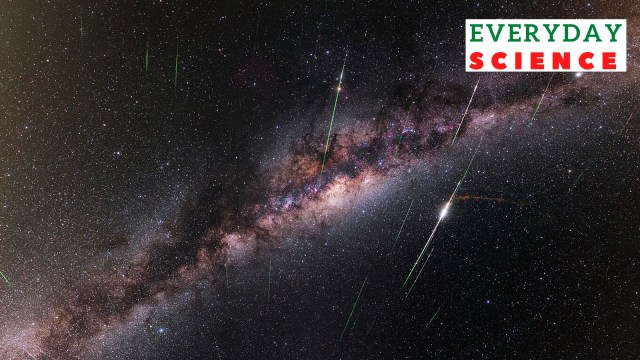
NASA has announced a series of notable astronomical events for April and May 2026, offering skywatchers multiple opportunities to observe celestial phenomena.
The space agency confirmed that comet C/2025 R3 will be visible with binoculars or telescopes, reaching its closest approach to Earth on April 27 at approximately 44 million miles (70.8 million kilometers) away. The comet will have a magnitude of +8, requiring optical aid for viewing in the constellations of Pegasus and Pisces.
The Lyrid meteor shower is expected to peak between April 21 and 22, originating from debris of comet Thatcher. Observers should look toward the east near the star Vega during the pre-dawn hours for optimal viewing, with rates potentially reaching 10 to 20 meteors per hour under dark skies.
The Eta Aquarid meteor shower, associated with comet Halley, will be active from April 20 through May 21, peaking during the early May period. These meteors are known for their high speed, traveling at about 40.7 miles per second (65.4 kilometers per second) into Earth’s atmosphere. Under dark skies, observers may spot about 10 meteors per hour in the Northern Hemisphere, while the Southern Hemisphere offers better viewing conditions with higher hourly rates.
From April 20 to 26, both the Lyrid and Eta Aquarid meteor showers will be active simultaneously, creating a unique opportunity for skywatchers. During this overlapping period, observers in areas with minimal light pollution could potentially see enhanced meteor activity, though specific combined rates were not detailed in the official sources.
NASA recommends viewing from locations away from artificial light with an unobstructed view of the horizon. Observers should allow their eyes about 30 minutes to adapt to the darkness for the best experience.
These events highlight ongoing public interest in astronomy and space observation, with multiple celestial phenomena occurring within a short timeframe in spring 2026.
