
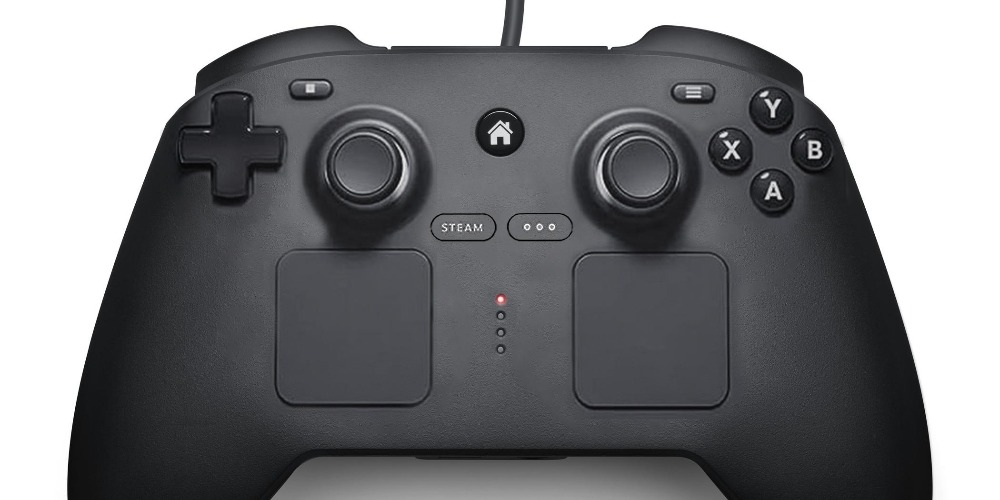
Valve is set to revive its ambitious foray into gaming hardware with the launch of a new Steam Controller on May 1, 2026, nearly a decade after its first attempt to redefine couch gaming. The company confirmed the release date in a recent announcement, though the device will skip official availability in several markets, including Norway—a familiar limitation for Valve’s hardware ventures.
The upcoming controller, which retains the same name as its 2015 predecessor, is priced at €99 (approximately $107 before taxes or regional fees). Designed to bridge the gap between traditional gamepads and the precision of mouse-and-keyboard setups, the new Steam Controller aims to offer a more intuitive experience while preserving the customization Valve’s ecosystem is known for.
In a departure from the original’s unconventional layout, the refreshed model adopts a more conventional dual-analog-stick design, supplemented by the signature touch-sensitive trackpads and additional rear buttons. According to Valve developers Lawrence Yang and Jeremy Slocum, the goal was to create a controller that feels “more familiar” to mainstream gamers while retaining the ability to emulate mouse and keyboard inputs—a feature particularly useful for titles not optimized for controllers. Configurations created for the Steam Deck will also transfer seamlessly to the new controller, ensuring continuity for users invested in Valve’s hardware ecosystem.
The timing of the launch underscores the ongoing challenges in the tech supply chain. Valve has delayed other high-profile projects, including its next-generation Steam Machine and the Steam Frame VR headset, due to a global shortage of memory chips. Yang joked with Kotaku that the controller’s lack of reliance on RAM or storage allowed it to sidestep those delays, quipping, “It’s the one piece of hardware we could actually finish on time.”
Durability and user customization are central to Valve’s design philosophy for the new controller. In partnership with iFixit, the company will offer replacement parts and it plans to release 3D schematics to enable users to print their own accessories or modifications. Among the more playful features is a “ping” function, which triggers an audible ringtone—reminiscent of an old landline phone—if the controller is misplaced between couch cushions.
The device’s regional rollout will mirror Valve’s previous hardware strategies, with no official launch planned for Norway or other select markets. This approach aligns with the company’s handling of the original Steam Controller and the Steam Deck, which were similarly limited in availability. Early listings for the new controller have already surfaced on Komodo Station, Valve’s official hardware store for Japan, South Korea, Taiwan, and Hong Kong, where We see marked as “Coming Soon.”
Valve’s return to the controller space reflects its broader ambition to shape the future of PC gaming, even as it navigates supply chain constraints and market fragmentation. For gamers, the new Steam Controller offers a compelling blend of familiarity and innovation—a rare combination in an industry often divided between rigid tradition and experimental design. Whether it will achieve the mainstream adoption its predecessor lacked remains an open question, but its arrival signals Valve’s unwillingness to abandon its vision for a more versatile gaming experience.
See full coverage on Google News
