
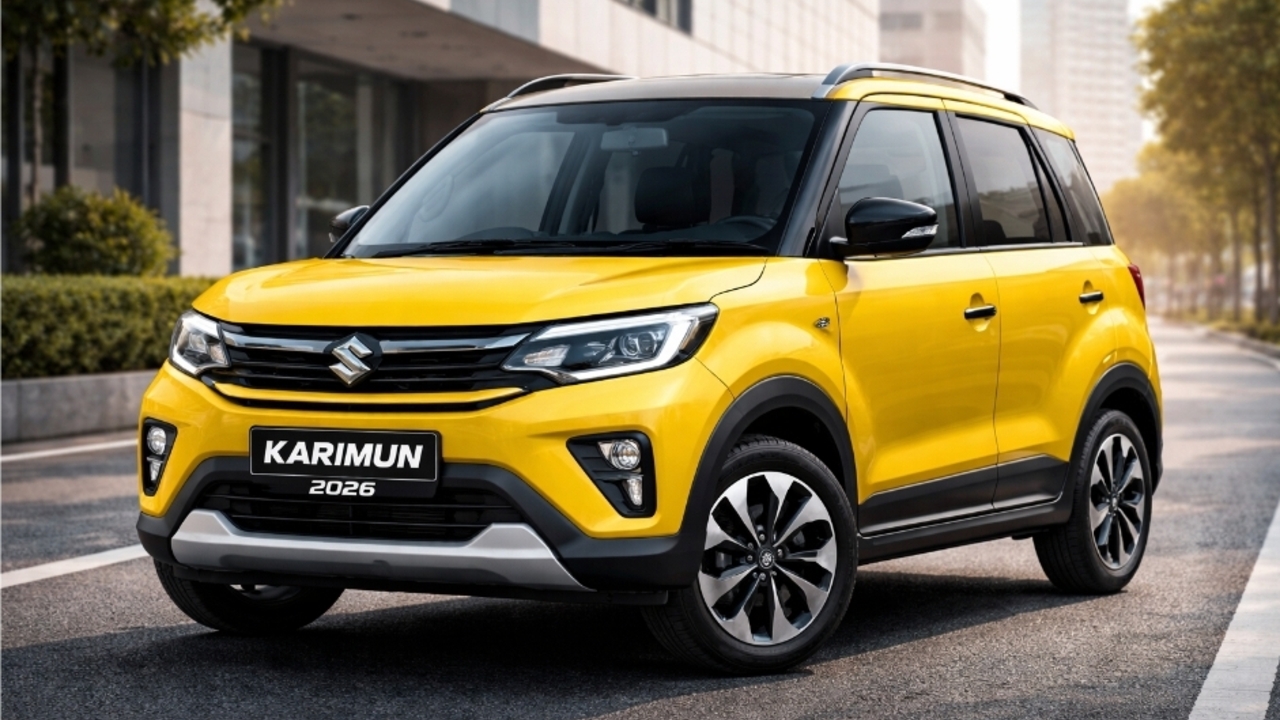
Suzuki Motor Corporation (TYO: 9229) has officially launched the 2026 Suzuki Karimun (Wagon R) in the Indonesian market, deploying a strategic “mild hybrid” approach to capture the budget-conscious urban commuter segment. The move represents a calculated pivot by PT Suzuki Indomobil Sales (SIS) to maintain sales volume by offering a pragmatic alternative to full electrification in a region where charging infrastructure remains limited.
By focusing on hybrid technology rather than Battery Electric Vehicles (BEVs), Suzuki is effectively hedging against the volatility of lithium prices and the sluggish rollout of power grids across Sumatra and Java. While the Indonesian government continues to promote EV adoption through subsidies, the practical utility of BEVs remains concentrated in Tier-1 hubs, leaving a significant gap in the market for commuters in cities such as Banyuasin or Palembang. This strategic positioning allows Suzuki to minimize “range anxiety” for its customers while keeping capital expenditure low.
The 2026 Karimun is designed to disrupt the Low Cost Green Car (LCGC) segment, placing direct pressure on the margins of competitors such as Daihatsu and Toyota (NYSE: TM). The vehicle’s value proposition centers on the Total Cost of Ownership (TCO), aligning with rising pressures on fuel subsidies in Indonesia by offering “fuel-sipping” technology to protect consumers from future petrol price hikes.
From an engineering standpoint, Suzuki has evolved the “Si Kotak” (The Box) design into a more sophisticated urban tool. The 2026 model transitions from the previous K10B engine to a new 1.2L K-Series powertrain. This system is powered by Smart Hybrid Vehicle by Suzuki (SHVS) technology, which provides a measurable increase in kilometers per liter (KPL), with some reports indicating fuel consumption as efficient as 22 km/L.
Pricing for the 2026 Karimun is tiered to attract various segments of the urban demographic. While some entry-level estimates place the car in the Rp130 million to Rp150 million range, official On The Road (OTR) Jakarta pricing data from March 2026 reveals a more detailed structure:
- Karimun GA (Manual): Rp182,500,000
- Karimun GL (Manual/AGS): Rp195,000,000
- Karimun GX Hybrid (AGS): Rp210,000,000
This pricing strategy underscores Suzuki’s intent to balance affordability with modern efficiency. By integrating a highly fuel-efficient city car configuration, Suzuki aims to maintain its dominance in the budget sector while competitors pursue more expensive BEV transitions. The evolution of the two-generation evolution of the “Box” demonstrates a commitment to pragmatism over purely aspirational technology.
As the modernized and stylish 2026 Karimun enters the fray, it is positioned not just as a vehicle, but as a strategic hedge against the infrastructure gaps and economic volatility of the current automotive transition in Southeast Asia.
The launch of the 2026 Suzuki Karimun underscores the company’s focus on delivering measurable efficiency and affordability to the entry-level daily commuter segment.
