
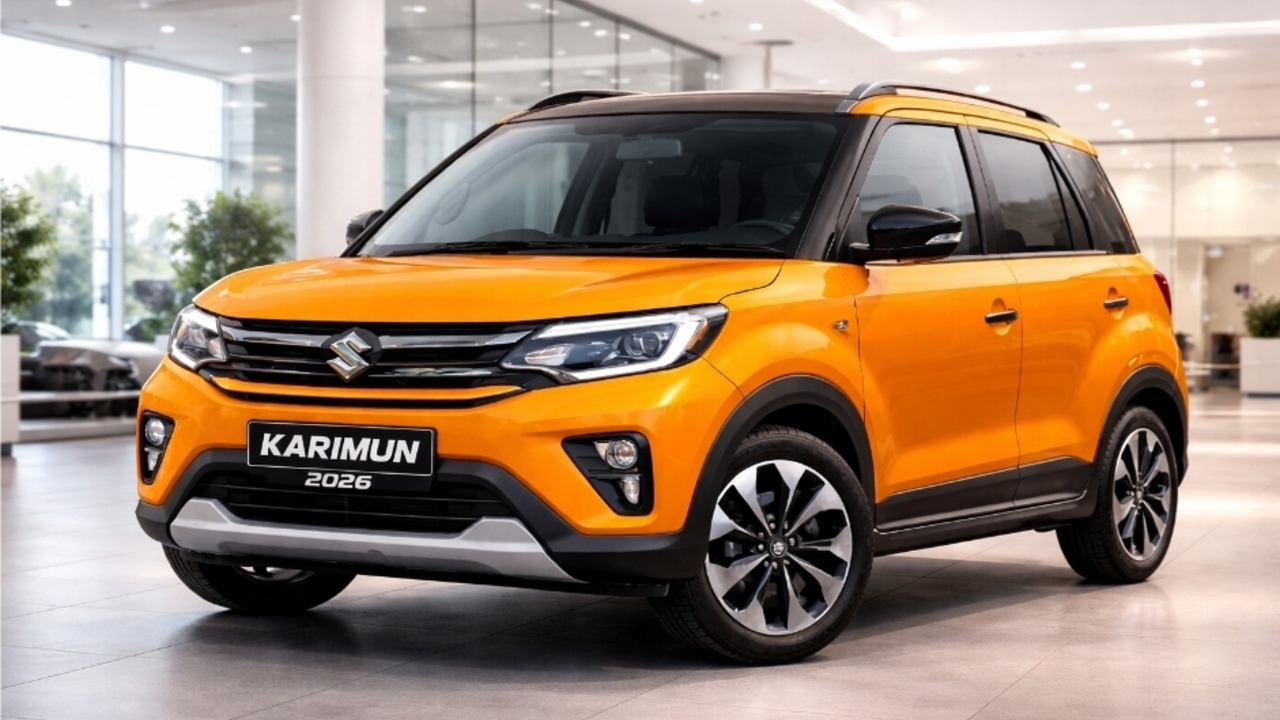
Suzuki is reportedly preparing to revitalize its presence in the compact city car segment with the anticipated launch of the 2026 Suzuki Karimun. Positioned as a highly efficient solution for urban mobility, the upcoming model aims to challenge the current dominance of Low Cost Green Cars (LCGC) by blending modern styling with superior fuel economy.
Strategic Market Positioning and Pricing
Market leaks suggest that the 2026 Karimun will enter the competitive landscape with a pricing strategy designed to attract budget-conscious commuters. Reports indicate a starting price point in the range of Rp130 million, while other estimates suggest the model could be positioned around Rp150 million. This pricing strategy underscores Suzuki’s intent to capture the entry-level market by offering a balance of affordability and updated technology.

The move reflects a broader industry trend where manufacturers are prioritizing “pocket-friendly” efficiency to meet the demands of urban drivers facing rising operational costs.
Design Evolution and Technical Specifications
The 2026 iteration is described as a “reincarnation” of the classic boxy silhouette that defined previous generations. This evolution focuses on a more stylish and modern aesthetic without sacrificing the utility of its signature compact frame. According to early reports, the vehicle will feature an upgraded powertrain designed specifically for maximum fuel efficiency, reinforcing its reputation as a “fuel-saving king.”
Beyond its exterior updates, the 2026 model is expected to be more sophisticated than its predecessors, integrating advanced features to enhance the daily driving experience in congested city environments.
Impact on the Urban Mobility Segment
By focusing on “agility in the city” and extreme fuel economy, Suzuki is targeting a specific niche of daily commuters who require a reliable, low-maintenance vehicle for short-distance travel. The introduction of the 2026 Karimun—potentially linked to the global Suzuki Wagon R platform—could shift the competitive dynamics of the LCGC market, forcing rivals to reconsider their efficiency and pricing benchmarks.
The focus on a “modern and stylish” appearance suggests that Suzuki is no longer viewing the city car purely as a utility tool, but as a lifestyle product for the modern urbanite.
