
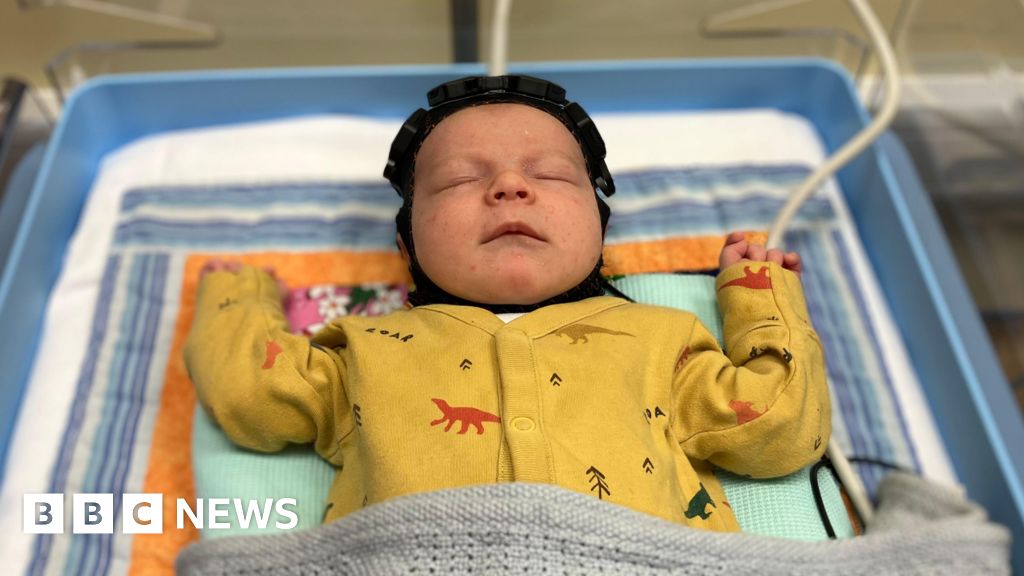
New ‘Swimming Cap’ Technology Offers Breakthrough in Newborn Brain Monitoring
Researchers in Cambridge have developed a novel “swimming cap” utilizing light and ultrasound to provide a more comprehensive assessment of brain function in newborns, potentially accelerating diagnosis and care for conditions like cerebral palsy and epilepsy.
The device, trialed at the Rosie Maternity Hospital, combines high-density diffuse optical tomography – which monitors oxygen changes on the brain’s surface – with functional ultrasound to image small blood vessels deep within the brain. Unlike traditional methods, this technology is portable, allowing for frequent monitoring at the infant’s bedside. Consultant neurosurgeon Dr. Alexis Joannides explained the limitations of current practices, stating, “MRI has limitations for two reasons: one is the cost and availability of scan slots, the other is that you have to take the baby to a noisy scanner… It means, realistically, you can’t perform a series of scans.” Early detection of brain injuries is crucial, as they are a major cause of lifelong disability, and the NHS is currently implementing a program to reduce brain injury during childbirth.
The Fusion study, as it’s known, aims to identify infants at higher risk of brain damage earlier, enabling quicker intervention and potentially improving long-term outcomes. Researchers believe the technology could eventually be used as a screening tool for all newborns. “Understanding brain activity patterns in both term and preterm infants can help us identify those most vulnerable to injury at an early stage,” said Prof Topun Austin, a consultant neonatologist and director of the Cambridge University Hospital’s Evelyn Perinatal Imaging Centre. Parents like Stani Georgieva and Thomas Starnes, whose son Theo is participating in the trial, expressed enthusiasm for the research, hoping it will benefit future generations. You can learn more about Action Cerebral Palsy and their work supporting families affected by these conditions.
Researchers are optimistic that, with continued funding and development, the device could be available for wider evaluation within three to five years and potentially integrated into routine newborn care within the decade. Dr. Joannides, also co-director of the NIHR HealthTech Research Centre in Brain Injury, stated that the team hopes to have a product ready for broader evaluation within three to five years, and that it could eventually be used as a screening tool.
