
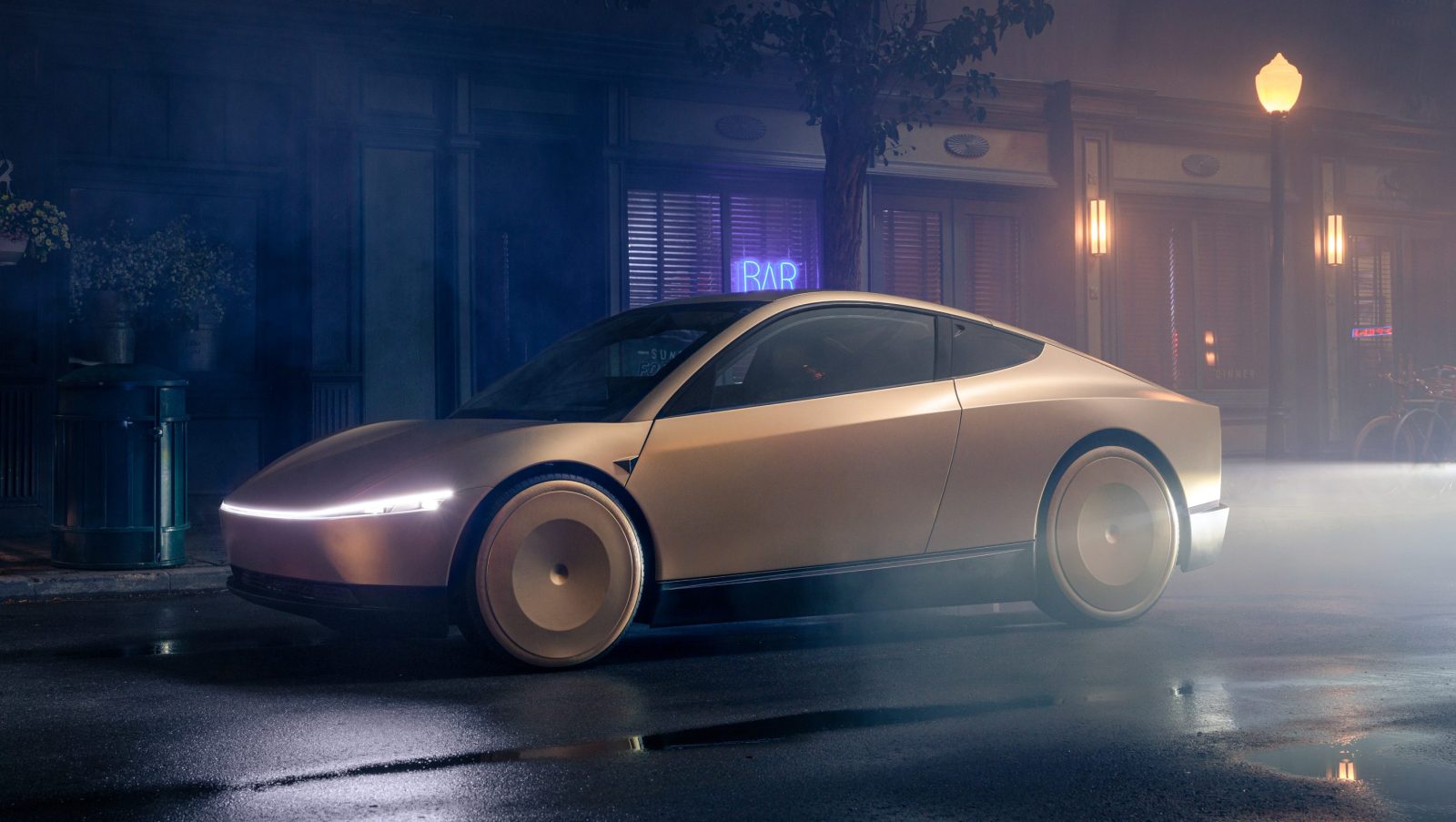
Tesla May Add Steering Wheel and Pedals to Cybercab Amid Autonomous Driving Delays
Tesla chairwoman Robin Denholm indicated today that the automaker is prepared to redesign its upcoming Cybercab vehicle to include a steering wheel and pedals if necessary, signaling a potential shift in strategy as fully autonomous driving capabilities remain elusive.
The Cybercab, unveiled last year, was initially presented as a two-seater electric vehicle designed exclusively for a future robotaxi fleet, notably lacking traditional controls like a steering wheel or pedals. CEO Elon Musk had previously stated a firm commitment to a fully autonomous design, believing other, cheaper vehicle models wouldn’t be needed with the advent of self-driving technology. However, progress toward unsupervised autonomous driving has faced repeated delays, impacting the original vision for the Cybercab.
During an interview with Bloomberg, Denholm stated, “If we have to have a steering wheel, it can have a steering wheel and pedals.” This admission comes as Tesla prepares to begin Cybercab production at Gigafactory Texas near Austin in 2026, with plans for the vehicle to drive significant production growth. Current federal regulations limit manufacturers to 2,500 self-driving vehicles without steering wheels or pedals annually, a factor that could constrain Tesla’s rollout plans. The National Highway Traffic Safety Administration provides further details on automated driving.
The need for a steering wheel isn’t currently driven by regulators, but by Tesla’s technological limitations; the current “Full Self-Driving (Supervised)” feature still requires active driver monitoring. This adjustment could allow Tesla to deliver the Cybercab in larger volumes, positioning it as a more affordable alternative to the Model Y for its Robotaxi service, as detailed in Tesla’s Robotaxi overview.
Tesla officials have indicated they will continue to assess the regulatory landscape and technological advancements to determine the final Cybercab configuration.
