
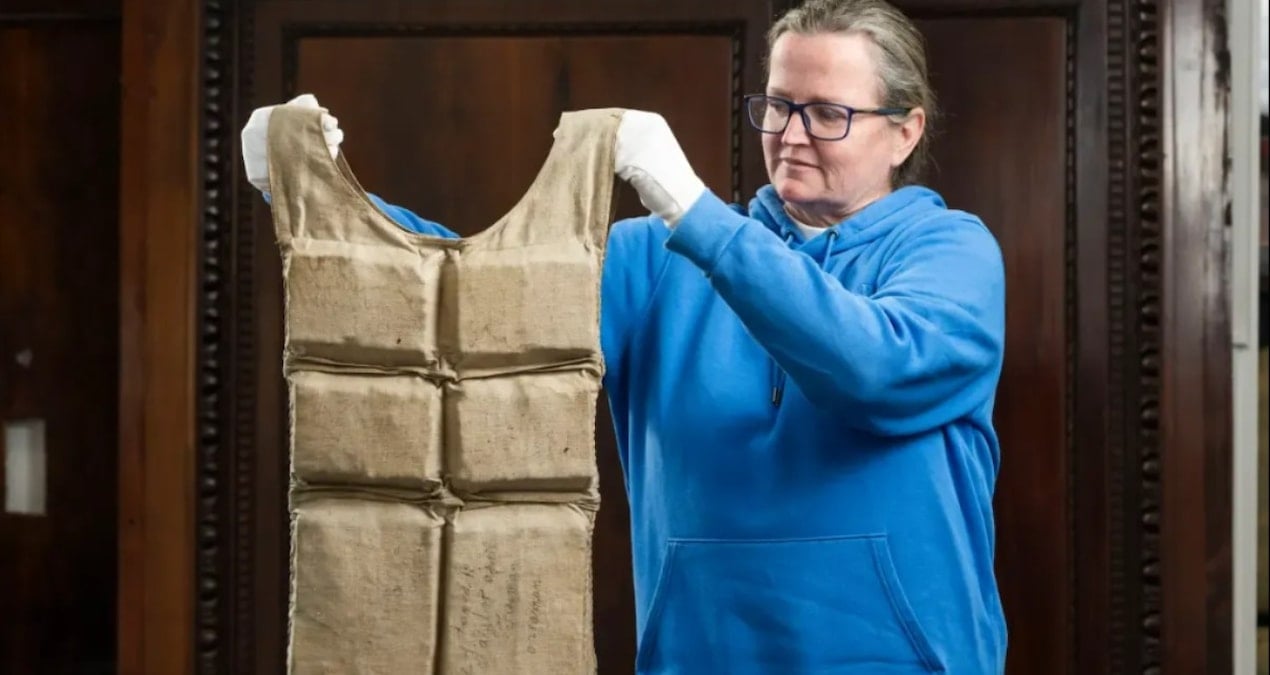
One of the few surviving life jackets from the Titanic disaster has sold at auction for $700,000, drawing international attention to a rare artifact from one of history’s most infamous maritime tragedies.
The life jacket, believed to have belonged to a passenger who survived the sinking of the RMS Titanic in 1912, was offered in a recent auction after more than a century in private hands. Its emergence on the market has sparked renewed interest in personal relics from the ship, which struck an iceberg during its maiden voyage and sank in the North Atlantic, resulting in the loss of over 1,500 lives.
Auction house officials confirmed the item’s authenticity, citing documentation and provenance that trace it back to the immediate aftermath of the disaster. The life jacket, made of cork and canvas, remains in remarkably preserved condition despite spending over 110 years out of public view.
Experts note that artifacts directly tied to individual survivors are exceptionally rare, as most personal effects were lost with the ship or never recovered. This particular life jacket stands out not only for its survival but also for the visible markings and wear consistent with leverage during the evacuation.
The sale price reflects both the historical significance of the Titanic and the growing demand among collectors for authenticated, emotionally resonant pieces from the early 20th century. Items connected to the disaster continue to surface periodically, often generating intense bidding wars when they appear in public sales.
While the identity of the original owner has not been publicly disclosed, researchers suggest the jacket may have been worn during the chaotic lifeboat launches on the night of April 14–15, 1912. Survivors’ accounts describe the frigid conditions and desperate scramble for buoyancy aids as the ship tilted and ultimately broke apart.
The auction highlights how material objects from the Titanic continue to serve as tangible links to the human stories behind the tragedy. More than a century later, such relics remain powerful reminders of both the vulnerability and resilience displayed during one of the peacetime era’s deadliest maritime disasters.
