
A two-year-old girl in the United Kingdom has died after ingesting a button battery, a tragedy highlighting the often-overlooked dangers these common household items pose to young children. The incident, involving Harper-Lee Pansoft of Stoke-on-Trent, underscores how quickly a seemingly minor ingestion can escalate into a life-threatening emergency. Medical experts warn that button batteries can cause severe internal burns and bleeding within hours of being swallowed, demanding immediate attention and raising concerns about product safety and parental awareness.
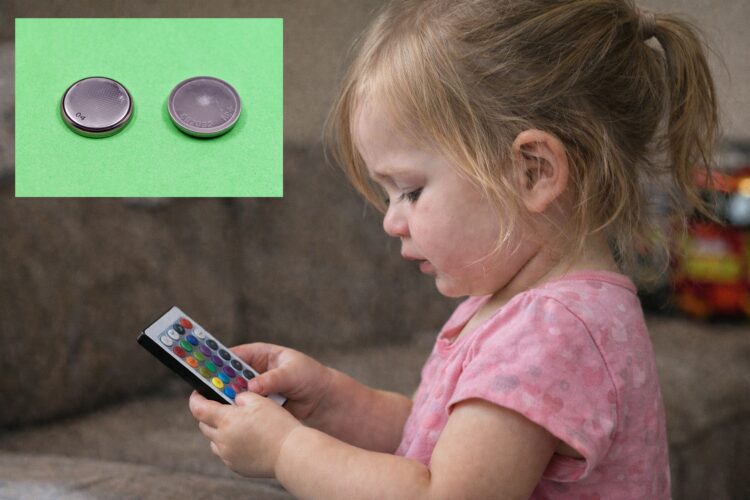
A two-year-old girl in the United Kingdom died after swallowing a button battery found inside a television remote control, highlighting the potentially fatal risks these small power sources pose to young children. The tragedy underscores the importance of awareness and preventative measures to protect children from accidental ingestion.
According to reports from The Sun, Stacey Nicklin, of Stoke-on-Trent, Staffordshire, initially believed her daughter, Harper-Lee Pansoft, was experiencing a recurrence of tonsillitis when the toddler began crying and clutching her mouth. Harper-Lee had a history of frequent throat infections, leading her mother to initially dismiss the symptoms as familiar.
However, just hours later, Harper-Lee began coughing up bright red blood. She was immediately taken to Royal Stoke University Hospital, where an endoscopy revealed a button battery lodged in her esophagus. Doctors determined she needed to be urgently transferred to Birmingham Children’s Hospital, but her chances of survival during transport were considered extremely low. Sadly, Harper-Lee died shortly after.
Medical professionals explained that the battery reacted with fluids in her body, creating a highly alkaline substance that burned her esophagus and surrounding blood vessels, leading to massive internal bleeding. This chemical reaction occurs even without a direct leak of battery chemicals, as contact with bodily fluids creates an electrical circuit. The cause of death was determined to be rapid blood loss due to damage to internal blood vessels.
Following the devastating loss, Nicklin has become an advocate for raising awareness about the dangers of button batteries. “I will regret for the rest of my life thinking my daughter’s cries were just a tonsillitis flare-up,” she said. “I want to raise awareness so this doesn’t happen to anyone else.”
Button Batteries Can Cause Tissue Damage Within 15 Minutes of Ingestion
When a button battery becomes lodged in a child’s esophagus, severe damage, including tissue necrosis and perforation, can occur within hours, making immediate medical attention critical. The batteries create an electrical current when they come into contact with saliva or mucus, generating a strong alkaline substance that rapidly corrodes and chemically burns the esophageal lining. Research indicates that tissue damage can begin within 15 minutes of contact, and can progress to severe tissue death and perforation within two hours.
The esophagus is located near the heart, major blood vessels, and trachea, meaning that significant damage can lead to life-threatening complications. A perforation of the esophageal wall can cause an esophagotracheal fistula, leading to aspiration and severe pneumonia, as well as respiratory failure. If the damage extends to the aorta, it can cause massive bleeding and shock, potentially leading to rapid death.
Symptoms of button battery ingestion can include bright red vomiting, excessive drooling, coughing, nausea, abdominal pain, lethargy, loss of appetite, refusal to eat solid foods, and clutching at the neck or stomach. As damage progresses, symptoms can escalate to include bright red vomiting, sudden difficulty breathing, chest pain, rapid paleness, and shock.
The medical community classifies button battery ingestion as a “top-tier pediatric emergency.” Batteries with a diameter of 20mm or greater, particularly lithium batteries, are considered especially dangerous, as they have a higher voltage and cause faster, more severe chemical reactions, significantly increasing the risk of serious complications.
If a button battery ingestion is suspected, caregivers should immediately seek emergency medical attention and clearly inform medical personnel of the possibility. Giving the child food or water, or inducing vomiting, can further irritate the damaged esophageal lining and increase the risk of bleeding and perforation.
If possible, bringing the packaging or the device the battery came from can help medical professionals determine the battery’s size, voltage, and composition, aiding in treatment.
