
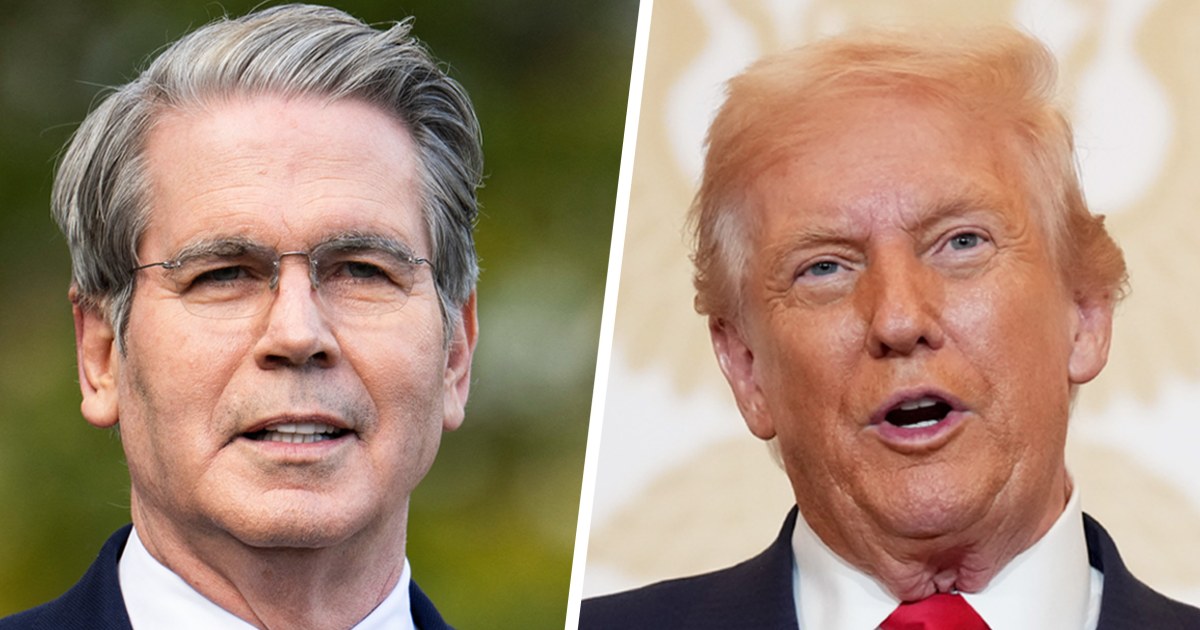
Treasury Department Report Contradicts White House Claims on Inflation
The Treasury Department released a report today stating that inflation remained above the Federal Reserve’s 2 percent target in the third quarter, directly contradicting recent assertions by President Donald Trump and administration officials that “there is no inflation.”
Speaking on CBS News’ “60 Minutes” yesterday, President Trump stated, “We have no inflation, we have no inflation,” and claimed to have “already taken care of” the issue, calling 2% “the perfect inflation.” However, the Bureau of Labor Statistics reported an annual inflation rate of 3% in September. The Treasury’s “Economy Statement,” prepared for the Borrowing Advisory Committee – comprised of bond market executives from firms like Citigroup, Pimco, JPMorgan, and BlackRock – noted moderate increases in food prices, driven in part by record beef costs due to lower herd counts. Rising inflation impacts household budgets and purchasing power, particularly for essential goods.
The report also highlighted a divergence in consumer spending, with lower-income individuals experiencing a more significant slowdown than their middle and upper-income counterparts. McDonald’s CEO Chris Kempczinski told CNBC in September that traffic from lower-income consumers was “down double digits,” prompting the company to respond with value offerings. While overall economic growth “solidified” in the third quarter, the Treasury acknowledged that wage growth, at 4.1% as of August, only slightly outpaced inflation. Concerns about the labor market are also growing; the ADP reported a loss of 32,000 private sector jobs in September, and the government shutdown has delayed the release of official employment data. You can find more information about the Consumer Price Index on the Bureau of Labor Statistics website.
The Treasury Department also pointed to potential disruptions from artificial intelligence and the impact of population shifts, stating that employment growth is below levels seen earlier in the year. Officials indicated they would continue to monitor labor market developments and pursue “supply-side policies, deregulation, and other reforms” to “protect the American consumer.” The administration plans to closely monitor these developments and implement policies aimed at stabilizing the economy, as detailed in their Treasury Department reports.
