An ‘Eclipse Season’ Begins Today
Astronomers and skywatchers are preparing for a rare astronomical alignment as the August 'eclipse season' officially begins.
Where it stands
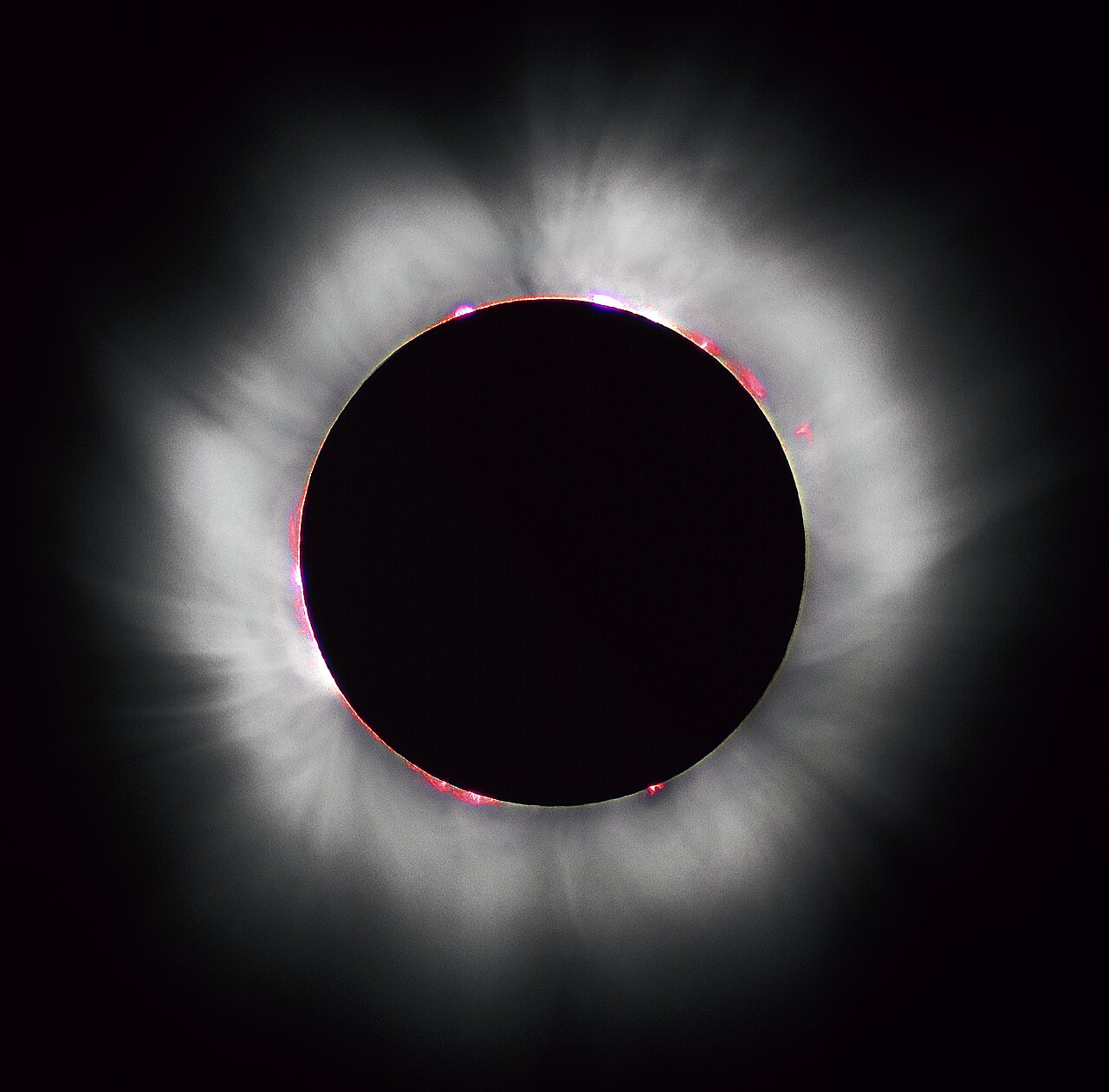
The term 'eclipse season' refers to a specific period during which Earth, the Moon, and the Sun align to produce consecutive solar and lunar eclipses. This window typically lasts for a few weeks, occurring when the Moon crosses the ecliptic—the apparent path of the Sun across the sky. The current cycle starting in late July will result in two distinct eclipses taking place within a two-week timeframe in August. Observers in the northern United States will experience a partial solar eclipse on August 12. Visibility varies by location, with coverage from Space Daily noting that obscuration will range from 3 percent in Detroit to 37 percent in Fairbanks. This particular alignment is also noted for its impact on the night sky, as it coincides with the peak of the Perseid meteor shower, potentially resulting in a moonless night.
Skywatchers across Europe are also positioned to view the celestial events. Yahoo reports that the timing of these alignments creates a rapid succession of eclipses. While the physical phenomena are global, local visibility is strictly dependent on geographic coordinates. Viewers in Illinois, Maine, and other specific regions are looking toward local experts and almanacs to determine if the path of the eclipse will cross their horizons. Despite the widespread public interest, not every location will experience the same level of coverage. Outlets including The Boston Globe and FOX Weather emphasize that while some regions will see significant celestial activity, others may see only minimal shifts in sunlight.
The specific degree of the sun's obscuration remains a point of logistical focus for those attempting to capture the event through specialized equipment. Future visibility remains the primary focus for the scientific community and amateur astronomers alike. August skywatching guides highlight that beyond the eclipses, the month will feature a planetary parade and the annual meteor shower. Detailed schedules for these events are currently circulating, though exact viewing conditions for specific neighborhoods are subject to the local weather patterns prevalent on the dates of the alignments.
Synthesized by headlinez.news from the headlines below under a strict no-invention contract. ✓ fact-checked: all claims supported by sources Updated 47d ago.
🌍 How it travelled
headlinez.news detected this story across 2 language editions of the world's news.
Detected by matching proper nouns and figures that survive translation. Times reflect when each edition's coverage was first indexed.
Answered
What is an eclipse season?
It is a period during which the Sun, Moon, and Earth align, allowing for the occurrence of multiple solar and lunar eclipses within a few weeks.
When is the next solar eclipse occurring?
A partial solar eclipse is scheduled for August 12, 2026.
Will the eclipse affect the Perseid meteor shower?
Yes, the alignment of the Moon during this period is expected to result in a moonless night during the peak of the Perseids.
Coverage (13)
- Minnesota Starwatch for August Brainerd Dispatch · 51d ago
- Ekadashi in August 2026: Complete Dates, Vrat Timings, Parana Time, Significance and Benefits The Economic Times · 51d ago
- Parts of the northern United States see only a shallow bite taken out of the Sun on August 12, from 3 percent in Detroit to 37 percent in Fairbanks — and the same alignment leaves the sky moonless for that night's Perseid peak Space Daily · 51d ago
- Skywatch 16 WNEP · 51d ago
- Table of celestial sites set out for all Austin Daily Herald · 51d ago
- August skywatching guide: From a planetary parade and eclipses to a meteor shower Yahoo · 51d ago
- Two eclipses are taking place in August. Here’s where you can view them. The Boston Globe · 51d ago
- A total solar eclipse is coming in August. Will Illinois see it? Peoria Journal Star · 51d ago
- August skywatching guide: From a planetary parade and eclipses to a meteor shower FOX Weather · 51d ago
- August Starwatch Fergus Falls Daily Journal · 51d ago
- What can Mainers expect during the Aug. 12 partial solar eclipse? A UMaine expert explains Daily Bulldog · 51d ago
- ‘Eclipse season’: Europe to see two eclipses in two weeks as Earth, Moon and Sun line up Yahoo · 51d ago
- An ‘Eclipse Season’ Begins Today Forbes · 51d ago
The coverage curve
How fast coverage is spreading — measured hourly from article rate × source diversity. How this works →
Related visual coverage
Automatically selected only when the subject entities match this story. Embeds remain hosted by their original platforms.
Top Things to See in August's Sky, Including a Total Solar Eclipse, the Perseids, and Lunar Eclipse
YouTube · The Secrets of the Universe
Topics
Related trends
New images of the sun show its surface in the finest detail yet
World's most powerful solar telescope reveals turbulent plasma whirlpools on the sun's surface for the first time.
'Crazy idea' succeeds: Scientists monitor space junk with radio telescopes
Researchers are successfully tracking orbital debris using radio telescopes, marking a shift in how small space objects are detected and monitored.
Giant Concentric Rings Discovered in The Atmosphere of Venus
Astronomers unexpectedly spot giant concentric rings in Venus's atmosphere, sparking fresh debate on the planet’s cloud dynamics
The 24-hour day is not fixed but slowly stretching, and in the dinosaurs' time it was shorter: the Moon's pull is gently braking Earth's spin, so a day back then ran about 23.5 hours, and far shorter deeper in the past
Earth’s days are slowly stretching—as the Moon drifts 3.8 cm yearly, a dinosaur-era day was only 23.5 hours.
Hubble shows star formation in Andromeda galaxy is winding down
Hubble data reveals Andromeda’s star‑birth rate has ebbed for 500 million years, signalling a middle‑age galaxy losing its newborn suns.
Betelgeuse, Betelgeuse! Astronomers capture clearest image yet of famous star's elusive companion
Astronomers have captured new, high-resolution imagery providing evidence that the star Betelgeuse possesses a companion.