'Crazy idea' succeeds: Scientists monitor space junk with radio telescopes
Researchers are successfully tracking orbital debris using radio telescopes, marking a shift in how small space objects are detected and monitored.
Quick answers
What object was detected by the researchers?
Scientists successfully measured a suitcase-sized piece of space wreckage.
How far away was the debris measured?
The piece of wreckage was measured from 36,000 kilometers away.
What technology was used for this monitoring?
The process involved using radio telescopes and live radar.
The brief
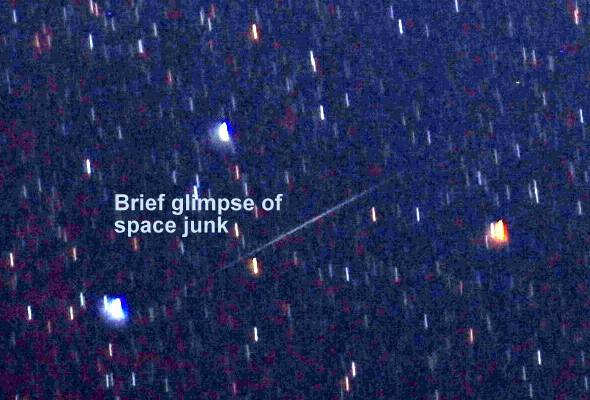
Space, Jodrell Bank, ZME Science, and Mid-Day report that radio telescopes are now being utilized to monitor orbital debris. Scientists successfully measured a suitcase-sized piece of wreckage from a distance of 36,000 kilometers.
This capability demonstrates a new application for existing radio technology in the identification and tracking of space junk. The Jodrell Bank observatory showcased live radar observations of satellites and debris to verify the technique.
While some outlets describe the initiative as a successful application of a formerly unconventional concept, the current reporting does not specify how this method will be integrated into existing global space traffic management systems or whether further tests are scheduled.
Synthesized by headlinez.news from the headlines below under a strict no-invention contract. ✓ fact-checked: all claims supported by sources Updated 49d ago.
Who reported it (6)
- Rising Number Of Rockets & Satellites Fuel Dangerous Rise in Space Junk & Debris Firstpost · 50d ago
- Scientists turn radio telescopes into space scanners EurekAlert! · 50d ago
- Jodrell Bank Showcases Live Radar on Satellites & Debris Mirage News · 50d ago
- Astronomers Measured a Suitcase-Sized Piece of Wreckage From a Staggering 36,000 Kilometers Away ZME Science · 50d ago
- Radio telescopes now being used to monitor space debris Mid-Day · 50d ago
- 'Crazy idea' succeeds: Scientists monitor space junk with radio telescopes Space · 50d ago
Momentum
How fast coverage is spreading — measured hourly from article rate × source diversity. How this works →
Related visual coverage
Automatically selected only when the subject entities match this story. Embeds remain hosted by their original platforms.
Mad Science Sunday! MST3K Marathon of Crazy Scientists & Weird Experiments | Volume IV
YouTube · MYSTERY SCIENCE THEATER 3000
Topics
Related trends
New images of the sun show its surface in the finest detail yet
World's most powerful solar telescope reveals turbulent plasma whirlpools on the sun's surface for the first time.
Giant Concentric Rings Discovered in The Atmosphere of Venus
Astronomers unexpectedly spot giant concentric rings in Venus's atmosphere, sparking fresh debate on the planet’s cloud dynamics
The 24-hour day is not fixed but slowly stretching, and in the dinosaurs' time it was shorter: the Moon's pull is gently braking Earth's spin, so a day back then ran about 23.5 hours, and far shorter deeper in the past
Earth’s days are slowly stretching—as the Moon drifts 3.8 cm yearly, a dinosaur-era day was only 23.5 hours.
Hubble shows star formation in Andromeda galaxy is winding down
Hubble data reveals Andromeda’s star‑birth rate has ebbed for 500 million years, signalling a middle‑age galaxy losing its newborn suns.
An ‘Eclipse Season’ Begins Today
Astronomers and skywatchers are preparing for a rare astronomical alignment as the August 'eclipse season' officially begins.
Betelgeuse, Betelgeuse! Astronomers capture clearest image yet of famous star's elusive companion
Astronomers have captured new, high-resolution imagery providing evidence that the star Betelgeuse possesses a companion.