Trump proposes new tariffs on China, Europe and other trade partners
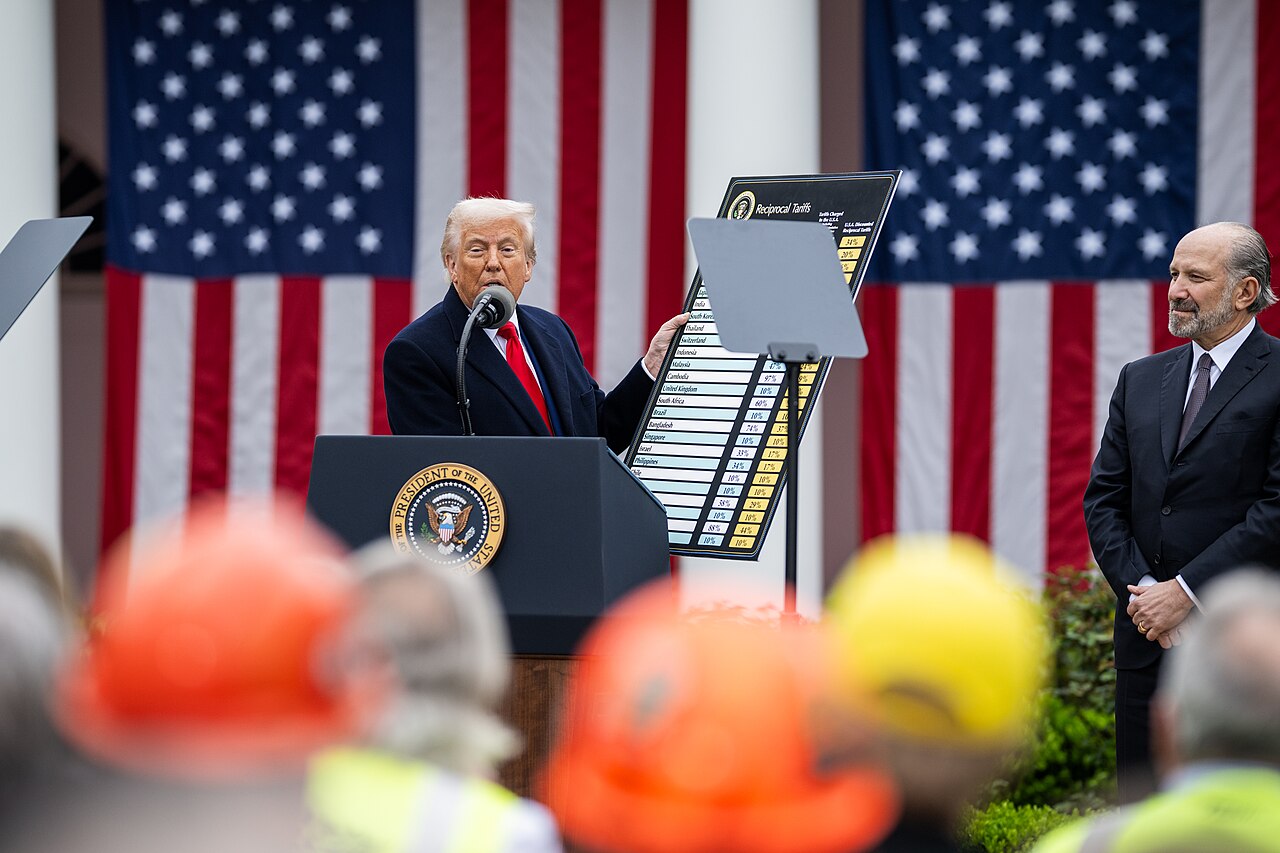
The Trump administration has proposed new tariffs on 14 trading partners, with China facing a 20% duty stacked on top of existing levies, in the latest attempt to rebuild a trade agenda twice cut down by the courts.
- Intelligence Anchor: Trump proposes new tariffs on China, Europe and other trade partners
- Core Takeaway: The Trump administration has proposed new tariffs on 14 trading partners, with China facing a 20% duty stacked on top of existing levies, in the latest attempt to rebuild a trade agenda twice cut down by the courts.
- Signal Velocity: 22 score across 7 independent media sources and 7 indexed articles.
The story so far
The Trump administration on Wednesday proposed new Section 301 tariffs on 14 U.S. trading partners, led by China, the European Union, Japan, India, South Korea, Taiwan, Vietnam, Thailand, Malaysia, Singapore, Indonesia, Cambodia, Bangladesh and Switzerland. The duties stem from an eight-month investigation by the Office of the U.S. Trade Representative into what Washington calls "structural excess capacity"—factory output, often subsidized or driven by industrial policy, that exceeds domestic demand and floods global markets with cheap goods.
China is the central target. It faces a proposed 20% excess-capacity duty layered on top of roughly 25% tariffs already in place from 2018 over forced technology transfers, bringing the combined rate to about 40% on affected goods. The rate is capped at 20% under a trade truce reached in Busan, South Korea, in October 2025, which expires January 10, 2027. About $30 billion in Chinese imports under consideration for cuts through a bilateral process known as the "Board of Trade" would be exempt. Vietnam also faces a 20% rate, though officials said a higher figure was justified. Rates for the EU, Japan and South Korea are not expected to exceed 15%, consistent with trade deals those partners negotiated with Washington.
For the other 13 economies, the new duties will not stack on the 10% to 12.5% forced-labor tariffs imposed on roughly 60 partners in July. Energy products such as oil and gas, certain semiconductors, medicines and foodstuffs that cannot be produced in the U.S. are expected to be exempt. The tariffs cannot take effect before January at the earliest, pending a public notice-and-comment period and hearings, including a scheduled session on January 25.
The legal context is crucial. The Supreme Court ruled in February that the president cannot use the International Emergency Economic Powers Act to impose sweeping tariffs, striking down the April 2025 "Liberation Day" levies. A federal trade court then ruled in May that a temporary 10% global tariff imposed under Section 122 of the Trade Act of 1974 exceeded presidential authority. Section 301, the statute behind Trump's first-term China tariffs and the basis for this new proposal, requires formal investigation and public process, making it slower but legally sturdier ground.
Trading partners have pushed back sharply. China's foreign ministry said the so-called overcapacity "does not really exist," while a spokesperson later called it "a false issue" used for political manipulation. The European Commission "strongly reject[s] the premise that Europe is a source of structural overcapacity," noting that Europe is itself exposed to global overcapacity and that any U.S. measure must respect a 15% ceiling agreed with President Ursula von der Leyen in July 2025.
The politics have shifted since Trump's first tariff blitz. Democrats won control of Congress in November's midterm elections, partly by campaigning on cost-of-living pressures worsened by tariffs. The Yale Budget Lab estimates current tariffs add about $900 annually per U.S. household, and consumer prices rose at a 3.8% annualized rate in October, the highest since May and well above the Federal Reserve's 2% target. Post-election polling shows little appetite for higher tariffs even among Trump supporters, though Congress would need to pass new laws to restrict presidential trade authority, and those would face a near-certain veto.
The proposal lands days before the G20 summit in Miami and follows a trilateral meeting in Shenzhen between Trump, Chinese President Xi Jinping and Russian President Vladimir Putin at the APEC summit. Trade talks with Canada collapsed in August, triggering 50% tariffs on roughly $20 billion in Canadian goods before a targeted easing ahead of the midterms. Small businesses that challenged earlier tariffs are now contesting the Section 301 duties at the U.S. Court of International Trade.
The evidence points to one conclusion: this is not a new trade war so much as a reconstruction project. After losing its emergency-powers authority and its backup global tariff, the administration is rebuilding its import-tax architecture country by country, using a slower legal path designed to survive court challenges. Whether it holds depends on hearings in January, the fate of the Busan truce, and whether trading partners retaliate before the duties ever take effect.
Synthesized by headlinez.news from the headlines below under a strict no-invention contract. ✓ fact-checked: all claims supported by sources Updated 54m ago.
Who reported it (7)
- Trump proposes new tariffs on China, European Union msn.com · 1h ago
- Trump Wants More Tariffs. How Are They Affecting the Economy? Bloomberg · 1h ago
- U.S. proposes new tariffs on 14 trading partners, including China and the EU CNBC · 1h ago
- World reacts to Trump’s new tariffs as US stocks tumble Al Jazeera · 1h ago
- EU ‘strongly rejects’ rationale behind Trump’s tariffs The Hill · 1h ago
- Trump Administration Unveils New Tariffs for China, EU and More, Citing Unfair Practices The New York Times · 1h ago
- Trump proposes new tariffs on China, Europe and other trade partners The Washington Post · 1h ago
The obvious questions
Which countries are affected by the new tariffs?
China, the European Union, Japan, India, South Korea, Taiwan, Vietnam, Thailand, Malaysia, Singapore, Indonesia, Cambodia, Bangladesh and Switzerland. Mexico and Norway were investigated but spared for now.
When could the tariffs take effect?
Not before January at the earliest, after a public notice-and-comment period and hearings, including one scheduled for January 25.
Will the new tariffs add to existing duties?
China faces a 20% duty stacked on top of roughly 25% in existing 2018 tariffs. For the other 13 partners, the new duties will not stack on the 10% to 12.5% forced-labor tariffs imposed in July.
What is the legal basis for these tariffs?
Section 301 of the Trade Act of 1974, following an eight-month USTR investigation. The administration turned to this statute after the Supreme Court struck down emergency-powers tariffs in February and a trade court voided a backup global tariff in May.
Momentum
How fast coverage is spreading — measured hourly from article rate × source diversity. How this works →
Related visual coverage
Automatically selected only when the subject entities match this story. Embeds remain hosted by their original platforms.
Trump says if Nvidia board didn't reinstate Jensen Huang, he could have relocated to China
YouTube · CNBC Television
Topics
Related trends
China’s Trade Surplus Passes $1 Trillion at Record Pace
China's trade surplus blasted past $1 trillion in ten months, but the real story is the fragile AI boom propping it up.
What to know about Iceland’s vote on whether to restart talks to join the EU
As Icelanders vote on EU talks, the shadow of a changing global order hangs over the island's cherished independence.
Spain ignores EU and prepares transfer of 500 migrant girls from Ceuta
Spain is challenging Brussels by preparing urgent mainland transfers for 500 vulnerable migrant girls stranded in Ceuta.
The global battle for Italian citizenship rights just got a potential lifeline
Italy's citizenship-by-descent program faces a pivotal legal turning point as a high-stakes dispute moves to the European Court of Justice.
Live updates: Trump says US will investigate EU trade practices for 'unethical' fines on Google
President Trump has announced a new investigation into European Union trade practices following recent antitrust fines levied against Google.
EU agrees new sanctions on Russia as Greece secures LNG exemption
The European Union has finalized its 21st sanctions package against Russia, featuring a notable exemption for liquefied natural gas.