
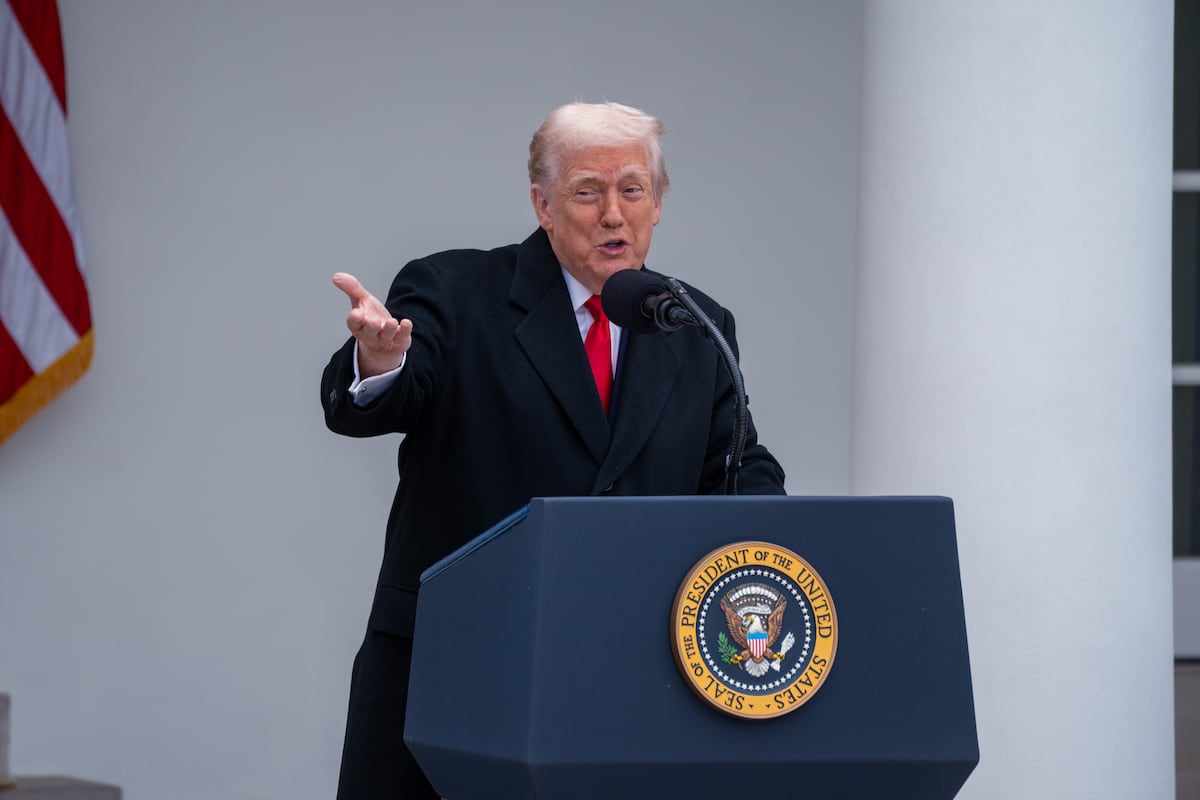
As Venezuela’s government mobilizes its supporters amidst heightened regional tensions, former President Donald Trump has indicated a willingness to engage in direct talks with Nicolás Maduro. The surprising development comes despite a significant U.S.military buildup in the Caribbean-including the deployment of the aircraft carrier USS Gerald Ford-and escalating concerns over potential conflict. While the Biden administration has maintained a policy of sanctions and limited engagement with Maduro’s regime, Trump’s openness to dialog signals a potential shift in approach, reminiscent of his previous diplomatic efforts with North Korea. top U.S.defense officials are currently traveling throughout the region to assess the rapidly evolving situation.
Former President Donald Trump has left the door open to speaking with Venezuelan President Nicolás Maduro as tensions escalate between the two countries, reiterating the possibility Tuesday that he would be willing to engage in talks. The potential for direct communication comes amid a significant military deployment by the U.S. in the Caribbean, raising concerns about a possible confrontation.
“If we can save lives, if we can do things nicely, that’s good. And if we have to do things the hard way, that would be fine too,” Trump told reporters aboard Air Force One while traveling to his Mar-a-Lago estate in Florida for Thanksgiving. The comments signal a willingness to explore diplomatic options even as the situation intensifies.
When asked directly if he planned to speak with Maduro, Trump responded, “I may talk to him. We’ll see.” He added that communication channels are already open between their respective teams, with the goal of facilitating a direct conversation between the two leaders.
Trump believes a diplomatic solution could “save lives,” echoing a strategy he previously employed during his first term with North Korean leader Kim Jong-Un. That effort, which involved a high-profile summit in Singapore, ultimately led to a temporary de-escalation of tensions, though concrete results were limited.
Sources within the White House reported Monday to Axios that the former president is considering a call with Maduro, though a date has not yet been set. The potential for dialogue unfolds as Venezuela’s government mobilizes its supporters in a show of unity, with Maduro urging his base to remain steadfast “in this decisive juncture.”
The escalating tensions are being compounded by widespread flight cancellations and disruptions to international airline operations in Venezuela, a consequence of the substantial U.S. military presence in the region. Washington maintains the deployment, which includes the aircraft carrier USS Gerald Ford, is intended to combat drug trafficking, but Venezuela views it as a move to destabilize Maduro’s government. The situation is rapidly redefining the geopolitical landscape in the Caribbean.
The prospect of a Trump-Maduro conversation evokes memories of the former president’s unexpected diplomatic overtures with Kim Jong-Un, which, despite limited long-term impact, did temporarily ease a volatile situation. That meeting, while largely symbolic, offered a pathway for communication and reduced the immediate threat of conflict.
Meanwhile, the Pentagon has announced a trip to the Caribbean by Defense Secretary Pete Hegseth. The former Fox News host is scheduled to arrive in Santo Domingo, Dominican Republic, on Wednesday to meet with President Luis Abinader and Dominican government officials to discuss security matters.
General Dan Caine, Chairman of the Joint Chiefs of Staff, is also in the region. He visited Puerto Rico on Monday, where a significant portion of the 15,000 troops mobilized for “Operation Southern Lance” are believed to be stationed, and continued to Trinidad and Tobago on Tuesday for meetings with government representatives. The moves come as supporters of the ruling socialist party in Venezuela rally in response to perceived threats from the United States.
