
A deep freeze is gripping large portions of North America as a weakened polar vortex unleashes the first major Arctic outbreak of the winter, with temperatures plummeting to -30°C in some areas. While the United States contends with record-breaking cold adn snowfall-reaching as far south as Texas and Florida-Europe is bracing for the indirect effects of this disruption, including the potential for powerful storms. This report details the causes behind the current cold snap and assesses the likelihood of similar harsh conditions impacting the European continent in the coming weeks.
Polar Vortex Brings Freezing Temperatures to the U.S.Minus 30 Degrees – Is a Cold Shock Coming to Europe?
Table of Contents
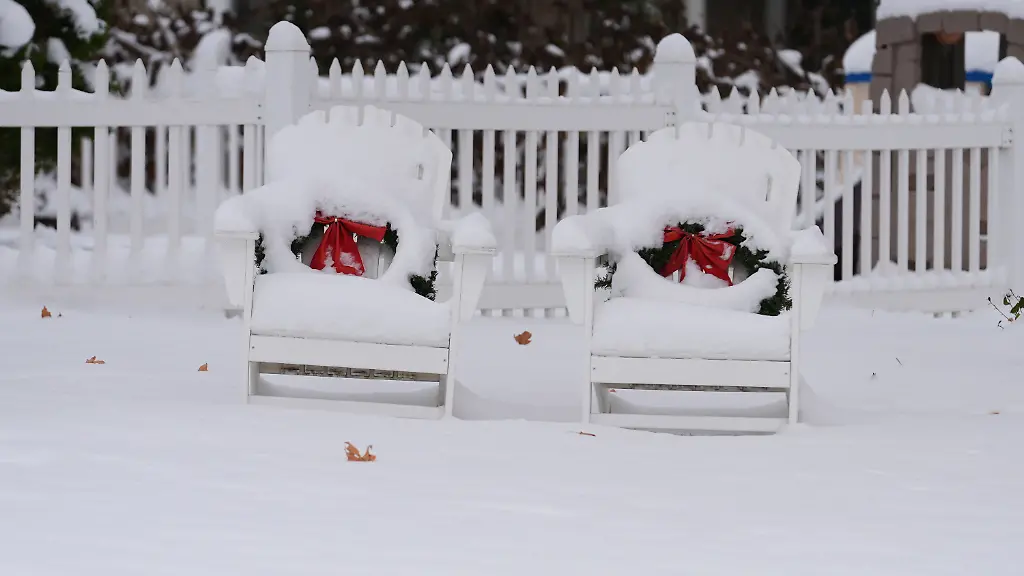


A significant Arctic outbreak is impacting North America, bringing the first major cold snap of the winter. The frigid temperatures are being driven south by a weakening polar vortex, and the effects are beginning to be felt across the Atlantic.
Temperatures plummeted to around minus 30 degrees Celsius over the weekend as Arctic air swept across the United States from Canada. Frost was even recorded as far south as northern Texas and Florida, while northern Montana struggled to reach minus 20 degrees Celsius during the day. The cold front is now moving eastward, accompanied by substantial snowfall and strong winds that are making conditions feel even colder – a phenomenon known as wind chill.
What’s Causing the Sudden Chill?
“Arctic outbreaks” are not uncommon in the United States. Similar to conditions in Lapland, Europe, extremely cold air accumulates over Canada during the winter, but on a much larger scale. The mountain ranges in North America are also primarily oriented north-south, allowing Arctic winds to flow south unimpeded, unlike in Europe where the Alps act as a barrier. This allows the cold air to rapidly descend into the southern United States, causing temperature drops of 20 to 30 degrees Celsius in a short period.
Contributing to the current situation is a weakened polar vortex. This high-altitude wind current forms over the Arctic during winter, acting as a barrier to keep frigid air contained in the north. When the polar vortex weakens, the system becomes unstable or even collapses, allowing Arctic cold to surge southward. This is precisely what is happening in North America.
Polar Vortex Cold Influences European Weather
The most severe cold waves typically occur in late winter. However, the current wave is already notable. Temperatures in northern parts of the continent are expected to reach a new low this week, impacting the Northeast by the weekend. The New England states along the East Coast are likely to experience the brunt of the cold, while the Midwest will begin to see a thaw.
As the cold air moves eastward, Europe is also bracing for impact. The passage of the cold air over the relatively warm, moist Atlantic Ocean frequently creates powerful low-pressure systems. These systems bring stormy conditions and heavy rainfall to Iceland, Norway, the British Isles, France, and Portugal. “Secondary lows” can even move through the Mediterranean, causing severe weather.
The Myth of Delayed U.S. Cold Reaching Europe
However, the winter has been slow to establish itself. While cooler air masses have occasionally reached Germany this week, the changeable and windy weather, dominated by Atlantic storms, prevents the development of sustained winter conditions comparable to those seen in November. In fact, temperatures are likely to rise above 10 degrees Celsius soon, dampening pre-Christmas hopes for snow.
The idea that the cold wave will arrive in Europe with a time delay is not causally accurate. The Atlantic Ocean separates the two continents, and cold air from North America consistently creates strong lows over the water, bringing milder, wetter conditions to Europe.
What is true is that a weakened polar vortex causing an “Arctic outbreak” in the U.S. can also affect Europe, as the vortex is completely disrupted. Simultaneously, it can regain its strength and then collapse multiple times, potentially bringing further harsh winter weather. Therefore, there is still considerable potential for winter surprises this year.
