
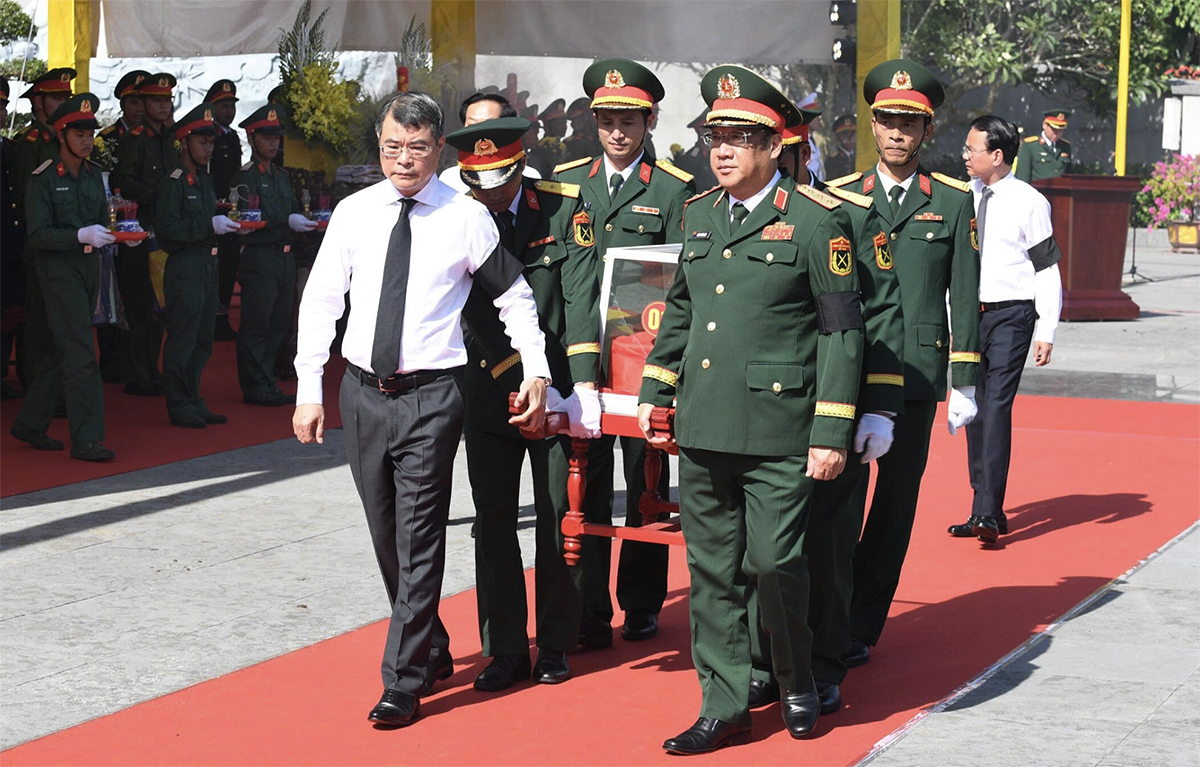
On May 23, 2026, Vietnamese Prime Minister Lê Minh Hưng attended a solemn ceremony in Quảng Trị province to honor 28 martyrs who had been repatriated from Laos, marking the culmination of a multi-year effort to recover and identify remains of Vietnamese soldiers and experts who died during the Vietnam-Laos alliance. The event, held at the Đường 9 National Martyrs’ Cemetery, featured participation from officials across Vietnam and Laos, underscoring the enduring diplomatic and historical ties between the two nations.
The Ceremony and Its Significance
The ceremony, organized by Quảng Trị’s provincial authorities, included a formal mourning process, with the Prime Minister and other leaders paying tribute to the 28 remains, which had been recovered during the 2025–2026 dry season in Savannakhet and Khammouane provinces of Laos. “The sacrifices of these heroes are a shining symbol of revolutionary heroism, a testament to the great and special solidarity between Vietnam and Laos, and an immortal ode to courage, sacrifice, and proletarian internationalism,” said Lê Văn Bảo, the provincial deputy chairman, quoting a speech delivered at the event. The phrase, “ĐỜI ĐỜI GHI NHỚ CÔNG ƠN CÁC ANH HÙNG LIỆT SĨ ĐÃ ANH DŨNG HY SINH VÌ NGHĨA VỤ QUỐC TẾ CAO CẢ,” was prominently displayed at the border crossing where the remains were first received, emphasizing the deep historical and cultural bonds between the two countries.

Prime Minister Lê Minh Hưng, alongside Lao officials from Savannakhet and Khammouane, participated in the ritual of offering incense and flowers, a gesture of respect for the fallen. The event was part of a broader initiative known as the “500-day campaign” to locate, recover, and identify remains, a project described in the sources as a “decisive political will and resolute action” by local authorities.
The Teams Behind the Repatriation
The recovery of the 28 remains was carried out by two specialized teams: Đội Quy tập hài cốt liệt sĩ 584 and 589, under the Quảng Trị Military Command. These teams operated in the rugged terrain of Laos, navigating “difficult and dangerous conditions” to locate and excavate the remains. The effort was supported by local communities in Savannakhet and Khammouane, whose cooperation was acknowledged as vital to the success of the mission.
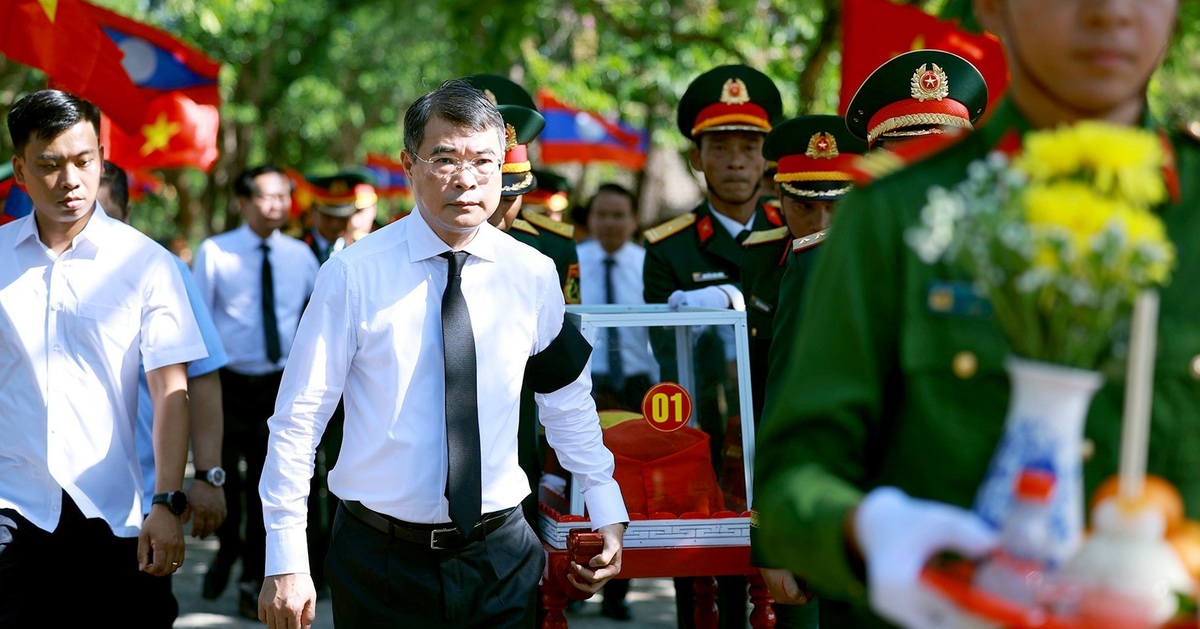
According to the VnExpress report, the recovered remains were initially stored in the province for DNA testing to determine their identities. “The province will continue to implement the 500-day campaign to locate, recover, and identify remains, contributing to the implementation of the policy for the military’s rear support and spreading the tradition of ‘remembering the source of the water’ among the nation,” Lê Văn Bảo stated. This phrase, “uống nước nhớ nguồn,” is a Vietnamese idiom that reflects the cultural emphasis on remembering one’s origins and honoring ancestors.
International Collaboration and Commemoration
The ceremony highlighted the collaborative nature of the repatriation efforts, with Lao officials playing a central role. At the border crossing in Nậm Cắn, where the remains were first received, local authorities and citizens formed a solemn procession to welcome the coffins, as described in the Nghệ An Information Portal. The event was marked by the display of a red banner bearing the words “ĐỜI ĐỜI GHI NHỚ CÔNG ƠN CÁC ANH HÙNG LIỆT SĨ ĐÃ ANH DŨNG HY SINH VÌ NGHĨA VỤ QUỐC TẾ CAO CẢ,” a phrase directly quoted in the sources to emphasize the collective gratitude toward the fallen.
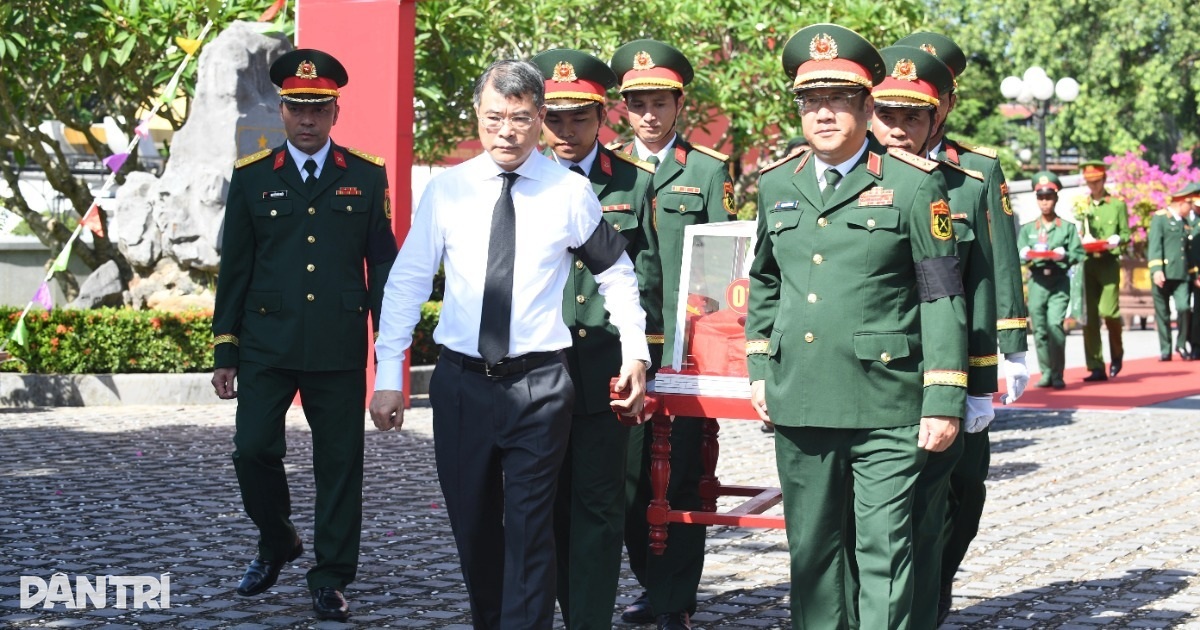
In a parallel effort, Hà Tĩnh province and Bolikhămxay province in Laos held discussions to strengthen cooperation in the next phase of the repatriation campaign. The Ha Tĩnh News report detailed a meeting where officials from both sides signed a memorandum of understanding to continue the work. “The party, government, and people of Bolikhămxay will continue to closely cooperate with Vietnam to implement the work of locating, excavating, and recovering remains, contributing to the development of the great and special friendship between the two countries,” said Sôm Chay Khun Phạ Xay, a Lao official.
Future Plans and Continued Efforts
The 500-day campaign, which began in 2025, is part of a broader national initiative to honor and identify the remains of soldiers who died during the Vietnam War and subsequent conflicts. The campaign has already led to the recovery of hundreds of remains, with the 2025–2026 season marking a significant milestone. Officials emphasized that the work would continue into the next dry season, with plans to expand efforts to other regions of Laos and increase collaboration with local communities.
The event also underscored the importance of preserving historical memory and fostering bilateral relations.
