
After being told she had only a year to live, Chermaine, 39, is celebrating a new lease on life following a double lung transplant for pulmonary arterial hypertension – a rare and life-threatening condition affecting approximately 800 people in the Netherlands. Chermaine’s story is not only one of medical triumph, but also of proactive research; she went on to earn a doctorate studying the impact of nutrition on the disease, and is now working to establish a lifestyle clinic to help other patients improve their quality of life. Her journey highlights the potential for lifestyle interventions to complement customary medical treatments and empower those facing serious illness.
Chermaine, 39, recently celebrated receiving a new set of lungs, 14 years after being told she had approximately one year to live. “I had pulmonary arterial hypertension,” she explained.
“It’s a rare disease where the arteries in the lungs become narrowed. This forces the right side of the heart to work harder to pump blood to the organs. Eventually, the heart can’t keep up, leading to heart failure and ultimately, death. Approximately 800 people in the Netherlands live with this condition.”
A Determination to Heal
Table of Contents
While a diagnosis like that can be devastating, Chermaine responded with fierce determination. “I became very combative and thought, ‘No way is that going to happen to me.’ I even initially believed I could heal myself. Of course, that wasn’t realistic, but I do think that by eating healthily, I improved my quality of life, and it also played a significant role in my recovery after the double lung transplant.”
Read More
Is Ultra-Processed Food Really as Bad as Claimed on Social Media?
Pulmonary arterial hypertension is not a lifestyle-related disease. “There are various causes. It can be genetic, or linked to certain congenital heart defects. In my case, it’s likely a combination of both, and in other cases, the cause remains unknown. But it’s certainly not caused by frequent visits to the snack bar.”
Significant Recovery
Chermaine’s proactive approach demonstrably improved her quality of life and extended her prognosis. “When I went to the hospital and told them I had my own business and a fulfilling social life, they often said, ‘That’s surprising, you should be in bed all day.’ But that wasn’t what I wanted at all. I felt relatively good until six months before the transplant.”
“And even after the transplant, my recovery went well, although it was a difficult process that involved 36 days in the intensive care unit. The only lasting effect is paralysis of my vocal cords due to the prolonged ventilation I required. But even that has improved significantly with speech therapy, surgery, and singing lessons, enough for me to give lectures.”
“During my doctoral studies, I finally understood how sick I had been.”
A year after her lung transplant, Chermaine’s doctor asked if she would be interested in pursuing a doctorate on the effect of nutrition on pulmonary arterial hypertension. “Yes, I was very enthusiastic. I’ve always wanted to research the impact of nutrition on quality of life in people with rare diseases, which is also what I focus on with my company, dr. Rebel. So when I received this proposal, I didn’t hesitate.”
Facing the Facts
In the years that followed, Chermaine dedicated herself to research, including blood tests and lifestyle programs. “Funding for my research was difficult to secure, given the rarity of the disease. But by organizing a walk that attracted many patients and family members, I was able to get started.”
The experience proved to be a sobering one. “I wasn’t as fit as I am now when I started, especially mentally. My time in the ICU had taken a toll. During my doctoral studies, I worked with my treating physicians – pulmonologists and cardiologists who had examined me – and attended educational sessions and meetings. It was then that I truly understood how sick I had been.”
An Incredible Amount of Luck
“Holy cow, I thought. It was much worse than I initially realized. I learned how the disease worked and what a strain it put on my body. That was difficult to process. I was also very afraid of getting sick again, even though my new lungs had completely cured me. I realized I had been incredibly lucky to still be alive.”
Read More
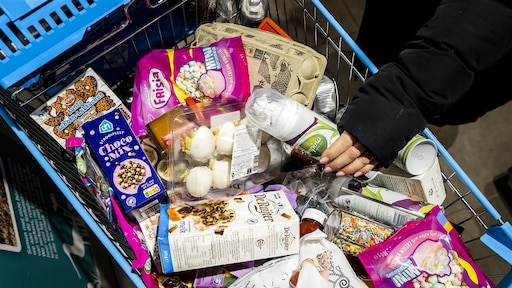
Supermarket Full of Ultra-Processed Food: How Difficult is Healthy Eating?
But Chermaine persevered, and the results of her research are compelling. “The biggest impact came from an intervention study. I provided patients with information about healthy eating and lifestyle through an e-learning platform, but without specific guidelines. Everyone was free to choose what they wanted to adopt.”
Giving Back Control
“This approach gives patients a sense of control in a very uncertain situation. They reported that they found it very helpful, ate much healthier after a year – for example, significantly reducing their sugar intake – and, most importantly, reported an improved quality of life. That’s remarkable for a progressive disease that worsens over time.”
“You can often make people better, even if you can’t always cure them.”
Chermaine isn’t sure exactly where the benefits lie. “It could be that patients benefited from the healthier diet. But it could also be that regaining that control was what improved their quality of life. More research is needed to determine that. But honestly? What matters is that the improved quality of life exists.”
‘Better’ Isn’t the Same as ‘Cured’
Now that her doctorate is complete, Chermaine is keeping busy. “I’m catching up on everything I missed during the years I was sick,” she laughs. In addition to her company, she is working to establish a lifestyle clinic at the Amsterdam UMC, where she earned her doctorate.
“Initially, it should be for patients with pulmonary arterial hypertension, but I hope it will then be expanded to other lung and heart diseases. And that after that, a clinic like this will be established for anyone who is seriously ill.”
“Currently, the focus is on medications and treatments to cure people, and that is absolutely important. But what I’ve learned: getting better is not the same as being cured. You can’t always cure, but you can often make people better with nutrition and lifestyle changes. Wouldn’t it be wonderful if that became a standard part of a hospital treatment plan?”
Click here for more Lifestyle
