

President Donald Trump, currently serving his second non-consecutive term, has completed a significant reversal regarding digital assets. While he previously dismissed bitcoin as a prevarication
and a threat to the U.S. dollar, his family now manages a crypto portfolio valued at three billion dollars as of May 2026.
From Skepticism to Crypto Advocacy
The shift in the Trump administration’s stance on digital currencies marks a departure from the rhetoric employed during his initial term between 2017 and 2021. As president, Trump frequently warned that the lack of federal oversight for cryptocurrencies created a dangerous environment for manipulation and illicit financial activity. By mid-2021, while out of office, he explicitly labeled bitcoin a prevarication
—a claim rooted in his concern that decentralized assets posed a direct competitive threat to the stability of the American dollar.
However, the political and financial landscape surrounding the Trump family has evolved rapidly over the past two years. According to reports, Trump transitioned into a vocal proponent of the industry during his 2025 presidential campaign. This pivot coincided with significant financial inflows, as crypto-related projects now constitute approximately 40 percent of the total assets held by the presidential family.
This ideological repositioning has been reflected in public appearances and campaign messaging throughout 2025 and into the first half of 2026. The evolution of this stance was marked by a series of engagements with industry leaders, signaling to stakeholders that the administration would prioritize the integration of blockchain technology into the national financial infrastructure. This shift contrasts with the policy environment of the previous decade, where digital assets were frequently viewed through the lens of national security risks rather than potential economic drivers.
Regulatory Shifts and Institutional Alignment
The ideological transition has been accompanied by a tangible change in the composition of the executive branch. The current administration has prioritized a crypto-friendly orientation, moving away from the more stringent oversight approach characterized by the tenure of Gary Gensler, the former head of the U.S. Securities and Exchange Commission (SEC).
Market observers note that the influx of millions in donations from the crypto sector played a role in the political realignment. This development has placed the United States in closer alignment with international figures such as Nayib Bukele, the president of El Salvador. Bukele, who pioneered the integration of bitcoin as legal tender in his country, has emerged as a key international ally of the current administration. The partnership between the two leaders has extended beyond finance, with the U.S. now coordinating with the Salvadoran government on immigration policy.
The administrative overhaul at the SEC has been a hallmark of this new approach. By replacing long-standing regulatory staff with personnel favoring decentralized finance (DeFi) expansion, the administration has signaled a move toward a permissive environment for digital asset firms. This regulatory pivot has been viewed by industry analysts as a fundamental change in the methodology of federal oversight, transitioning from an enforcement-first strategy to one emphasizing technological adoption.
Economic Context and Market Volatility
The rise of crypto holdings within the presidential family occurs against a backdrop of broader global economic instability. As of mid-May 2026, international markets are navigating a period of elevated borrowing costs. In the United Kingdom, for instance, yields on long-term government bonds have reached levels not seen since 1998, driven by political uncertainty and investor demand for higher interest rates.
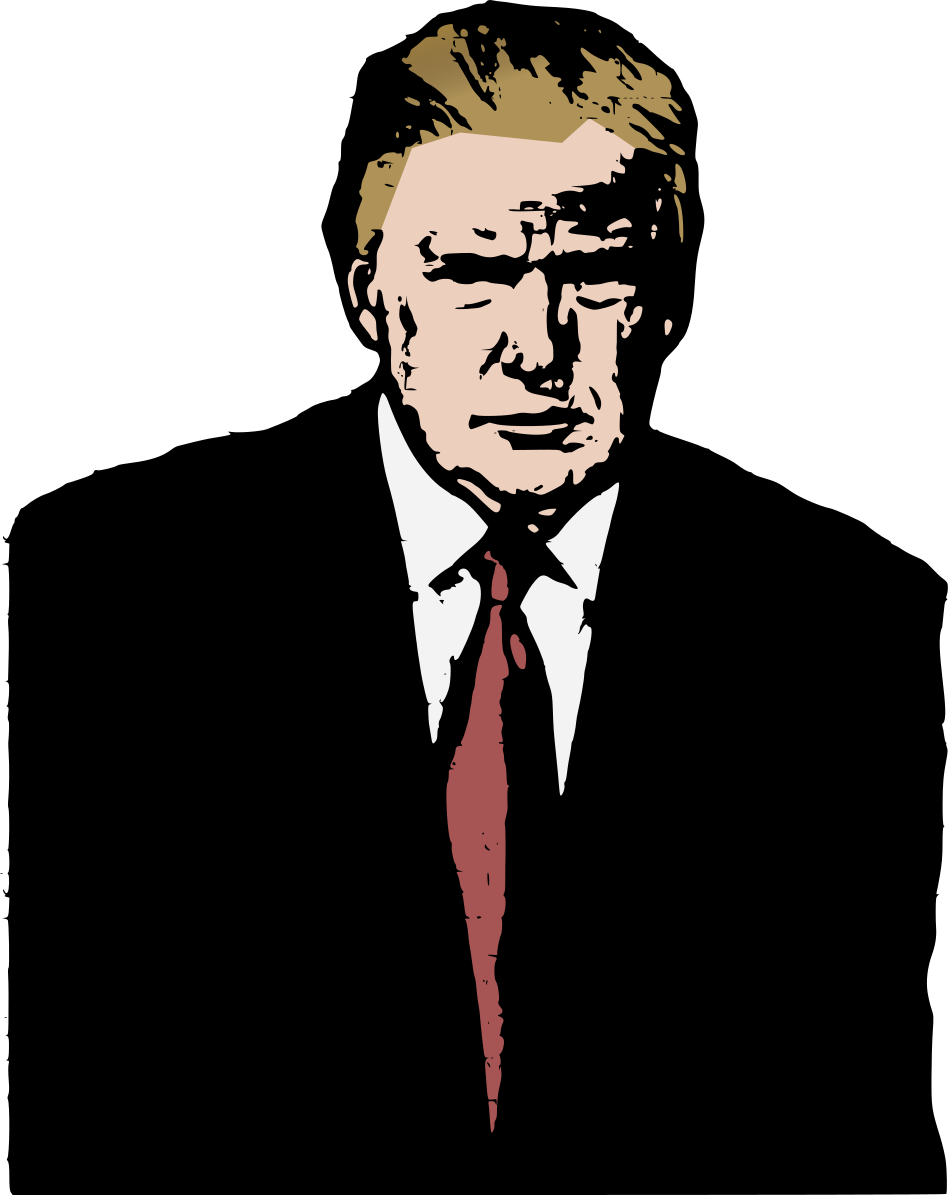
While the Trump administration promotes the expansion of the digital asset economy, some financial analysts suggest that the lack of a standardized global regulatory framework remains a point of contention. The rapid growth of the Trump-controlled crypto portfolio—now estimated at three billion dollars—highlights the scale of the transition from the skepticism of 2021 to the current integration of digital assets into the executive branch’s financial profile.
Economic indicators from the first two quarters of 2026 suggest that the volatility inherent in the crypto market has influenced the administration’s broader fiscal strategy. By anchoring a substantial portion of the presidential family’s assets in digital currencies, the administration has tied its personal financial performance to the success of the sector it now oversees. This creates a unique dynamic where the performance of specific blockchain protocols may be perceived as a reflection of the administration’s economic policy effectiveness.
Institutional Oversight and Legislative Outlook
As the administration continues to shape its economic policy, the intersection of private digital asset holdings and federal regulatory power remains a focal point for both domestic political critics and international market analysts. The extent to which this portfolio influences future legislative action regarding the SEC and broader financial oversight remains to be seen.
Ongoing discussions in Congress regarding the categorization of digital assets—whether as commodities or securities—are expected to be influenced by the administration’s newfound support for the industry. Observers are particularly focused on whether the current executive branch will push for legislation that codifies the current regulatory leniency into permanent law. Such a move would serve to insulate the industry from future administrative shifts, effectively cementing the gains made by crypto-advocacy groups during the 2025 campaign cycle.
The convergence of private financial interests and public policy continues to draw scrutiny from oversight committees, who are questioning the potential for conflicts of interest as the administration deliberates on the future of federal financial regulations. Despite these inquiries, the administration maintains that the integration of digital assets is a necessary step to maintain American technological competitiveness in an increasingly digitized global economy.
