

Right-wing extremist youth groups in Italy have escalated attacks on migrants, the homeless, and LGBTQIA+ individuals under the banner of “self-defense,” with police documenting brutal assaults—including a May 2026 incident at Rome’s Termini station where three teenagers hospitalized five homeless men with batons. Authorities link the violence to far-right networks, while victims rarely report crimes amid systemic distrust.
Italy’s far-right militias are weaponizing vigilante justice, targeting vulnerable communities with impunity. The latest wave of violence—documented in cities from Rome to Turin—exposes a crisis of state failure and rising extremism under Prime Minister Giorgia Meloni’s government. While officials condemn the attacks, structural barriers to justice and a climate of fear among victims threaten to normalize the violence.
The Remigration Campaign: Far-Right Groups Target Migrants and the Homeless
Self-styled “self-defense” patrols, often linked to organizations like Forza Nuova (New Force), have become a hallmark of Italy’s far-right resurgence. Their stated mission—dubbed “remigration”—mirrors the rhetoric of Meloni’s coalition, which has framed migration as a national security threat. Yet the violence extends beyond political posturing: witnesses describe coordinated assaults on migrants, the homeless, and LGBTQIA+ individuals, with attackers using coded language like “Maranza” to dehumanize youth with migration backgrounds.

In a May 16, 2026 report, n-tv detailed how three teenagers—aged 17, 19, and 20—assaulted five homeless men at Rome’s Termini station with batons, leaving victims requiring hospital treatment. The attackers, identified as members of a local far-right network, invoked Article 52 of Italy’s constitution—”the defense of the fatherland is a sacred duty of the citizen”—to justify their actions. Police confirmed the incident but noted that such cases rarely result in prosecutions, with victims often avoiding reports due to fear of retaliation or distrust in authorities.
Similar attacks have been documented in Milan, Turin, and Bologna, where far-right groups operate under names like “Ronde antimaranza,” conducting nightly patrols to “restore order.” The targets are not limited to migrants: homeless individuals, LGBTQIA+ persons, and religious minorities also face harassment. A 2025 Human Rights Watch report highlighted how these groups exploit constitutional language to evade legal consequences, framing their violence as patriotic duty.
State Response: Condemnation Without Accountability
Italian authorities have publicly condemned the violence, with Interior Minister Matteo Piantedosi calling the attacks “unacceptable” and ordering increased police patrols in affected areas. However, critics argue the response remains reactive rather than systemic. Prosecutors have struggled to secure convictions in past cases, with far-right defendants often invoking self-defense or claiming their actions were politically motivated.
Meloni’s government has faced scrutiny over its handling of far-right extremism. While the prime minister has distanced herself from vigilante groups, her coalition partners—including Brothers of Italy and the League—have historically downplayed the threat of extremism. In 2024, the League’s deputy leader, Matteo Salvini, dismissed far-right violence as “isolated incidents,” a stance that emboldened fringe groups to escalate their tactics.
Legal experts warn that Italy’s justice system is ill-equipped to address the rise of far-right militias. Prosecutors often lack sufficient evidence to link attackers to organized networks, and witnesses—particularly migrants—are reluctant to testify. A 2025 study by the Italian National Institute of Statistics (ISTAT) found that only 12% of hate crimes involving far-right perpetrators resulted in convictions, compared to 45% for other types of violent crime.
The Role of Social Media and State Ambiguity
The normalization of far-right rhetoric online has played a crucial role in mobilizing youth. Telegram and encrypted messaging apps have become hubs for coordinating attacks, with far-right influencers framing migration as an existential threat. A leaked 2026 internal report from Italy’s intelligence agency, AISE, noted that far-right recruitment has surged among disaffected youth, particularly in economically depressed regions.
Meloni’s government has taken limited action against extremist content online. While the interior ministry has ordered platforms to remove hate speech, enforcement remains inconsistent. Critics argue that the government’s focus on migration control has inadvertently legitimized far-right narratives, creating a climate where vigilante justice is seen as a necessary response to perceived chaos.
“The state cannot claim to be fighting extremism while simultaneously fueling the narratives that radicalize young people. When politicians use language that demonizes migrants and the homeless, it sends a message: that violence against these groups is acceptable.”
Giulia Bongiorno, Human Rights Lawyer
What Comes Next: A Crisis of Legitimacy
The escalation of far-right violence in Italy raises critical questions about the future of democracy in the country. While Meloni’s government maintains that it is committed to upholding the rule of law, the rise of vigilante groups suggests a deeper crisis of state legitimacy. Migrants, the homeless, and minority communities are increasingly viewed as threats to national identity, with far-right networks filling the void left by perceived state failure.
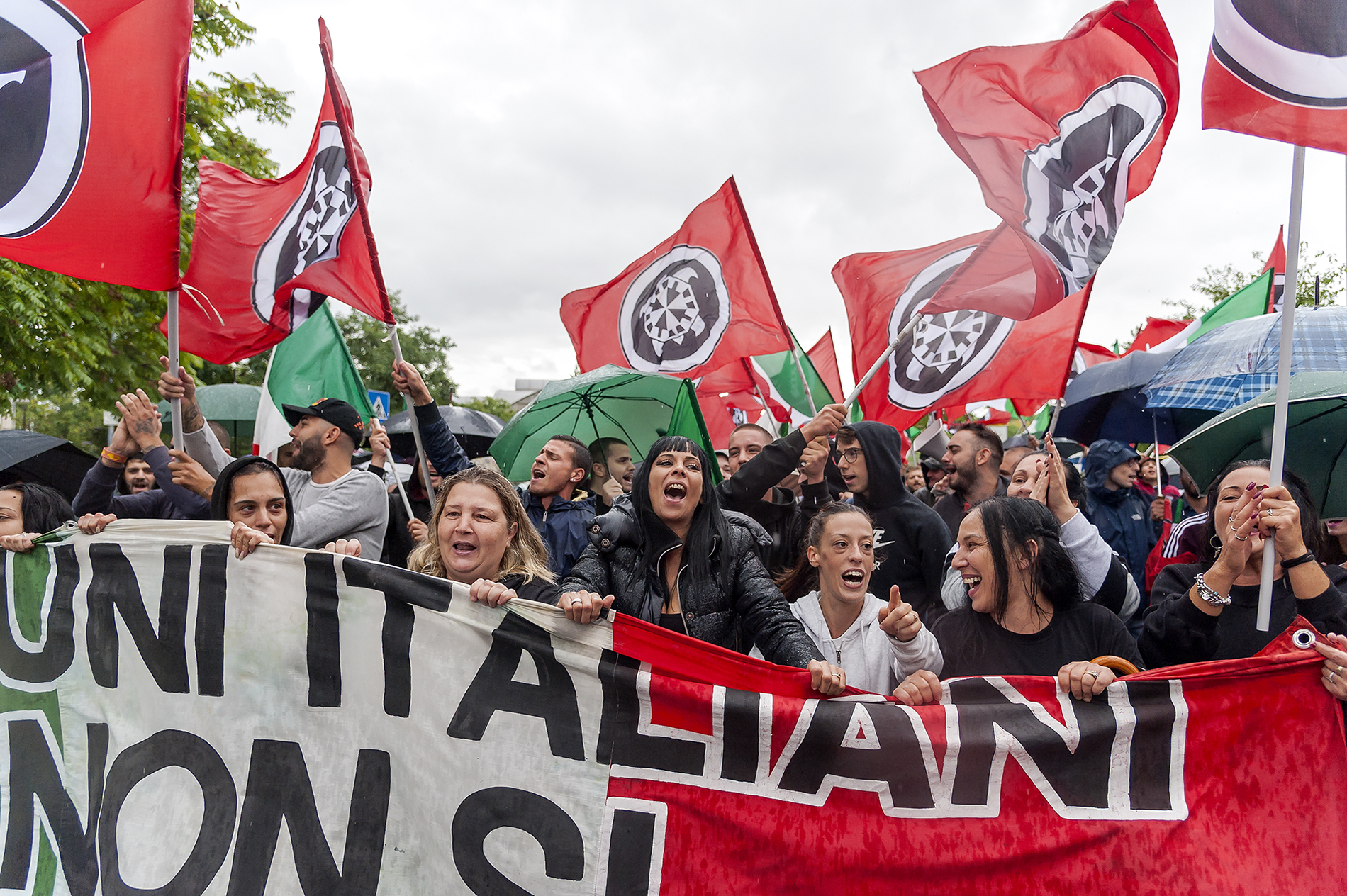
International observers, including the Council of Europe, have expressed concern over Italy’s handling of extremism. In a 2026 report, the organization warned that the normalization of far-right rhetoric could lead to further violence, particularly in the lead-up to the 2027 general elections. The report called for stronger legal measures to dismantle extremist networks and protect vulnerable communities.
For now, the cycle of violence continues. Without decisive action from the government and a shift in public discourse, Italy risks becoming a case study in how far-right militias exploit state ambiguity to justify their actions. The question remains: will Meloni’s government take the necessary steps to dismantle these networks, or will the country continue to witness the erosion of its democratic institutions?
The answer will determine not just Italy’s future, but the broader trajectory of Europe’s far-right movement.
