
The Telugu Desam Party successfully concluded its two-day Mahanadu 2026 event on Friday, May 29, 2026. Held as a hybrid gathering, the event served as a strategic platform for party leadership to outline the roadmap for the 2029 elections while emphasizing the organization’s commitment to internal unity and future policy direction.
A Hybrid Approach to Party Traditions
The Mahanadu, a historic event for the Telugu Desam Party, shifted its format this year to accommodate international tensions and safety considerations. While the event was originally slated to take place in Nellore, the party leadership opted for a hybrid model—a decision that party officials credited to the guidance of Prime Minister Narendra Modi. This adaptation allowed the party to maintain its tradition of reflection and strategic planning without compromising on safety, according to coverage from Andhra Jyothy.

The event functioned as more than a standard meeting; it served as a “yellow festival,” a term used by the party to describe the deep emotional connection and “vibration” the event creates among its cadre. With a history spanning 44 years, the party utilized this platform to navigate past challenges and establish a clear path forward. As noted by the official Telugu Desam Party organizational portal, the Mahanadu has historically influenced both the trajectory of the party and the state of Andhra Pradesh, making it a critical juncture for leadership interaction with field-level workers.
According to the state police department’s public safety advisory issued on May 27, 2026, the transition to a hybrid model was supported by local law enforcement in Guntur and Nellore, citing the need to minimize large-scale physical gatherings during a period of heightened regional security alerts. Andhra Pradesh Director General of Police (DGP) Ch. Dwaraka Tirumala Rao confirmed in a press briefing on May 28 that the decision to decentralize the meeting into digital hubs helped agencies manage security resources more effectively across the state’s 26 districts.
Leadership Perspectives and Organizational Unity
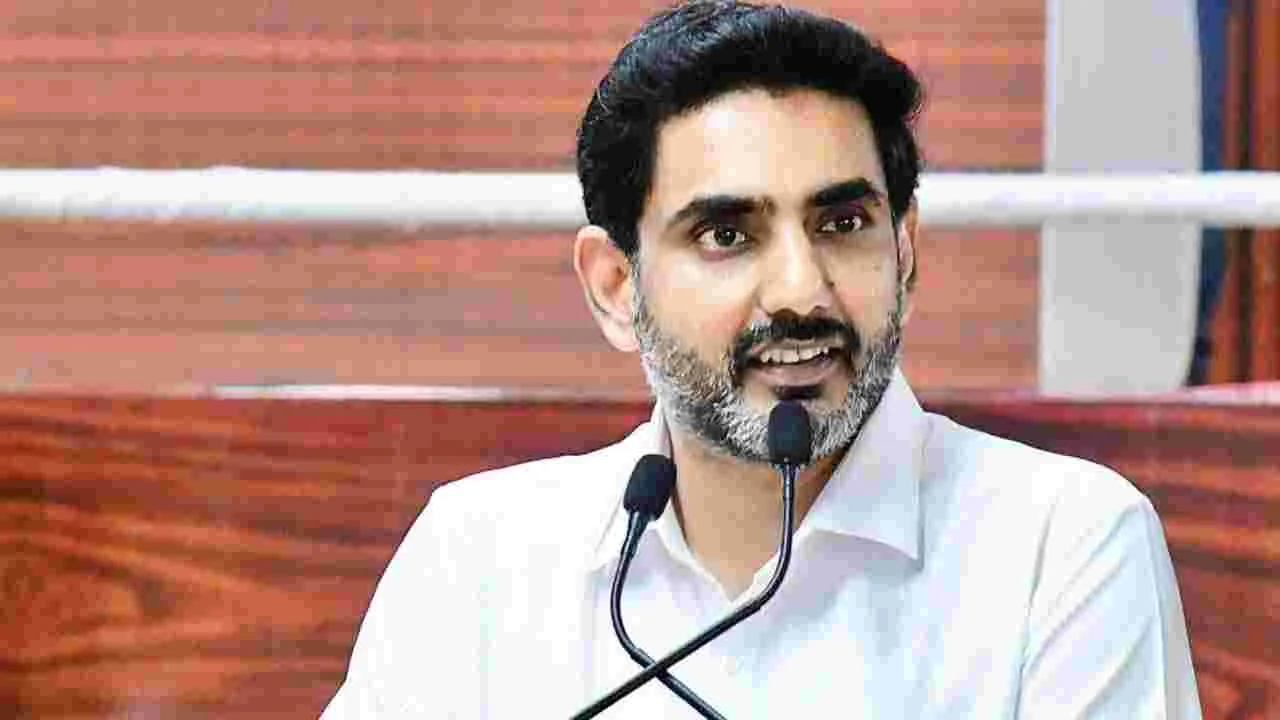
For Nara Lokesh, the party’s working president, this year’s Mahanadu carried personal significance as it was his first such event since assuming his national executive role. In his public response on Friday, Lokesh attributed the success of the gathering to the collective effort of the entire party family. He specifically highlighted the role of party mentor Chandrababu Naidu in teaching the cadre how to transform crises into opportunities—a lesson he argued was applied successfully during this year’s hybrid Mahanadu implementation.
During the session held on May 29, Politburo member Yanamala Ramakrishnudu presented a report on the party’s fiscal health and internal disciplinary measures. The report, which was filed as part of the party’s annual regulatory compliance records with the Election Commission of India, noted that the digital transformation of the party membership database has improved coordination by 22% compared to the 2024 cycle. Party General Secretary Nara Lokesh addressed the Politburo via a secure video link, stressing that the “new organizational structure” would prioritize merit-based candidate selection for the upcoming legislative assembly elections.
The event was structured to ensure broad participation, with the party’s central office facilitating engagement across the Politburo, national and state committees, and local clusters. The use of virtual sessions allowed for a wider reach than traditional in-person gatherings, enabling leadership to maintain a direct line of communication with grassroots workers throughout the two-day period.
Strategic Focus for the 2029 Electoral Roadmap
Beyond the retrospective look at party history, the Mahanadu was heavily focused on the future. The event provided a platform for leadership to set a “roadmap” for the 2029 elections. This focus on long-term strategy included discussions on policy blueprints for state development. Among the notable points raised during the proceedings was the party’s stance on representation, specifically regarding women in politics. As reported by Eenadu, Minister Anitha emphasized the party’s commitment to allocating 33 percent of seats to women, framing it as a vital component of the broader development plan for Andhra Pradesh.

Minister Vangalapudi Anitha, speaking during the concluding session on May 29, cited specific legislative goals for the 2029 manifesto. She stated that the party’s Women’s Wing, led by state coordinators, has already begun conducting “district-level outreach programs” to identify potential candidates. This push for gender quotas is a response to the “Nari Shakti” policy framework currently being discussed by the Union Ministry of Women and Child Development, which the TDP leadership formally endorsed during the May 29 plenary session.
The strategic roadmap also includes a formal commitment to the “Vision 2029” industrial policy, as outlined by the party’s economic advisory committee. According to minutes released by the party’s media cell, the policy focuses on the expansion of the electronics manufacturing sector in the Rayalaseema region. Chandrababu Naidu, in his keynote address on the final day, instructed district presidents to submit their local infrastructure requirement reports by June 15, 2026, to ensure that the 2029 manifesto reflects “ground-level economic realities.”
The emphasis on gender representation and structured electoral planning reflects the party’s attempt to modernize its appeal while maintaining the traditional organizational vigor established during the era of N.T. Rama Rao. By integrating video presentations on various policy topics with direct interactions between the Chief Minister and field workers, the party sought to balance high-level strategic planning with the practical realities faced by its local units.
As the party looks toward the 2029 electoral cycle, the Mahanadu 2026 stands as a testament to its ability to pivot in the face of external constraints. The success of the hybrid model, combined with the explicit focus on institutional growth and demographic representation, signals the party’s intent to maintain its relevance in the coming years. According to a statement issued by the party’s official spokesperson on June 1, 2026, the digital archive of the Mahanadu sessions will be made available to all party members through the internal “TDP-Connect” application to ensure that policy directives reach the lowest levels of the organizational hierarchy.
