
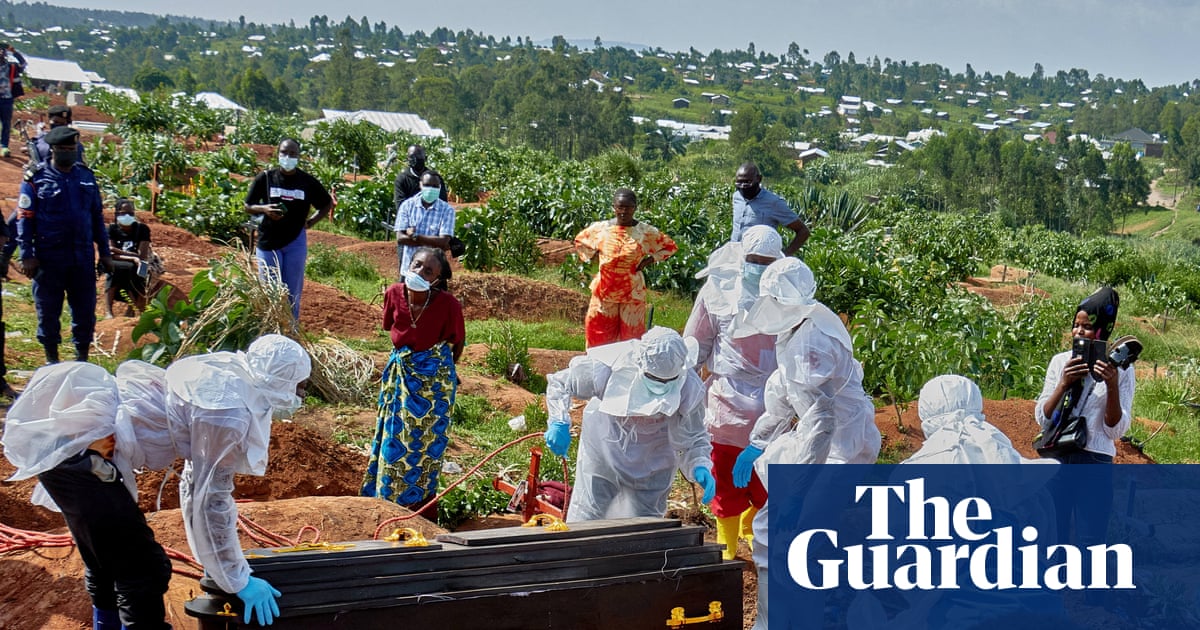
The Ebola outbreak in the Democratic Republic of the Congo and Uganda has reached a critical phase, with health officials reporting 906 suspected cases and 112 confirmed infections as of May 24, 2026. The World Health Organization declared the crisis a Public Health Emergency of International Concern on May 17, as the virus spreads across borders.
Frontline Toll and the Medical Crisis in Ituri
The human cost of the current outbreak is increasingly concentrated among those tasked with containing it. In the Rwampara region of Ituri province, the medical community is reeling from a rapid succession of deaths among staff members. Dr. Vladimir Maduali, a 30-year-old physician who graduated from the University of Bunia just three years ago, died of Ebola in the early hours of Sunday, May 24, 2026. His passing marked the fourth staff death at his hospital in just four days.
The exhaustion and danger facing these teams are profound. Dr. Richard Lokudu, the medical director of Mongbwalu hospital, described a situation where staff are operating under precarious and agonising conditions. The virus has not spared those providing care; three nurses at Lokudu’s facility have already died, and others remain critically ill. For those remaining, the work has taken on a grim, martial quality.
“We who are fighting Ebola work like soldiers. It may well be that others, myself included, will follow Vladimir tomorrow. We are fighting for the same cause: to save human lives from this Ebola epidemic.”
Dr. Richard Lokudu, medical director of Mongbwalu hospital, via The Guardian
The devastation extends to support staff as well, with three Congolese Red Cross volunteers at the Mongbwalu hospital succumbing to the virus over an 11-day period while handling the remains of victims. The loss of skilled personnel, such as Dr. Maduali—who his brother described as someone who saw his future only in medicine—threatens the continuity of essential health services in the hardest-hit regions.
Escalation of the Bundibugyo Strain
Unlike previous outbreaks that have seen the deployment of established vaccines, this emergency is driven by the Bundibugyo strain, for which there is currently no approved vaccine or treatment. According to the UNICEF Ebola Virus Disease Outbreak Flash Update, the virus has successfully migrated into major population centers. Confirmed cases have been identified in Goma and Bunia within the DRC, as well as in Kampala, Uganda, among individuals who recently traveled from infected areas.

For more on this story, see WHO declares Ebola outbreak in DRC an international public health emergency.
The logistical challenge is compounded by the nature of the terrain and the current security environment. Population movement along mining corridors and sustained cross-border traffic are fueling the transmission rate. UNICEF has responded by activating its highest emergency classification, a Level 3 Corporate Emergency, and releasing US$5.75 million in Emergency Programme Funds to bolster infection prevention and community surveillance.
The Collision of Disease and Conflict
The containment effort is running headlong into the reality of regional instability. In eastern Congo, the Ebola response is being hampered by ongoing fighting, particularly in North and South Kivu provinces, which remain partially controlled by Rwanda-backed M23 rebels. World Health Organization Director-General Tedros Adhanom Ghebreyesus has issued a stark warning regarding the impact of this violence on the medical response.
“Eastern DRC now faces a catastrophic collision of disease and conflict, with the Ebola outbreak in Ituri province outpacing the response. We cannot build community trust or isolate the sick while bombs are falling. We urge all warring parties to agree to an immediate ceasefire to contain this outbreak.”
Tedros Adhanom Ghebreyesus, WHO Director-General, via Daily Maverick
This catastrophic collision has created a vacuum in resource management. While donors have pledged approximately $500 million to assist with the outbreak, health officials report that the funds are not being disbursed effectively. Meanwhile, aid groups are struggling with acute shortages of basic supplies, including body bags, soap, and personal protective equipment such as masks, boots, and gloves.
Resource Shortages and the Displacement Crisis
The scarcity of protective gear has forced medical staff into impossible choices. In Butembo, one doctor reported having only two body bags left in stock, eventually resorting to using their own money to secure supplies. The lack of infrastructure is further strained by the massive displacement of civilians. Transit and reception sites in Uganda’s West Nile region are currently operating at more than double their intended capacity, creating prime conditions for the virus to spread among vulnerable populations.
With Save the Children noting that a quarter of the confirmed deaths are children, the pressure on health facilities is nearing a breaking point. The reality on the ground is summarized by the desperate outlook of those managing the isolation centers, who fear that the current rate of mortality is unsustainable. As one anonymous doctor in Butembo put it: If there are more deaths I don’t know how we will manage.
