
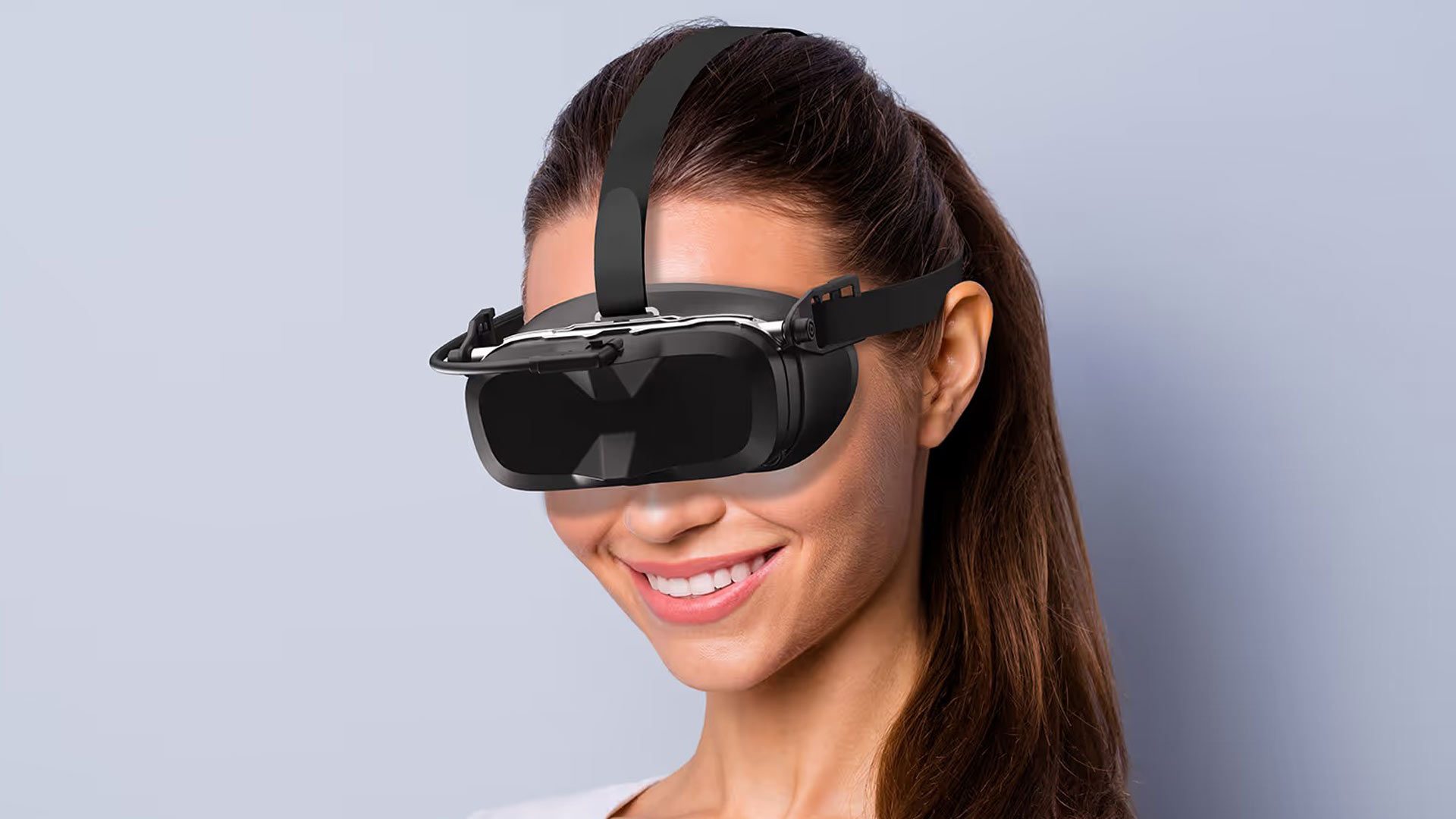
Shiftall Announces Updated MeganeX “8K” Mark II VR Headset
Japan-based Shiftall unveiled today the MeganeX “8K” Mark II, a refreshed version of its PC VR headset slated to begin shipping in December for $1,900, aiming to improve upon the original’s comfort and performance.
The new headset retains the 3,552 x 3,840 per-eye micro-OLED displays and 90Hz refresh rate of the original MeganeX, but incorporates several key upgrades. These include a new CPU and operating system resulting in a startup time reduced to less than one-fifth of the previous model, as well as newly designed pancake lenses developed by the Panasonic Group. Shiftall has also structurally reinforced the USB-C port connection and redesigned the nose gap for improved comfort, particularly for users with ‘Western’ nose shapes.
The MeganeX “8K” Mark II utilizes SteamVR tracking, requiring separate purchase of SteamVR 1.0/2.0 base stations. According to Shiftall, the headset achieves approximately 35.5 pixels per degree (PPD), exceeding competitors like the Pimax Dream Air and the Bigscreen Beyond. This high PPD contributes to a sharper, more immersive visual experience, a key factor for professional and enthusiast VR users. The company notes it refrains from publishing official field of view and PPD numbers due to a lack of industry-standard measurement methods.
Pre-orders for the MeganeX Mark II are now open, with pricing set at $1,900 in the US (excluding import duty), €1,900 in Europe (VAT included), £1,600 in the UK (VAT included), and ₩2,499,000 in South Korea (VAT included). Shiftall officials stated they expect the updated headset to appeal to both enterprise and prosumer markets seeking high-resolution VR experiences.
Shiftall unveiled its next PC VR headset, the MeganeX “8K” Mark II, which is slated to ship in December for $1,900.
The News
Japan-based Shiftall announced MeganeX “8K” Mark II, the follow-up to its thin and light PC VR headset originally launched late last year, the MeganeX superlight “8K”.
The new version is essentially a hardware refresh with only a few notable changes, which mostly aim to improve comfort, durability, and system internals.
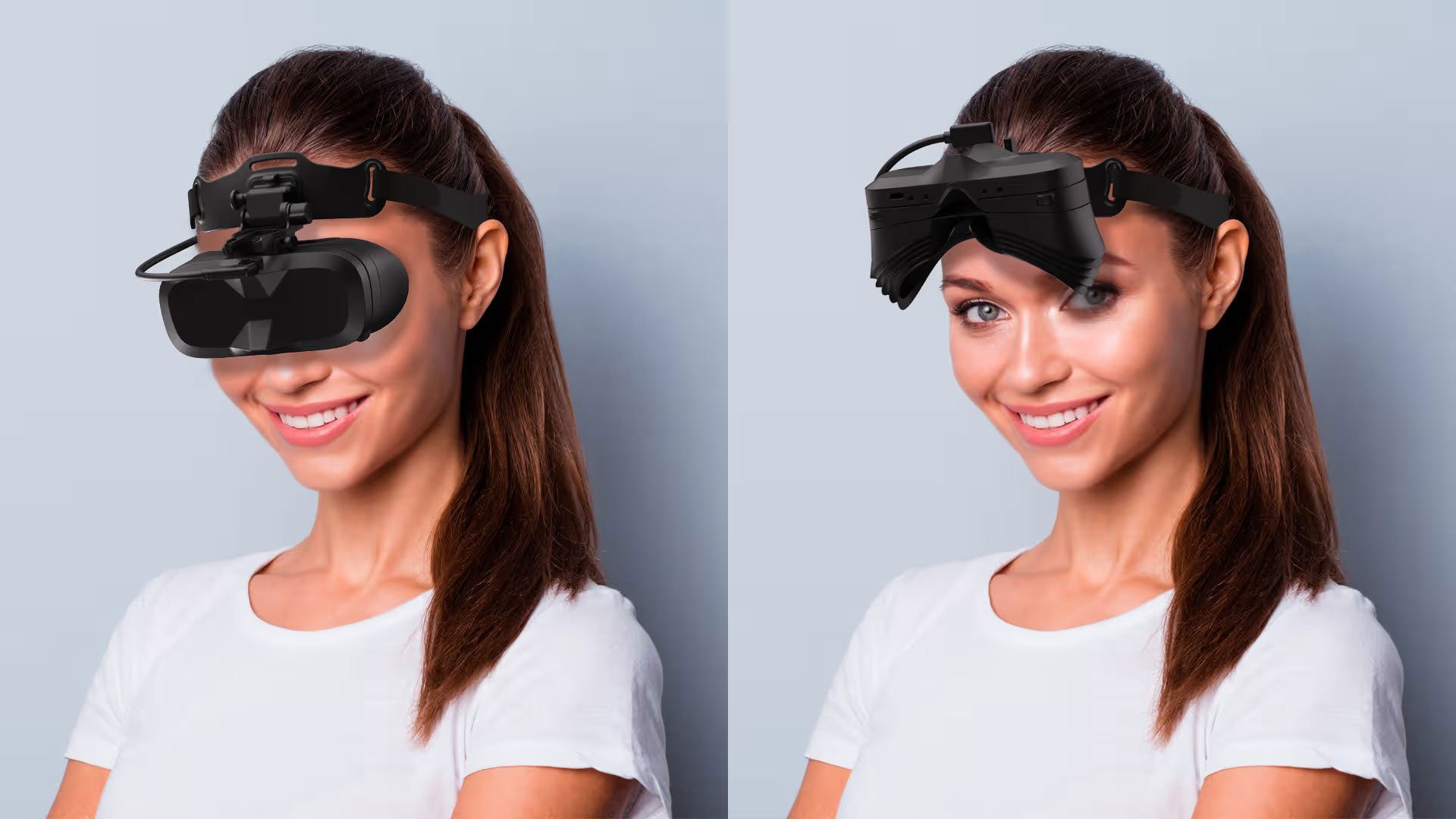
The headset contains the same 3,552 × 3,840 per-eye micro-OLEDs, supporting up to 90 Hz refresh, and the same SteamVR tracking standard, which requires the user to buy SteamVR 1.0/2.0 base stations separately.
Here’s a breakdown of all of the changes announced by Shiftall:
- New chip: The CPU and operating system (OS) have been upgraded, and the firmware has been newly developed, reducing the startup time to less than one-fifth of the previous model. Connection stability with PCs and SteamVR has been improved, and the firmware update process has been improved for greater reliability.
- New Pancake lenses: Shiftall says they’re newly designed by Panasonic Group.
- Redesigned USB-C cable connection: previously located on the top of the headset, the USB-C port has been moved to the front and structurally reinforced for improved durability. A specially developed intermediate USB cable enhances connection stability and prevents issues caused by wear or accidental disconnection.
- Refined nose gap: Sharp plastic edges no longer come into contact with ‘Western’ nose shapes. The material and shape around the nose area have been improved for greater comfort.
- New Strap material: A new strap material has been adopted, and includes better durability of the hook-and-loop fastener.
Estimated to start shipping in late December, MeganeX Mark II is now available for pre-order.
The headset (SteamVR base stations not included) is priced at $1,900 in the US (excluding import duty), €1,900 in Europe (VAT included), £1,600 in the UK (VAT included), and ₩2,499,000 in South Korea (VAT included).
Specs
| Feature | MeganeX Superlight “8K” | MeganeX “8K” Mark II |
|---|---|---|
| Display | 3,552 × 3,840 (micro-OLED, 10-bit HDR) | 3,552 × 3,840 (micro-OLED, 10-bit HDR) |
| Refresh rates | 90 Hz (support for 75 Hz / 72 Hz) | 90 Hz (support for 75 Hz / 72 Hz) |
| Lens type | Pancake lenses (Panasonic group) | Pancake lenses (newly designed from Panasonic) |
| Weight (main body) | < 185 g | 179 g |
| IPD & focus adjustment | Electric IPD 58–72 mm; diopter adjust 0D to –7D | Electric IPD 58–72 mm; diopter adjust 0D to –7D |
| Connectivity / tracking ecosystem | DisplayPort + USB 2.0, SteamVR tracking (base stations required) | DisplayPort + USB 2.0, SteamVR tracking (base stations required) |
My Take
You may have noticed I’ve put “8K” in quotes throughout this announcement. That’s to indicate that headset doesn’t actually provide 8K per-eye displays.
While companies like Shiftall and Pimax typically err on the side of the biggest number, I see this as more of a marketing device than a true reflection of what the end user actually sees. Because it’s using dual 3,552 × 3,840 micro-OLEDs, the user doesn’t actually perceive an 8K image. By that maxim, Quest 3 could be labeled with “4K”, owing to its dual 2,064 × 2,208 displays, and Oculus Rift CV1 could be labeled “2K” according to its dual 1,080 × 1,200 displays. Impressive sounding, but a bit misleading.
That said, Shiftall thinks resolution is a better catch-all for VR headsets, which I disagree with since its target audience will probably understand the nuances of displays and optics anyway.
“We have decided against publishing official FOV and PPD numbers,” Shiftall says, referring to the original MeganeX superlight “8K”. “If an industry-standard measurement method were established, such as the method used to calculate fuel consumption for automobiles, we would disclose our figures, but this is not the case in the current VR industry.”
Still, I suspect potential enterprise and prosumers looking to shell out $1,900 for a single headset—no controllers or base stations included—are already familiar with pixels per degree (PPD) and binocular overlap, which are more useful, albeit less flashy metrics. On that front, MeganeX “8K” Mark II is impressive. Its pancake lenses provide a reported ~100-degree horizontal FOV, which seems to deliver a near 100 percent binocular overlap.
Using the formula to get PPD (Horizontal Pixel Count ÷ Horizontal Field of View), it also tops the competition, coming out to around 35.5 PPD: larger than Pimax Dream Air ($2,000) at 35 PPD, and Bigscreen Beyond 2 ($1,020) at 32 PPD.
Whatever the case, I think its time to retire these sorts of resolution claims championed outside of the spec sheet, if only to lend more credibility to the company in question. And the same goes for the questionable Photoshop jobs too.
