
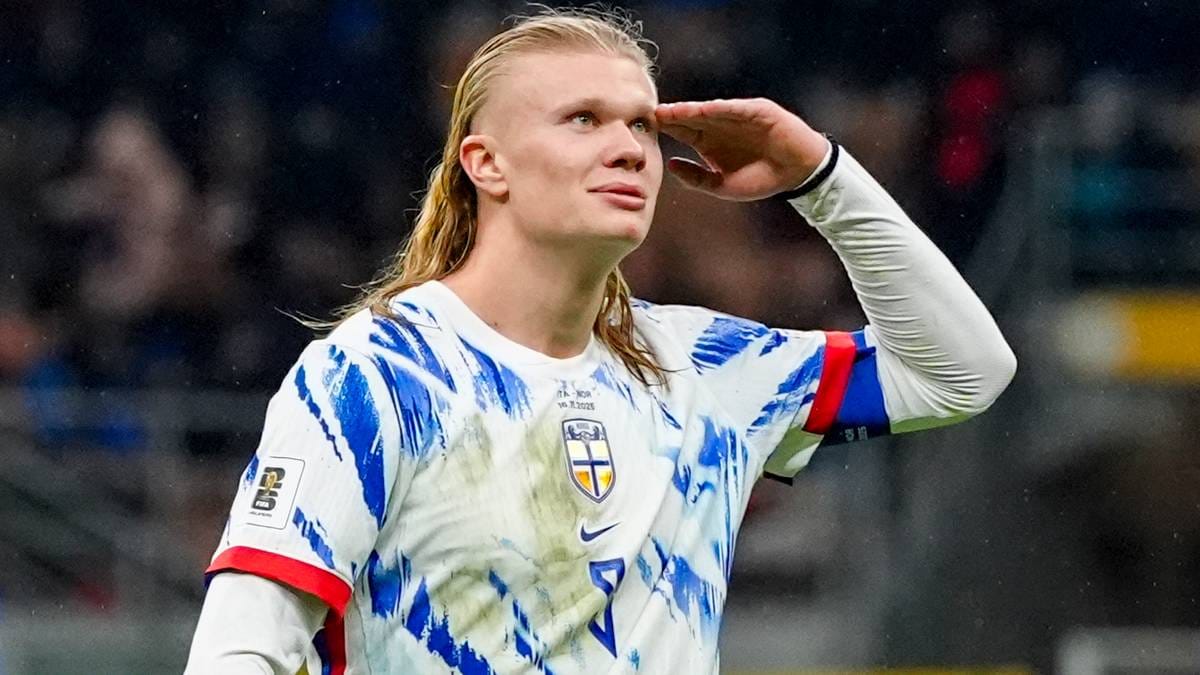
After a 28-year absence, Norway has secured its place in the 2026 FIFA World Cup, fueled by a remarkable offensive surge and the rising star power of players like Erling Haaland. The qualification marks a notable turning point for Norwegian football,reversing decades of near misses and setting the stage for a highly anticipated return to the world stage.This article explores the team’s journey to the tournament and the factors contributing to their newfound success.
Norway is heading to the World Cup. It’s a tune that’s already stuck in the heads of just about everyone. Next year, the national team will compete on the world stage, and the celebratory songs will follow.
When Ståle Solbakken and his squad of 23 land in the United States, Canada, or Mexico in early June, they’ll be met with a palpable sense of anticipation and excitement. The stakes are high as they prepare to compete against the world’s best.
The USA is a nation built on star power.
And the Norwegian national team fits right into that landscape.
Watch the highlights from Norway’s 3–0 victory over Italy at Ullevaal Stadium in World Cup qualifying. Footage from TV 2.
Norway in 2025 possesses qualities that American audiences adore, extending far beyond a typical passion for European soccer. This team has a star power that resonates with the American sports fan base.
That wasn’t the case the last time Norway competed in the World Cup in the United States back in 1994.
USA, HERE WE COME: Egil “Drillo” Olsen and Rune Bratseth celebrate qualifying for the World Cup after their away match against Poland in 1993.
Foto: Bjørn Sigurdsøn / NTB
A Football Outsider
Table of Contents
No matter how beloved “Drillo” and his team were back home, the feeling the Norwegian national team encountered in most other places could unfortunately be described in one word: dislike.
An entire world disliked almost everything about Professor Egil Olsen and his brand of football.
They disliked his football philosophy. They disliked his team. They disliked his arrogance. They disliked the fact that Norway suddenly defeated nations that were much higher on the list of teams people wanted to see in a World Cup.
Norway qualified by winning our group ahead of powerhouses like the Netherlands and England.
Football’s homeland, as the English like to call themselves, was shaken after being humbled 2–0 at Ullevaal. And it was a national tragedy, relatively speaking, when they failed to qualify for the tournament in the USA.
This was also a major disappointment for the Americans. Regardless of how far removed American fan culture is from the British, they wanted England involved when the European style of football was being relaunched to a skeptical American audience.

SHOCKED: Øyvind Leonhardsen celebrates in front of distraught English players as they qualified for the 1994 World Cup in the USA.
Foto: Jon Eeg / NTB
The System Was the Star
But Drillo and his men had other plans. And they astonished the football world with a type of tactic that ironically relied on what the British themselves once swore by – directness, discipline, work rate, winning the ball back, and long balls to strong headers, often with a Flo at the receiving end. Concepts like “best without the ball,” “breakdown,” and “breakthrough eagerness” didn’t exactly have a Latin ring to them, but quickly became part of everyday conversation back home, as Norway suddenly began to shake up the footballing powers.
For everyone else, it was mostly a feeling that football was being taken back to a kind of medieval darkness, with Drillo as the high priest and his players as devout disciples.

A MAN OF PRINCIPLES: Egil “Drillo” Olsen on the training ground before the 1994 World Cup in the USA.
Foto: Tor Richardsen / NTB
When Norway was eliminated from the 1994 World Cup after the group stage on goal difference, there was unanimous celebration from most outsiders.
The world hated Drillo’s football. To the extent that it has lingered until quite recently.
The system was the star under Drillo.
For Ståle Solbakken, the challenge has obviously been to create a system that suits the stars.
Perhaps a kind of tactical ghost has been with Solbakken a little longer than he’s willing to admit. Solbakken has, after all, achieved plenty for himself as a club coach, particularly with Danish side FC Copenhagen. But as a national team coach, in Norway, you can never completely escape the shadow of the little giant from Fredrikstad.
Until now.

TO THE TOP: Ståle Solbakken was lifted into the air after he led Norway to the top of their World Cup qualifying group.
Foto: Lise Åserud / NTB
Tripled Goalscoring Rate
As recently as a year ago, murmurs arose that Ståle Solbakken needed to embrace a more “Drillo-esque” approach after Norway suffered a 5–1 defeat in the Nations League match against Austria.
But Solbakken used the remaining months of the year and the winter well, preparing for World Cup qualifying.
And created a minor miracle of a Norwegian national team. Almost out of nowhere.
The numbers speak for themselves: according to Transfermarkt, the average number of goals scored has tripled from 1.50 per game in the previous qualifying campaign in 2021 to an incredible 4.63 in this qualifying cycle. This impressive offensive output has significantly boosted their chances of success.
Norway arrives at the World Cup as a genuine contender, despite it being 28 years since their last appearance.
Because it’s not primarily the teams, but the biggest stars that are the attractions when the World Cup returns to the USA.
On the Poster
And on the posters around the World Cup venues in the three host nations, there will now be pictures of Messi, Ronaldo, Yamal, Mbappé – and Erling Braut Haaland from Bryne on the coast of Norway.
Haaland has obvious Hollywood qualities, a kind of successor to the legendary Ivan Drago, the somewhat otherworldly Soviet boxer who challenged the hero Rocky in Sylvester Stallone’s iconic film before Drillo became national team coach.
In addition, we have an established world star in captain Martin Ødegaard, who is soon to be fit again. We have Alexander Sørloth, Sander Berge, Oscar Bobb, and not least Antonio Nusa. The down-to-earth winger from Langhus is on his way to becoming something special – a kind of National Team Superstar.

NATIONAL TEAM STAR: Antonio Nusa equalized with a stunning strike against Italy.
Foto: Fredrik Varfjell / NTB
His consistent performances for RB Leipzig in the German Bundesliga are also being noticed. But it’s within the clear security under Ståle Solbakken that Nusa has truly shone in recent months.
To the extent that some media outlets have called him a potential successor to Messi, if the Argentine icon ever decides to retire.
Big and bold words are what the Norwegian players will have to listen to for the next 200-plus days until the World Cup kicks off.
Because this is 2025. And the world loves everything about Norway. Including Julian Ryerson’s hairstyle.
Published
November 17, 2025, at 8:26 PM
