
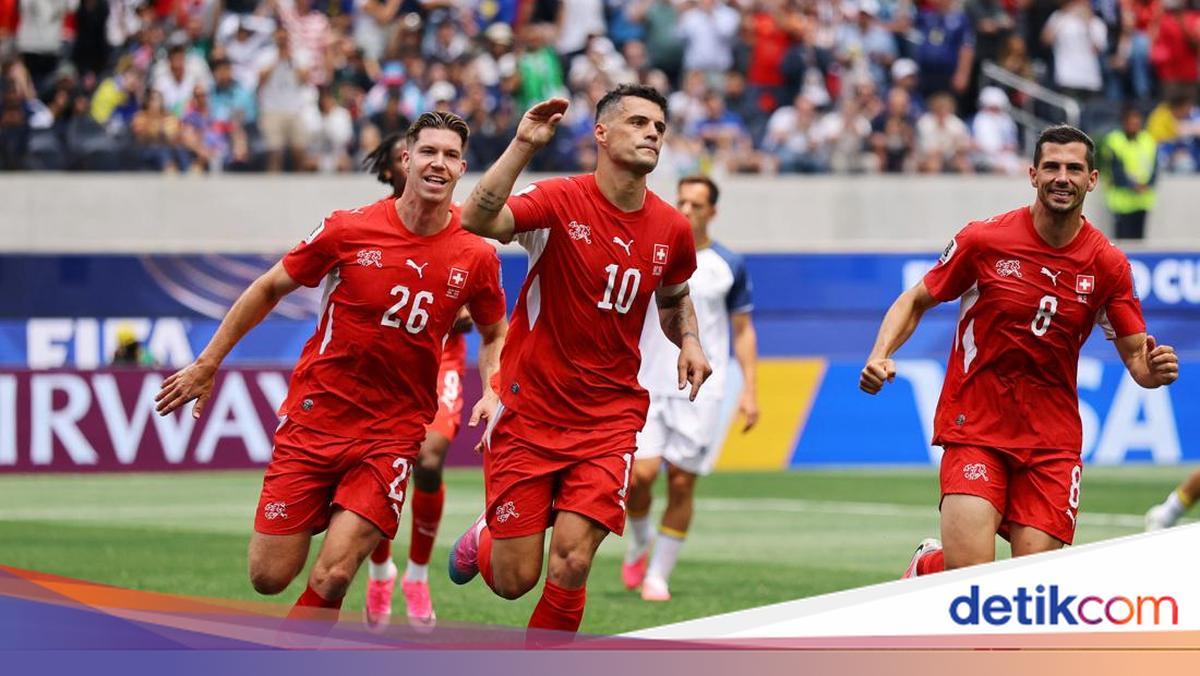
Switzerland defeated Bosnia and Herzegovina 4-1 in a Group B match of the 2026 World Cup at SoFi Stadium on Friday, June 19, 2026. The victory, secured through second-half goals from Johan Manzambi, Ruben Vargas, and Granit Xhaka, moved Switzerland to the top of the group standings with four points.
Switzerland’s Second-Half Surge
The match remained deadlocked through a scoreless first half, during which Switzerland struggled to convert dominance into goals. According to reporting from CNN Indonesia, the opening 10 minutes were characterized by cautious play as both teams assessed one another. While Switzerland controlled the tempo, they struggled to break into the final third. The tactical setup for the Swiss, which often relies on possession-based play and high-pressing, faced early resistance from a Bosnian side that prioritized structural integrity over attacking flair.

/data/photo/2026/06/14/6a2dc522bf0cb.jpg "Photo: Kompas.com")
The offensive breakthrough finally arrived in the 74th minute. Johan Manzambi capitalized on a cross from the left flank, burying a volley to break the stalemate. This goal proved to be the catalyst for a scoring flurry that defined the remainder of the contest. As Goal.com detailed, the tactical decision by Swiss manager Murat Yakin to introduce Manzambi and Vargas in the 72nd minute proved decisive, as the substitutes accounted for three of the team’s four goals. In tournament football, the ability of bench players to impact the game in the final quarter is often the difference between a draw and a vital three points, particularly in the condensed format of the World Cup group stage.
Discipline Issues and Tactical Shifts
Bosnia and Herzegovina’s hopes of a comeback were effectively dismantled in the 80th minute when Tarik Muharemovic received a straight red card for a hard tackle on Breel Embolo. The dismissal left Bosnia with only 10 men, forcing them to abandon their defensive structure and open up the pitch, allowing Switzerland to exploit the additional space. In international competition, a red card late in the second half frequently leads to an avalanche of goals as the shorthanded team fatigues and loses the tactical discipline required to defend against fresh substitutes.
The sequence of events following the red card was rapid:
- 84th minute: Ruben Vargas scored a low, precise shot to double the lead.
- 90th minute: Manzambi netted his second goal of the night following an assist from Vargas.
- 93rd minute: Ermin Mahmic scored a consolation goal for Bosnia from outside the box.
- 96th minute: Granit Xhaka converted a penalty kick to seal the 4-1 victory.
The match statistics highlight a significant disparity in offensive pressure. While Bosnia had previously relied on a disciplined low-block defense—a strategy that frustrated opponents like Italy and Wales during the qualification cycle, as noted by ANTARA News—they could not withstand the late-game intensity of the Swiss attack. The transition from a defensive posture to a high-scoring offensive strategy underscored the depth of the Swiss squad, which is currently navigating a tournament schedule that demands high physical output every few days.
Group B Implications and Managerial Strategy
Entering the match, Switzerland faced pressure to perform after a disappointing 1-1 draw against Qatar in their tournament opener. Murat Yakin admitted after that first match that his team selection had been flawed, specifically regarding the inclusion of less experienced players. According to Kompas.com, Yakin shifted his approach against Bosnia, favoring a more seasoned lineup to ensure stability. The reliance on veteran leadership, exemplified by captain Granit Xhaka, is a common hallmark of national teams attempting to navigate the high-stakes environment of the World Cup, where experience in tournament settings often dictates composure under pressure.

The win places Switzerland at the top of Group B with four points. Bosnia and Herzegovina, conversely, sit at the bottom of the table with a single point from their first two matches. The group’s standing remains fluid, pending the result of the upcoming match between Canada and Qatar. For teams in this position, the final match of the group stage becomes a must-win scenario to secure a spot in the round of 32, as goal difference often becomes the deciding factor in tight group races.
The defensive resilience Bosnia showed in the months leading up to the tournament—having been undefeated in nine consecutive matches since September 2025, per reports from ANTARA News—failed to materialize against a Swiss side that finally found its clinical edge. For Switzerland, the result serves as a critical correction to their tournament trajectory, providing necessary momentum as the group stage concludes. With this victory, the Swiss national team reinforces their standing as a contender to advance from the group, capitalizing on their superior late-game conditioning and tactical flexibility at SoFi Stadium.
Find more reporting in our Sport section.
