
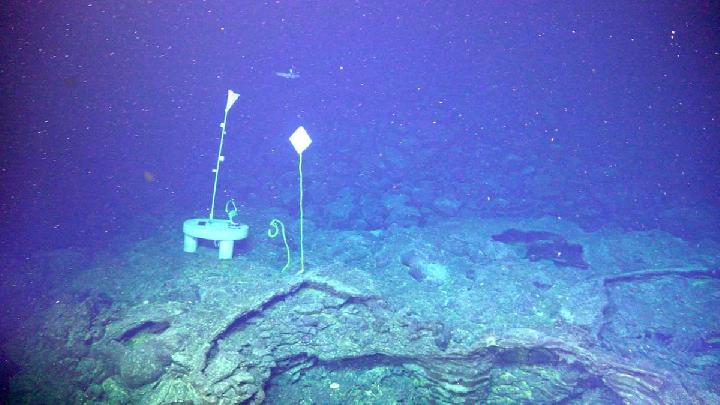
Underwater volcanoes pose unique challenges for scientists studying volcanic activity and potential hazards. Axial Seamount, a highly active volcano on the Juan de Fuca Ridge off the Oregon coast, has been under close observation sence its last eruption in 2015. Initial projections suggested a possible eruption by the end of 2025, but researchers have revised that timeline, now indicating a higher likelihood of activity in mid-to-late 2026 due to a slower rate of magma accumulation.
Researchers now estimate that Axial Seamount, an underwater volcano off the coast of Oregon, is more likely to erupt in mid-to-late 2026, a shift from previous predictions of a 2025 eruption. The updated timeline reflects a slower-than-expected rate of land inflation, a key indicator of volcanic activity. Understanding underwater volcanic activity is crucial for assessing potential impacts on marine ecosystems and, though rare, distant coastal regions.
Scientists initially indicated in December 2024 that Axial Seamount was nearing a critical inflation threshold similar to conditions observed before its last eruption a decade ago. However, recent data suggests the buildup to an eruption will take longer.
Located on the Juan de Fuca Ridge, a divergent plate boundary off the Pacific Northwest coast of the United States, Axial Seamount is considered one of the most active underwater volcanoes in the eastern North Pacific.
“After successfully forecasting the 2015 eruption at Axial, we’ve been trying to forecast the next one ever since,” said Bill Chadwick, a researcher at Oregon State University, according to a report from Live Science.
Chadwick explained in a presentation at the American Geophysical Union in December 2024 that eruptions at Axial are typically preceded by a period of high seismicity and steady land inflation caused by rising magma.
Following the 2015 eruption, inflation slowed to almost zero by mid-2023. However, in the fall of 2023, both the rate of inflation and seismic activity began to increase again.
In an abstract, Chadwick wrote that “based on current trends, and assuming Axial will be ready to erupt when it reaches the 2015 inflation threshold, our eruption window forecast is between now (July 2024) and the end of 2025.” By the end of 2024, Axial’s inflation had reached 95 percent of pre-2015 eruption levels.
However, the rate of inflation slowed again in April 2025, prompting Chadwick to revise his earlier forecast. “It will take a little longer than we thought to reach the same inflation threshold as before the last eruption,” he wrote in a blog update on October 27. “At the current inflation rate, we won’t reach that higher threshold until mid-to-late 2026.”
Chadwick noted that Axial Seamount exhibits a pattern similar to that of Krafla volcano in Iceland, where the inflation threshold has increased slightly with each eruption. He estimates the 2015 threshold was approximately 30 centimeters higher than in 2011, suggesting another 20 centimeters of uplift may be needed before the next eruption. “This is really just a guess based on knowledge, but also based on previous behavior of volcanoes like Krafla,” he said.
Chadwick added that each eruption can compress the surrounding crust, requiring greater inflation for magma to ascend, although this increase in the threshold is not expected to be limitless.
He also explained that current forecasting efforts still rely on historical patterns, but newer physical models they’ve developed are beginning to accurately predict past eruptions. As of November 10, the team began using the model to analyze real-time data from Axial, with results expected to be published after the next eruption occurs.
Pilihan Editor: Gempa Darat Dangkal Kembali Guncang Bandung Selatan
