
A new artificial intelligence system is showing promising results in the rapid and accurate detection of heart abnormalities via electrocardiograms (ECGs). Developed by researchers at the University of Málaga in spain and École Polytechnique Fédérale de Lausanne in Switzerland, the system-dubbed FADE-achieves 83.84% accuracy, possibly streamlining cardiac diagnosis and lessening the burden on overwhelmed healthcare professionals. What distinguishes FADE is its novel training approach, learning to identify irregularities by first analyzing and understanding normal heart rhythms, a method that coudl significantly reduce the need for extensive, expert-labeled data. The findings were published this month in Computer Methods and Programs in Biomedicine.
A new artificial intelligence system is demonstrating promising accuracy in detecting heart abnormalities from electrocardiograms (ECGs), potentially offering a faster and more accessible diagnostic tool for cardiac conditions. Researchers have developed the system, dubbed FADE, which achieves 83.84% accuracy in identifying anomalies – a significant improvement over traditional methods that rely heavily on manual interpretation by healthcare professionals.
Currently, diagnosing heart issues from ECGs often requires cardiologists to meticulously analyze the complex waveforms representing heart activity. This process can be time-consuming and subject to individual expertise. The new technology, developed by a team at the University of Málaga in Spain, in collaboration with experts at the École Polytechnique Fédérale de Lausanne in Switzerland, aims to streamline this process and improve diagnostic precision.
What sets FADE apart from conventional AI models is its unique training approach. Instead of learning to identify anomalies by being shown examples of abnormal ECGs – which requires extensive labeling by cardiologists – FADE is initially trained solely on normal heart rhythms. This innovative method eliminates the need for a large, pre-labeled dataset of cardiac abnormalities, saving both time and resources.
This approach saves time and reduces costs by eliminating the need for expert supervision during the initial training phase of the system.
“We train the model with a database of normal signals, which allows it to learn what a healthy electrocardiogram looks like without a cardiologist needing to indicate whether there are irregularities in the signals at this stage,” explained Paula Ruiz Barroso, a researcher at the University of Málaga and lead author of the study. This initial training allows the system to establish a baseline understanding of normal heart function.
Once trained on normal ECGs, FADE predicts future signal patterns and identifies deviations from this baseline as potential anomalies, including arrhythmias, ischemia, or myocardial infarction (heart attack). Researchers then establish a detection threshold using a small subset of both normal and abnormal samples to reliably determine when a signal should be flagged as irregular.
“This method allows us to reliably determine when a signal should be considered anomalous,” Ruiz told Fundación Descubre. The study, ‘FADE: Forecasting for anomaly detection on ECG’, published in the journal Computer Methods and Programs in Biomedicine, demonstrates the system’s ability to detect a wide range of cardiac abnormalities.
The research team reports FADE correctly classified normal ECG signals with 85.46% accuracy, while achieving an overall average precision of 83.84% in detecting anomalies. “Unlike previous work that only detects a small number of anomalies, mainly related to frequency, our approach is more robust, as it allows us to detect both abnormal heartbeats and arrhythmias,” Ruiz noted. Early and accurate detection of these conditions is crucial for timely intervention and improved patient outcomes.
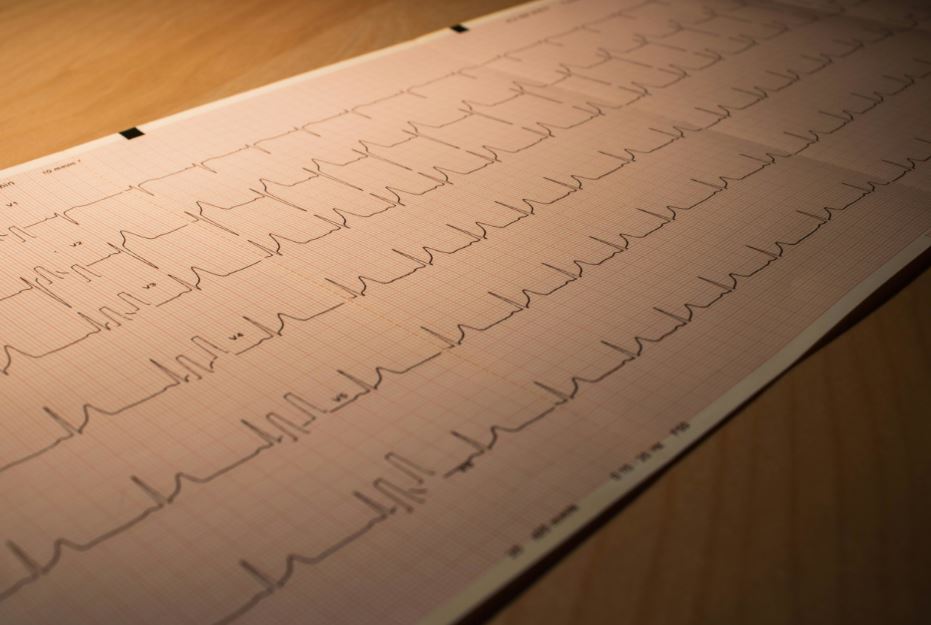
The system’s enhanced accuracy is attributed to its dual training process, utilizing two databases comprising 456 hours of recorded data.
The system’s design also addresses a common limitation of AI models: difficulty generalizing to new datasets. FADE employs a dual-path processing model, with each path optimized to capture different aspects of the ECG signal – one focusing on rapid changes and the other on slower trends. It also incorporates a model designed to reconstruct the future ECG waveform.
“We are able to better predict what the normal signal would look like because we consider the peaks and the central band of the curve separately. We teach the system to learn to intuit the two parts separately,” Ruiz explained. The researchers also utilize a learning formula that accounts for the specific characteristics of the ECG waveform.
The system’s precision is further enhanced by its dual training with two databases totaling 456 hours of recordings. “It’s not easy for a model to work on another database; you have to retrain it so it can relearn and adjust to the new context where it has to operate,” Ruiz said.
Real-World Application
Researchers at the University of Málaga are now collaborating with a medical team to implement the system in a clinical setting for evaluation by healthcare professionals. Simultaneously, they are working to optimize the model for use in a portable device, potentially enabling continuous heart monitoring for individuals. Ongoing efforts also focus on refining the system’s ability to filter out noise and maintain signal integrity, even with patient movement.
