
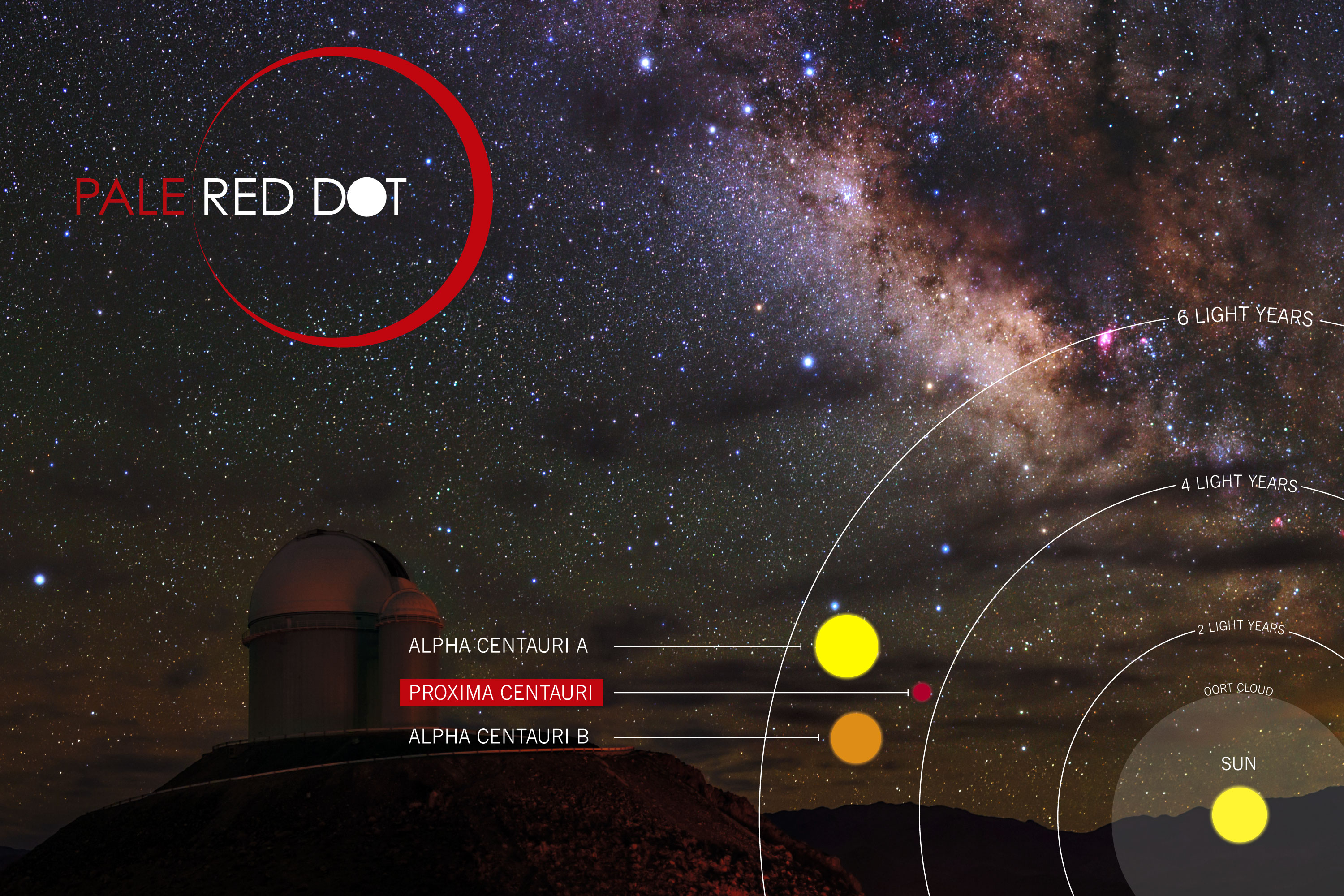
Astronomers using the Very Large Telescope (VLT) in Chile have identified anomalous gravitational perturbations near the star Proxima Centauri, suggesting the presence of an unseen planetary-mass object—likely a rogue planet or a previously undetected moon—within its habitable zone. The findings, published June 16 in Nature Astronomy, contradict earlier models that assumed Proxima Centauri’s system contained only two confirmed exoplanets, Proxima b and Proxima c.
Discovery of a Third Gravitational Signal in Proxima Centauri’s System
The discovery stems from a six-year observational campaign led by Guillem Anglada-Escudé of the Queen Mary University of London, who first proposed Proxima b’s existence in 2016. New radial velocity data from the VLT’s ESPRESSO spectrograph show periodic wobbles in Proxima Centauri’s motion that cannot be explained by the two known planets alone.
"The signal is weak but persistent, appearing in three independent datasets," Anglada-Escudé told reporters. "If confirmed, this object would be the first detected ‘hidden companion’ in a nearby star system using ground-based telescopes."
The candidate object—dubbed Proxima d by some researchers—would orbit at roughly 0.025 astronomical units (AU), placing it within the star’s habitable zone. However, its mass remains uncertain: estimates range from 0.2 to 0.8 Earth masses, straddling the boundary between a large moon and a small planet.
Implications for Proxima Centauri’s Orbital Dynamics and Formation History
Proxima Centauri’s system was already anomalous. Proxima b, a potentially habitable rocky planet, orbits every 11.2 days at just 0.05 AU, while Proxima c, a super-Earth, takes 1,900 days on a highly elliptical path. The new data suggest a third body disrupting these orbits—a scenario that forces astronomers to reconsider how such systems form.

"This would imply a highly dynamic early history, possibly involving planetary migrations or even a past collision," said Maria Rosa Zapatero Osorio of the Center for Astrobiology in Madrid, a co-author of the study. "It’s a reminder that even our nearest stellar neighbor still holds surprises."
The team acknowledges alternative explanations: stellar activity or instrumental noise could mimic the signal. To rule these out, they are cross-referencing data with the James Webb Space Telescope (JWST), which may detect thermal emissions from the object later this year.
Potential Role in Proxima b’s Habitability and the Search for Extraterrestrial Life
Proxima Centauri’s proximity—just 4.24 light-years from Earth—makes it a prime target for biosignature studies. The potential third object complicates assessments of habitability, as its gravitational influence could stabilize or destabilize Proxima b’s climate over time.
"If this object exists, it might have played a role in delivering volatiles to Proxima b," said Ignasi Ribas of the Institute of Space Studies of Catalonia, noting that tidal forces from multiple bodies could have driven geological activity. "But without direct imaging, we’re still guessing."
The discovery also raises questions about the prevalence of "hidden companions" in other star systems. Similar anomalies have been flagged around Trappist-1 and LHS 1140, though none have been confirmed. If Proxima d is real, it could imply that many exoplanet systems are more crowded—and more chaotic—than previously thought.
Upcoming Observations and the Path to Confirmation or Rejection
- JWST Follow-Up: Scheduled observations in Q4 2026 will search for infrared signatures of the object.
- Gaia Mission Data: The European Space Agency’s Gaia satellite, which maps stellar motions with micrometer precision, may provide independent confirmation by 2027.
- Alternative Hypotheses: If no object is found, the anomaly could point to unmodeled stellar phenomena, such as dark spots or magnetic cycles, which have fooled exoplanet hunters before.
"This is a classic case of ‘extraordinary claims require extraordinary evidence,’" said Sara Seager of MIT, who was not involved in the study. "But the fact that three instruments saw the same signal makes it hard to dismiss."

The Proxima Centauri system now joins a short list of stars where three or more planets have been detected using radial velocity alone—a method that relies on a star’s "wobble" to infer unseen masses. Most confirmed multi-planet systems, like TRAPPIST-1 or Kepler-90, required transit photometry (measuring dimming as planets pass in front of their stars).
"This shows that radial velocity is still a powerful tool, even for small, cool stars," said Anglada-Escudé. "We might be undercounting planets in these systems."
The findings also revive debates about rogue planets—free-floating worlds not bound to any star. If Proxima d is confirmed as a low-mass object, it could be a captured rogue, offering clues about how such bodies end up in stellar systems.
- Is the Object a Planet or a Moon?
- Its mass is too low to be a gas giant but too high to be a typical moon. Some theorists speculate it could be a free-floating moon ejected from a gas giant’s orbit.
- Could It Host Life?
- At 0.2–0.8 Earth masses, it would likely be a terrestrial world, but its proximity to Proxima Centauri (a flare-active red dwarf) makes surface conditions extreme. Any atmosphere would need to be dense enough to retain heat but thin enough to avoid a runaway greenhouse effect.
- Why Wasn’t It Detected Earlier?
- The signal was buried in noise until new data-processing techniques, developed for ESPRESSO, isolated it. This suggests other "hidden companions" may lurk in older datasets.
"This is one of those ‘wait and see’ moments in astronomy," said Lisa Kaltenegger of Cornell University. "If it’s real, it changes how we think about planetary formation near M-dwarfs. If it’s not, it teaches us how hard it is to find small, faint worlds."
For now, the astronomical community is divided. Skeptics point to past false alarms, such as the 2019 claim of a planet around Alpha Centauri A, which later proved to be stellar activity. But the Proxima d team’s rigorous cross-checking has given the finding more weight than most.
"We’re not claiming discovery yet," said Anglada-Escudé. "But we’re saying the evidence is strong enough to warrant a closer look."
- Anglada-Escudé, G. et al. (2026). "Radial velocity evidence for a hidden companion in the Proxima Centauri system." Nature Astronomy.
- European Southern Observatory press release (June 16, 2026).
- James Webb Space Telescope observation schedule (NASA, 2026).
- Interviews with Guillem Anglada-Escudé, Maria Rosa Zapatero Osorio, and Ignasi Ribas (June 2026).
- Gaia mission updates (ESA, 2026).
Find more reporting in our Tech section.
