

Southern California’s San Andreas and San Jacinto fault systems are currently experiencing their highest levels of tectonic stress in 1,000 years, according to a study published this month in the Journal of Geophysical Research: Solid Earth. Researchers warn the region is in a critically loaded state, potentially capable of a large, through-going rupture.
Tectonic Stress Reaches Millennium High
A team led by researchers from the University of Hawaii at Mānoa has determined that stress levels across multiple segments of the San Andreas and San Jacinto faults have reached or exceeded the highest values observed in the past millennium. By running computer simulations based on 1,000 years of seismic history—reconstructed through geological data and tree-ring records—the study quantifies the current pressure as unprecedented.
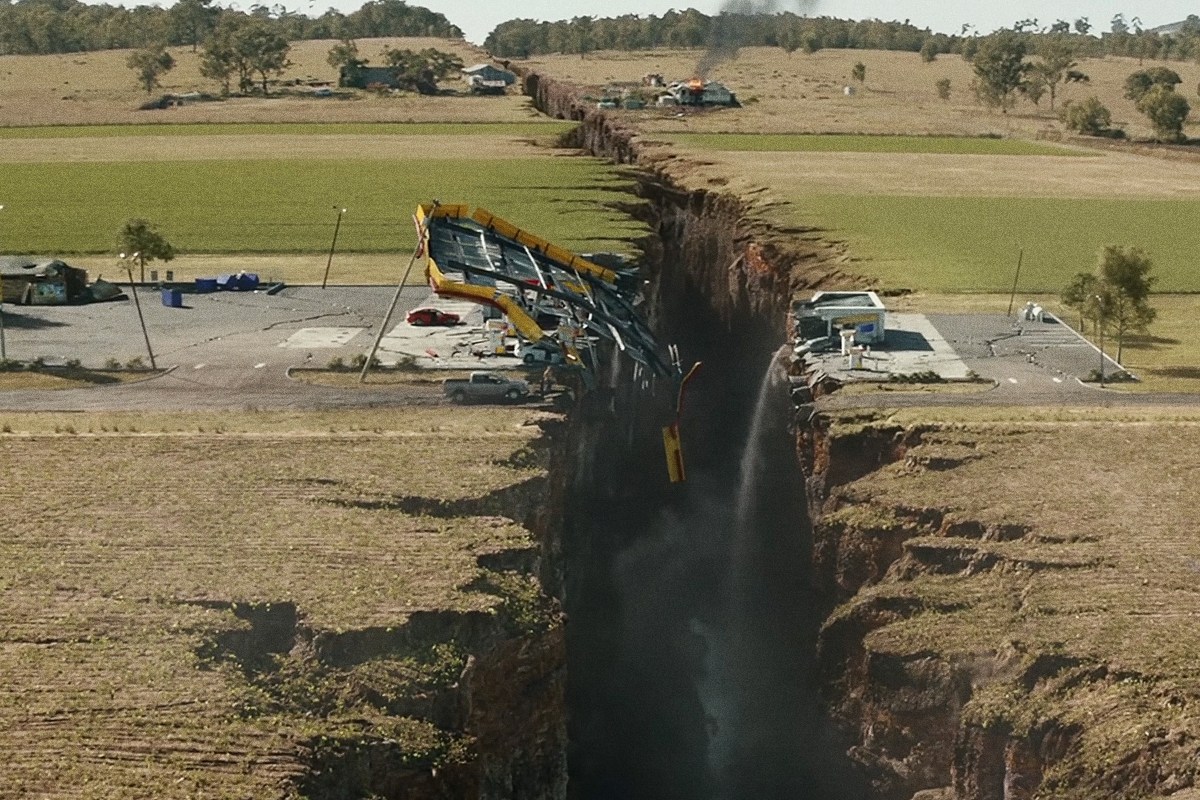
As The Guardian reported, lead author Liliane Burkhard noted that the accumulation of stress has continued for more than 160 years since the last major rupture in the region. The study explains that this elevated pressure is not merely a localized issue; it is distributed across a vast, mechanically locked rock volume.
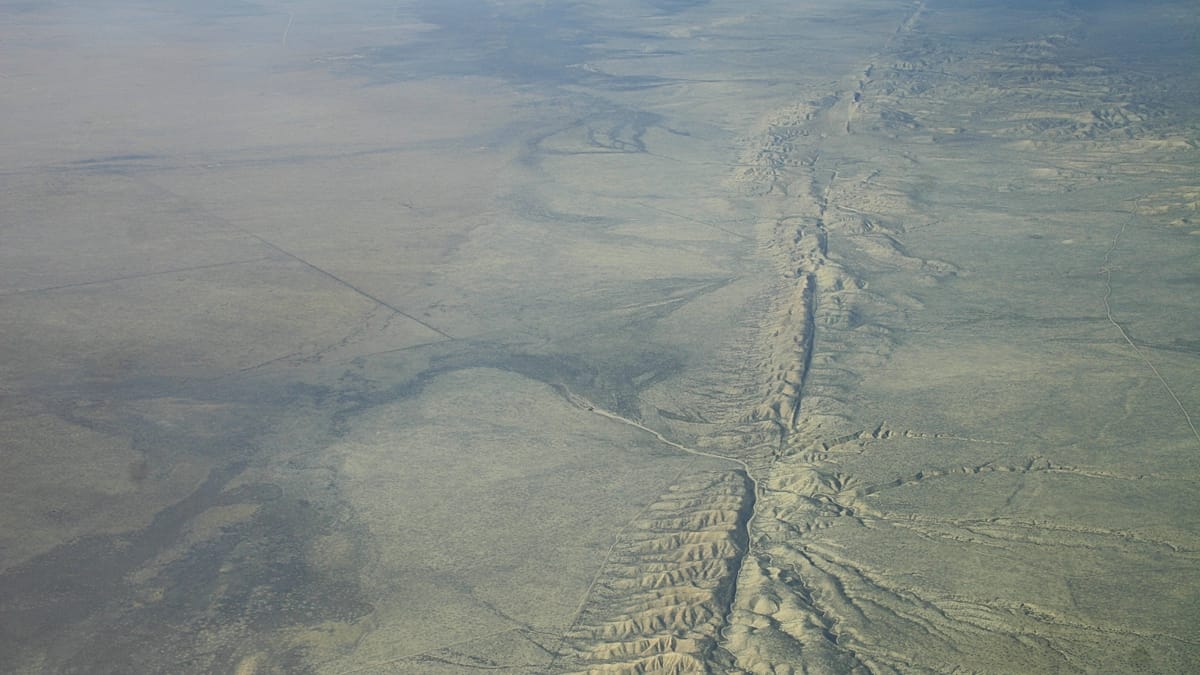
“The key thing that makes this number significant is not the pressure itself in isolation but that this stress is acting across an enormous area: the fault plane extends tens of kilometers along strike and to depths of 10-20 km. What matters here is that this elevated stress is distributed across a vast rock volume that is mechanically locked together. When that lock gives way, the energy released scales with both the stress and the area over which it acts, which is why the resulting earthquakes are so large.”
Liliane Burkhard, lead researcher, via Euronews.com
In the field of geophysics, “locking” refers to the phenomenon where the friction between two tectonic plates prevents them from sliding past one another smoothly. Instead, the plates become stuck, causing energy to build up over decades or centuries. When the stress eventually exceeds the strength of the friction holding the rocks together, the fault slips suddenly, releasing the accumulated energy in the form of seismic waves. The San Andreas Fault is a transform boundary, where the Pacific Plate and the North American Plate grind horizontally past each other, a process that inherently generates significant stress due to the complex topography and varying rock types along the fault line.
The Role of the Cajon Pass Earthquake Gate
Central to the study’s findings is the behavior of the Cajon Pass, a critical junction where the San Andreas and San Jacinto fault systems intersect northeast of Los Angeles. Researchers have identified this area as an “earthquake gate” that can either contain seismic activity or facilitate a cascade across multiple faults.
According to FOX Weather, the model estimated specific stress levels of 3.6 megapascals on the San Jacinto-Bernardino segment, which researchers noted is equivalent to the pressure felt 360 meters below the ocean surface. The study suggests that when stress levels on these two fault systems align, the Cajon Pass may allow a rupture to jump from one to the other, creating a significantly larger event than a single-fault quake.
This potential for a joint rupture poses a direct threat to the infrastructure and population centers of Los Angeles, San Bernardino, Riverside, and the Coachella Valley. Futurism noted that the team’s simulation identified the 1812 earthquake as a historical example of a rupture that crossed both systems, contrasting it with the 1857 event, which remained confined to a single fault.
The concept of an “earthquake gate” is a relatively recent development in seismic modeling. Historically, scientists often modeled fault lines as isolated segments, assuming that a rupture on one fault would be halted by geological barriers. However, recent observations of large-scale seismic events globally have demonstrated that ruptures can sometimes “jump” gaps of several kilometers, effectively bypassing these barriers. The Cajon Pass acts as a structural bottleneck; if a rupture initiated on one segment reaches this junction, the alignment and magnitude of stress at that specific point determine whether the rupture terminates or continues onto an adjacent fault, effectively chaining multiple events together.
Assessing Historical Context and Future Risk
While the study provides a clearer picture of the physics behind seismic accumulation, it does not offer a timeline for an imminent earthquake. Experts emphasize that the research is intended to improve hazard assessment rather than provide predictive warnings. Seismology currently lacks the capability to predict the exact day or hour of a future earthquake, as the chaotic nature of deep-crustal stress makes precise timing impossible to determine.
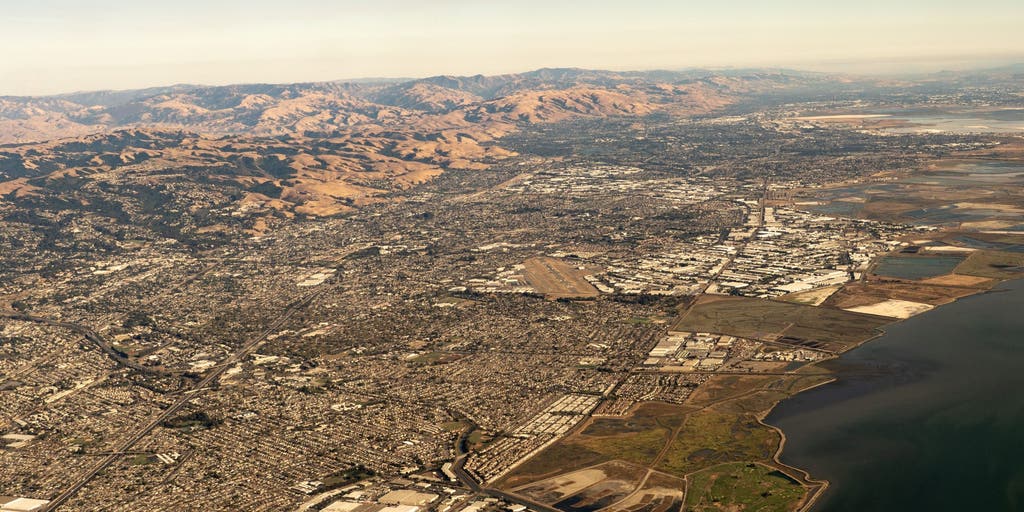
Euronews.com highlighted that the study serves as a necessary update to understanding how fault segments interact in a “critically loaded state.” The findings underscore that the conditions determining whether the “earthquake gate” remains closed or opens depend on the alignment of stress levels on the two fault systems at the precise moment of a rupture.
The broader significance of this research lies in its application to seismic hazard mapping. Agencies such as the United States Geological Survey (USGS) rely on these types of physical models to update building codes and emergency management protocols. By identifying that the current stress is at a 1,000-year peak, the study provides a baseline for evaluating the “worst-case” scenarios that urban planners must account for, such as the potential for infrastructure damage, utility disruption, and the cascading effects of a multi-fault rupture.
For residents of Southern California, the findings provide a data-driven look at why preparation remains a priority. As the scientific community continues to refine these physics-based models, the focus remains on ensuring that regional infrastructure and emergency protocols are calibrated for the range of scenarios identified by the simulation, particularly the possibility of a multi-fault event that could affect millions.
Find more reporting in our Tech section.
