
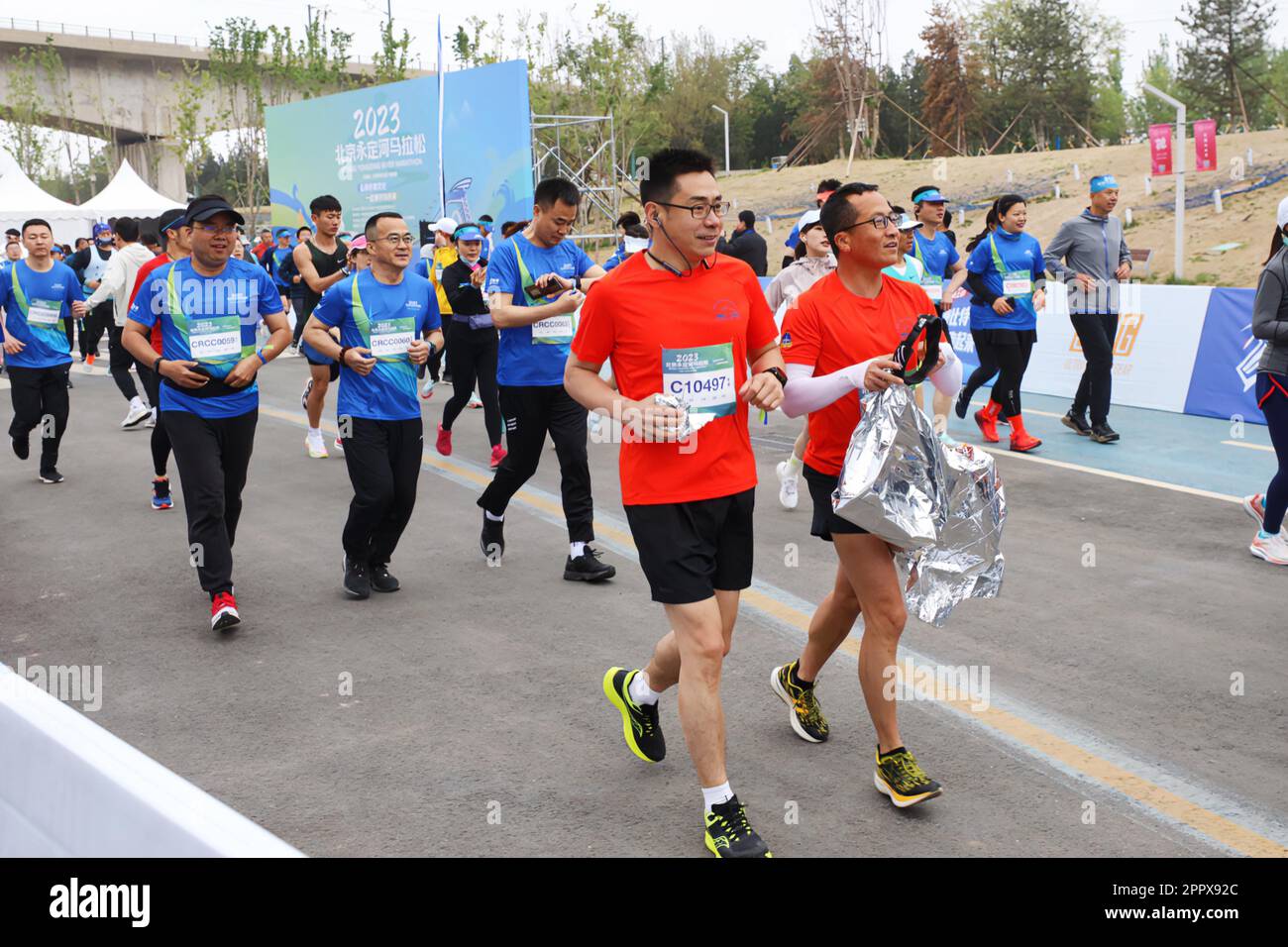
The 2026 Beijing Shijingshan Yongding River Half Marathon is scheduled to take place on May 24, 2026. The race will feature a field of 9,500 runners navigating a course that highlights the industrial heritage of the Shougang Park area and the ecological landscape of the surrounding Yongding River region.
Race Logistics and Course Design
The 2026 Beijing Shijingshan Yongding River Half Marathon serves as a high-profile event for the Shijingshan district, a region officially designated as a double Olympic zone.
The race is set to begin at the intersection of Wuyi Theater South Road and Qunming Lake Street.
The course is designed to emphasize the intersection of urban renewal and ecological restoration. Runners will depart from Qunming Lake Street, passing through major city thoroughfares including Shijingshan Road, Gucheng South Street, and Hedi East Road. The route concludes at the Lianshi Lake Ecological Park. Throughout the run, participants will pass industrial landmarks such as the Shougang Park blast furnaces and cooling towers, alongside views of the Shougang Ski Jumping Platform and the Lianshi Lake wetland area.
Participant Requirements and Registration
Registration for the event opened on March 31, 2026, with a total participant cap set at 9,500 runners. The entry fee for the race is 120 yuan per person. The competition is divided into two primary categories: men’s individual and women’s individual half marathon groups.
Organizers have implemented strict entry requirements to ensure a competitive field. Prospective participants must have completed at least two races of 10 kilometers or longer since January 1, 2024. Results from virtual or online marathon events are not accepted, and runners are required to provide official documentation of their qualifying times during the registration process. Additionally, all participants must be at least 18 years old as of January 1, 2026, meaning they must have been born on or before January 1, 2008.
Commemorative Elements and Technology
The event organizers have introduced a unique design for the finisher medals. Each medal features a pocket-watch-inspired aesthetic, with the front outer ring recreating the silhouette of the Shougang No. 3 blast furnace. The interior of the medal incorporates a dynamic quicksand design. The reverse side depicts the lines of the Shougang Bridge and the Yongding River.
Beyond the physical design, the medals are equipped with Near Field Communication (NFC) technology. This feature allows finishers to scan their medals with a smartphone to immediately access their official race times and performance data.
The marathon is intended to promote the integration of sports, culture, and tourism within the Shijingshan district. By showcasing the area’s industrial transformation and ecological improvements, the event aims to contribute to the broader goals of national fitness initiatives. As of mid-May 2026, preparations are in the final stages ahead of the May 24 start date.
Strategic Objectives and Regional Impact
The staging of the 2026 Beijing Shijingshan Yongding River Half Marathon serves as a critical component of the district’s long-term strategy to leverage its unique geographic and architectural assets. By utilizing the Shougang Park area—a site that has undergone significant conversion from heavy industrial use to a venue for international sports and leisure—the event organizers aim to cement the district’s identity as a hub for both competitive athletics and public wellness.
The course route itself is meticulously planned to provide participants with an immersive experience of this transformation. By moving runners past the blast furnaces and cooling towers, the event highlights the preservation of industrial history, while the subsequent transition to the Lianshi Lake Ecological Park underscores the district’s commitment to environmental sustainability. This contrast between the park’s steel-wrought past and its current status as an ecological destination is a central theme promoted by the event’s planning committee.
Operational Standards and Safety Protocols
The administrative framework for the race, specifically the requirement for verified race history, reflects a standard of operational rigor intended to maintain the safety and integrity of the event. By mandating that participants prove their fitness through documented finishes in events of at least 10 kilometers, organizers mitigate the risks associated with untrained runners attempting the half-marathon distance.
The registration process, which began in late March 2026, includes stringent verification procedures. Potential participants are required to submit official records of their qualifying performance times. This vetting process is not merely for the purpose of seeding or competitive grouping; it is a fundamental element of the race’s safety policy. The age restriction, requiring participants to be at least 18 years old as of the start of the calendar year, ensures that all runners have reached a level of physical maturity deemed appropriate for the demands of a half-marathon, which spans 21.0975 kilometers.
Technological Innovation in Participant Engagement
The inclusion of NFC technology in the finisher medals represents a shift toward higher levels of technological integration in public sporting events. By bypassing traditional paper-based result distribution methods, the organizers have streamlined the post-race experience. Upon crossing the finish line at Lianshi Lake Ecological Park, participants can instantly retrieve their performance metrics. This integration serves to modernize the runner’s experience, providing immediate gratification and data accessibility that aligns with contemporary expectations for digital-first events.
The aesthetic choice of the medal—a pocket-watch design incorporating the silhouette of the Shougang No. 3 blast furnace—functions as a tangible souvenir of the district’s industrial heritage. The use of a dynamic quicksand interior further distinguishes these medals from standard event awards, reflecting the premium placed on the unique identity of the Shijingshan district.
Final Preparations and Community Integration
As of May 15, 2026, with the race less than two weeks away, the final phase of preparations is underway. This includes the logistical coordination of traffic management along Shijingshan Road, Gucheng South Street, and Hedi East Road, as well as the deployment of medical and aid stations along the course. The event is not only a challenge for the 9,500 registered runners but also a logistical undertaking for the district to manage the influx of participants and spectators while maintaining the ecological integrity of the Yongding River region.
The marathon acts as a catalyst for local engagement, drawing attention to the double Olympic zone
status of the area, which refers to its historical role in hosting events related to both the Summer and Winter Olympic Games. By continuing this tradition through the half marathon, the district reinforces its standing as a premier destination for large-scale sporting activities. With registration closed and the participant cap reached, the focus now shifts to the execution of the race on May 24, where the combination of industrial history, ecological progress, and athletic performance will culminate in the Shijingshan district.
