
Protests Erupt at Venice Biennale: National Pavilions Close in Solidarity with Palestine
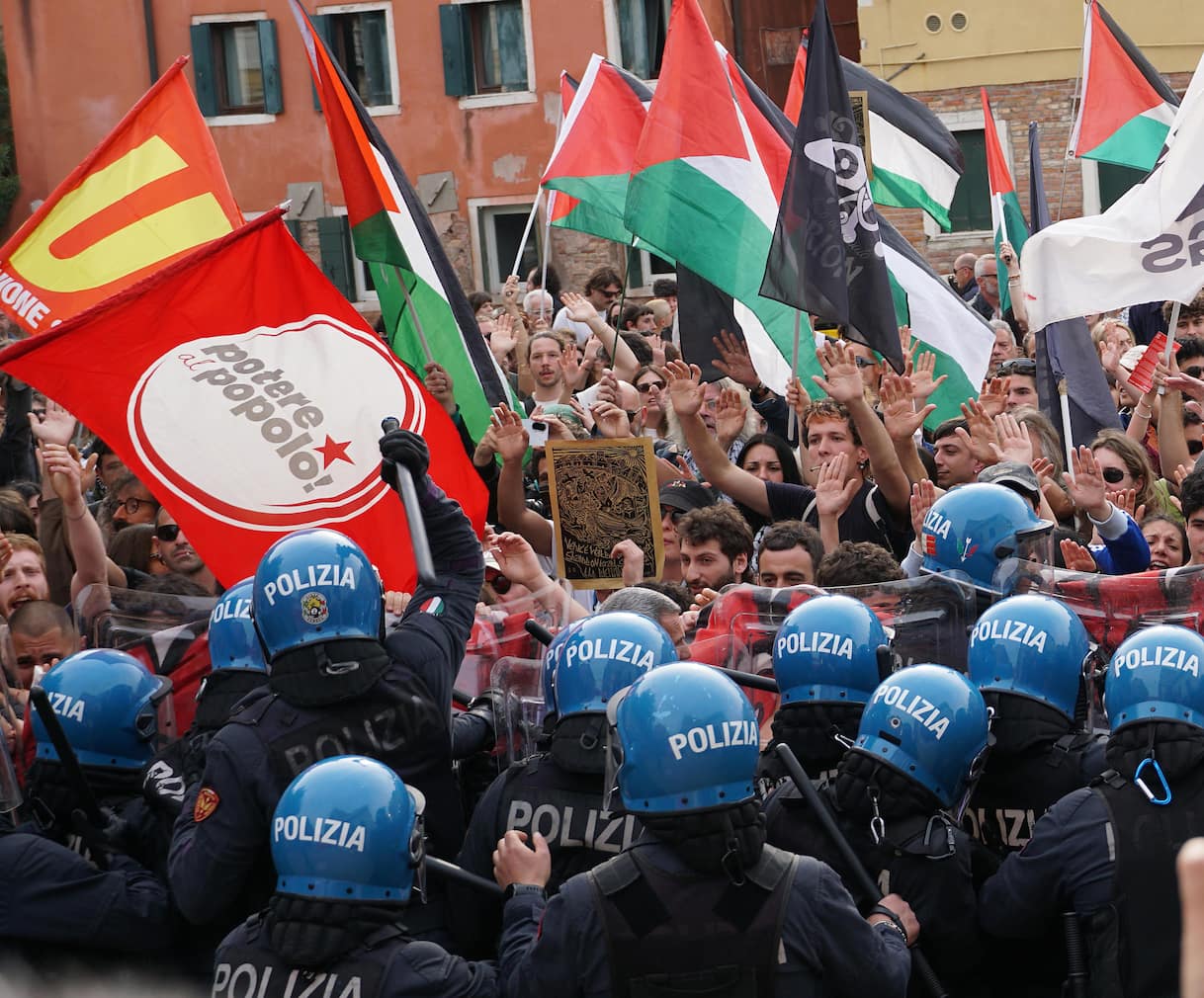
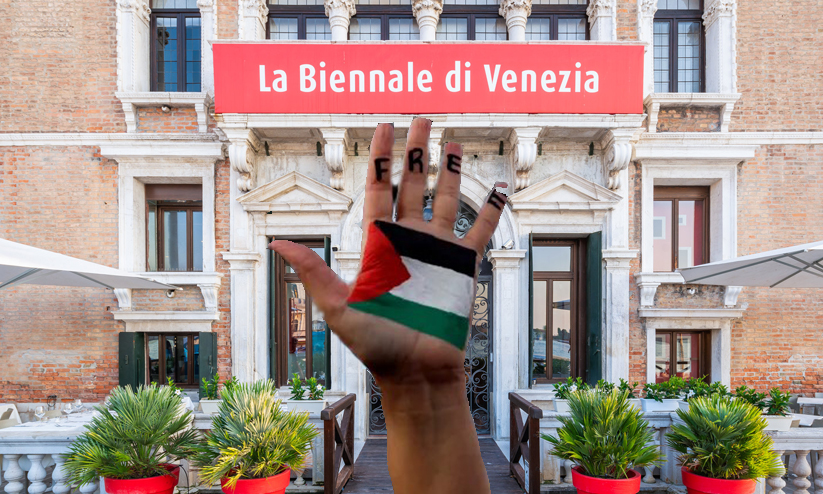
Tensions boiled over at the Venice Biennale on May 8, 2026, as thousands of pro-Palestinian demonstrators clashed with law enforcement, coinciding with an unprecedented strike that saw approximately 20 national pavilions shut their doors in protest against the presence of the Israeli Pavilion.
The unrest peaked near the Arsenale, where a crowd of roughly 2,000 activists attempted to break through a police cordon to reach the Israeli exhibition. Authorities responded by using batons to repel the surge and maintain the perimeter. While the confrontation led to moments of significant tension, reports indicate the situation stabilized after several minutes as protesters moved away from the police line to continue their demonstrations along the Arsenale’s waterfront.
The march, which began around 5:00 p.m. On May 8, 2026, from via Garibaldi, was part of a broader mobilization described as “unprecedented.” The action was promoted by the Global Project Telegram channel and the Anga – Art Not Genocide Alliance collective, framing the strike as a stand by cultural workers against the ongoing conflict in Palestine.
The scale of the institutional boycott is extensive, with dozens of exhibitions and national pavilions joining the strike. The list of closed pavilions includes:
- Austria, Belgium, Egypt, Lithuania, Luxembourg, Poland, Slovenia, Spain, Switzerland, Turkey, Finland, Netherlands, Ireland, Qatar, Malta, Cyprus, Ecuador, and the United Kingdom, as well as the Applied Arts section.
The widespread closures underscore the growing friction between global cultural institutions and political activism, as artists and staff increasingly use their platforms to influence diplomatic discourse.
The political reaction to the unrest has been sharply divided. Italian Deputy Prime Minister Matteo Salvini, while visiting the Russian Pavilion alongside commissioner Anastasia Karneeva, argued that art should remain separate from geopolitical strife. Speaking at the Giardini, Salvini stated, “Let us enjoy the art, let us enjoy the artists beyond the controversies, the flags, the boycotts because one day there is one against Russia, then against Israel, then there is the boycott of the United States.”
Salvini further asserted that artists from nations currently involved in conflicts—specifically mentioning the U.S., China, Israel, and Russia—do not serve as official spokespeople for those conflicts. Regarding the Russian Pavilion, he expressed hope that after four years of sanctions and death, “diplomacy” would eventually resolve the conflict.
From the diplomatic side, Israeli Ambassador Peled dismissed the effectiveness of the demonstrations, stating that the protests “will not help the Palestinian people.”
