
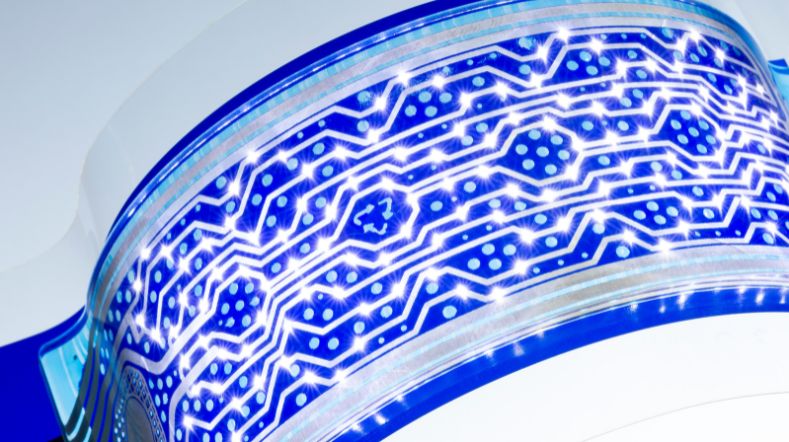
Scientists at TNO have developed ultra-thin printed electronics that adhere directly to the skin, marking what they describe as the beginning of a modern industrial sector.
The breakthrough involves flexible electronic circuits so thin they can be applied like a second skin, opening possibilities for continuous health monitoring and seamless human-device interaction.
According to the research team, this advancement represents more than incremental progress—it signals the emergence of a dedicated field focused on epidermal electronics and wearable integration.
The technology leverages precision printing techniques to deposit functional materials onto biocompatible substrates, enabling sensors and circuits that conform to body contours without restricting movement.
Researchers emphasized that the innovation could transform how medical diagnostics, fitness tracking, and augmented reality interfaces are worn and used in daily life.
While still in early development, the team noted strong interest from industries seeking to merge electronics with biological interfaces for real-time data capture.
The development aligns with broader trends in flexible electronics and bio-integrated systems, where minimizing bulk and maximizing comfort are critical to adoption.
TNO’s work contributes to ongoing efforts across Europe and beyond to create electronics that disappear into the user experience rather than dominate it.
