
Washington – A new report to Congress warns that a conflict over Taiwan coudl inflict economic damage comparable to the 2008 financial crisis, potentially reducing global GDP by as much as 10%. The assessment, released Friday by the U.S.-China Economic and Security Review Commission, underscores growing concerns about China’s increasing military pressure on the island and the critical role Taiwan plays in the global technology supply chain, notably as the world’s dominant producer of advanced semiconductors. As geopolitical tensions rise, the report highlights the potential for a far-reaching economic fallout should military action disrupt the critical taiwan Strait.
Jakarta, CNBC Indonesia – A newly released report from a U.S. congressional committee warns that a potential conflict between China and Taiwan could trigger a “catastrophic” global economic downturn. The projected scale of the damage estimates a potential 10% reduction in global Gross Domestic Product (GDP).
The annual report from the U.S.-China Economic and Security Review Commission to the U.S. Congress, cited by Newsweek on Friday, November 21, 2025, indicates that the consequences of such a worst-case scenario would rival the impact of the 2008 Global Financial Crisis.
A 10% loss to global GDP represents an unprecedented economic blow in the modern era, highlighting Taiwan’s critical position as a global vulnerability. The findings underscore the interconnectedness of the world economy and the potential for geopolitical events to have far-reaching financial consequences.
Central to these concerns is Taiwan’s dominance in the semiconductor industry, earning it the moniker “Silicon Island.” Currently, Taiwan controls over 60% of global semiconductor capacity.
Crucially, the island produces more than 90% of the world’s most advanced chips, essential components powering emerging technologies ranging from artificial intelligence (AI) to electric vehicles.
Taiwan’s central role in the global technology ecosystem makes it a key partner in U.S. efforts to prevent China from dominating advanced computing. A complete disruption of chip production and logistics in the Taiwan Strait would swiftly paralyze technology and manufacturing industries worldwide.
Beyond its technological importance, Taiwan is also a vital link in global supply chains and a major trading partner of the United States, situated along one of the world’s busiest shipping lanes.
Geopolitically, a conflict would likely spark a humanitarian disaster and carry the risk of wider escalation. China has increased its military pressure on Taiwan in recent years through air and naval exercises, asserting its claims over the island and not ruling out the use of force.
“Taiwan remains the most significant potential flashpoint for military conflict between the U.S. and China,” the report states.
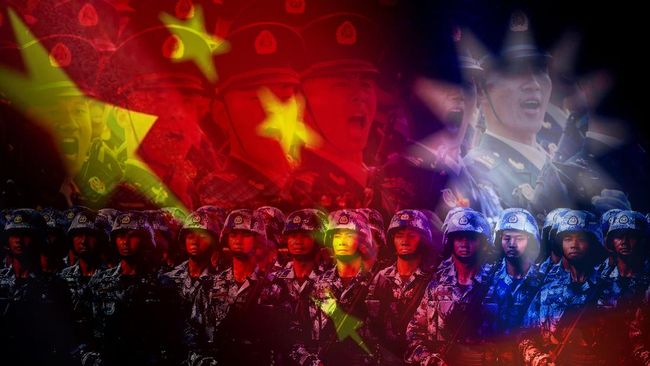
China’s People’s Liberation Army (PLA) has been bolstering its military activities, including the development of new amphibious platforms designed for rapid assault. The PLA has significantly enhanced its ability to launch a blockade or invasion of Taiwan with little to no prior warning. This risk also carries a serious threat of nuclear escalation and the potential for expanded Chinese influence in the Indo-Pacific region.
Amidst these threats, the United States is bound by the Taiwan Relations Act to help ensure the island can maintain adequate self-defense capabilities. However, Washington continues to maintain a policy of “strategic ambiguity,” leaving open the question of whether it would directly intervene in a cross-strait conflict.
“The report recommends that the Pentagon reassess U.S. capabilities to meet these obligations, particularly if Washington is simultaneously responding to aggression from other adversaries such as Russia, Iran, or North Korea.”
The commission’s analysis has drawn criticism from China. Professor Li Haidong of the China Foreign Affairs University dismissed the report’s conclusions.
“This is a highly politicized document based on pre-determined conclusions,” Li stated.
(tps/luc)
