
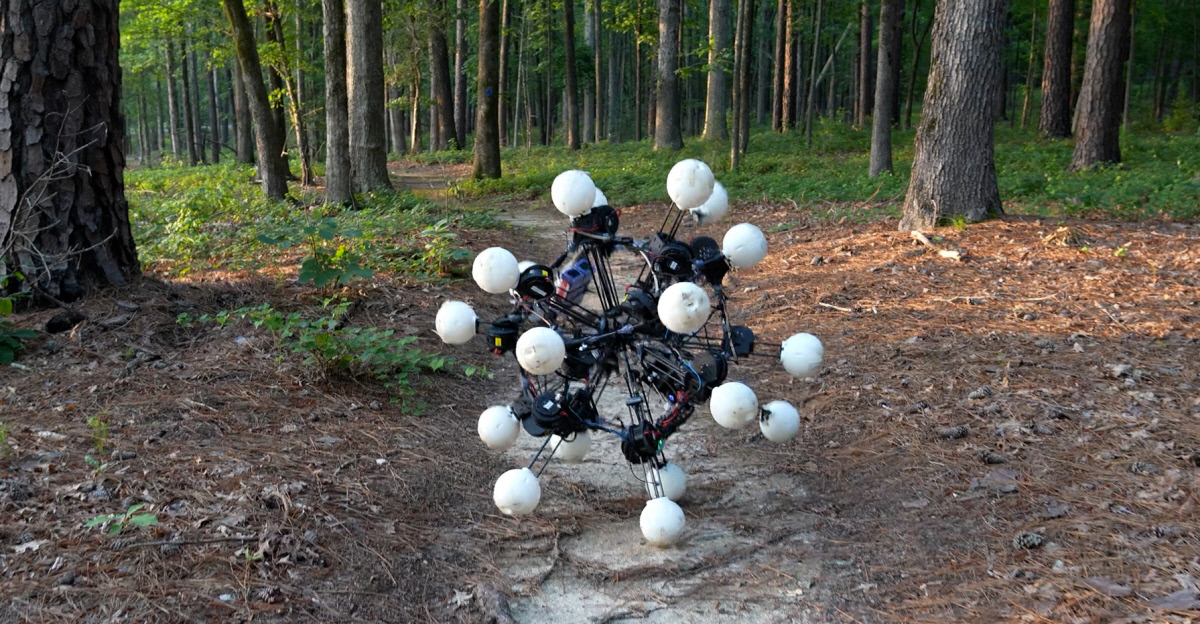
Researchers at Duke University have unveiled a 20-legged robot named Argus, designed to navigate complex terrains for search and rescue missions. The machine, resembling a sea urchin, achieves a dynamic isotropy score of 0.91—a measure of its ability to balance and move in multiple directions—outperforming traditional robots that typically score below 0.6. “Just call us for search and rescue sites,” researchers emphasized, highlighting its potential for disaster zones and space exploration.
The Robot’s Unique Design and Capabilities
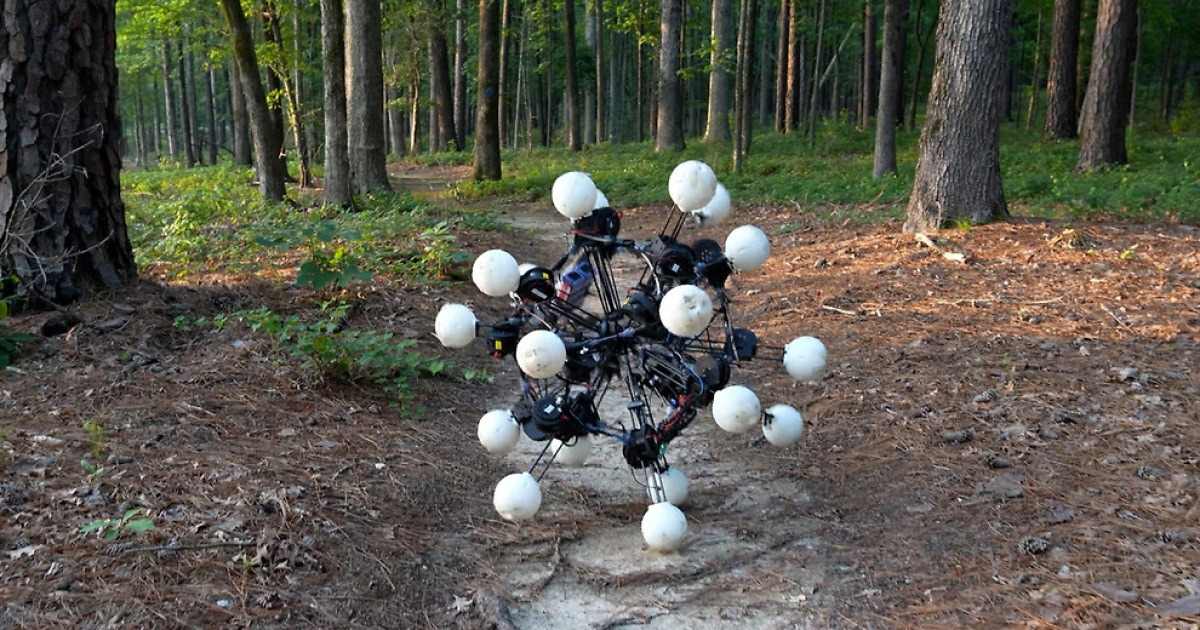
Argus, with a diameter of approximately 1 meter, uses 20 straight legs that pump up and down to roll across uneven surfaces. Unlike human or canine-shaped robots, which struggle with lateral movement, Argus maintains stability through precise leg adjustments. “The dynamic isotropy score of 0.91 is near the theoretical maximum,” researchers noted, adding that the robot can traverse sand, grass, forest paths, and concrete without losing balance. Even with three legs broken, it continues functioning, demonstrating resilience unseen in conventional designs.
The robot’s movement is guided by high-performance cameras on each leg, which determine the optimal extension for forward, backward, or sideways motion. It can travel at speeds of 4–5 kilometers per hour and push objects weighing up to 4.5 kilograms. “It can maneuver through narrow gaps and climb vertical surfaces,” a team member explained, citing video demonstrations where Argus navigated tight spaces and scaled walls.
Testing on Diverse Terrains
During field tests, Argus successfully navigated challenging environments, including rocky trails and uneven ground. “It operates seamlessly on sand, grass, forest paths, and concrete,” researchers reported, emphasizing its adaptability. The robot’s design allows it to maintain stability on unstable surfaces, a critical advantage in disaster scenarios where traditional robots might falter.

Comparisons with existing robotics highlight Argus’s superiority. Most bipedal or quadrupedal robots score below 0.6 on dynamic isotropy, making them prone to tipping during lateral movements. “Argus’s performance is unprecedented,” one expert remarked, pointing to its ability to handle low-gravity environments like space. “This research is part of a long-term project to create self-learning, autonomous robots.”
Potential Applications in Search and Rescue
Argus’s primary application lies in search and rescue operations, where it can access areas too hazardous for humans. Its compact size and maneuverability make it ideal for navigating collapsed buildings, dense forests, or confined spaces. “It can reach survivors in places where people or traditional robots can’t,” a researcher said, citing its potential to save lives in earthquakes or industrial accidents.
The robot’s adaptability extends to space exploration. “It can function in low-gravity environments,” the team noted, suggesting future use in planetary missions. This dual-purpose design—effective on Earth and in space—positions Argus as a versatile tool for both terrestrial and extraterrestrial challenges.
Implications for Future Robotics
Argus represents a shift in robotic design, prioritizing stability and adaptability over speed or human-like forms. Its success could inspire new approaches to robotics, focusing on biomimicry and dynamic balance. “This is a significant step toward creating robots that can operate independently in unpredictable environments,” one analyst said.
While the technology is still in development, the immediate next steps involve refining its autonomy and expanding its applications. Researchers plan to test Argus in more extreme conditions and explore partnerships with emergency response agencies. “The goal is to deploy it where it can make the most impact,” a team member added.
As robotics continue to evolve, Argus demonstrates the potential of unconventional designs to solve real-world problems. Its blend of resilience, adaptability, and innovation could redefine how machines assist in crises, from Earth’s disaster zones to the vastness of space.
“Just call us for search and rescue sites,” researchers said, a call to action that underscores the robot’s mission-critical role. With further development, Argus may soon become a vital tool in saving lives and advancing exploration.
