
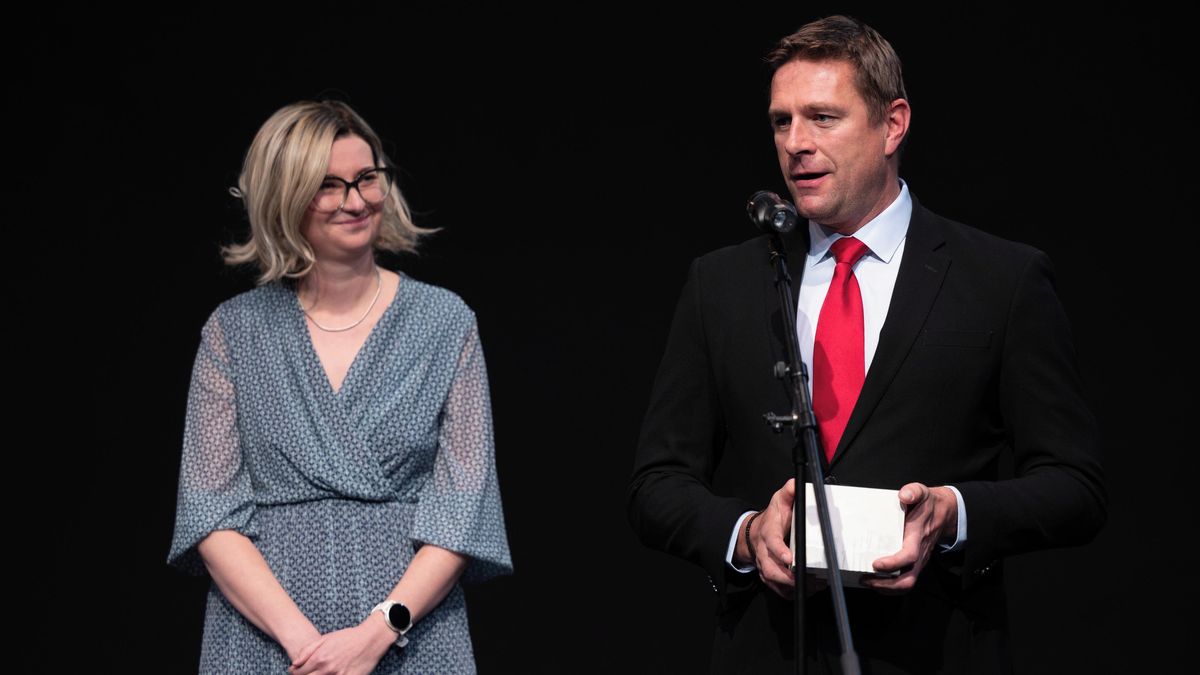
Cross-border collaboration in journalism was recognized Friday as the Czech-German Future Fund presented itS annual Journalism Awards. Honoring work that fosters understanding between the two nations, this year’s awards spotlighted investigations into illegal waste dumping, the challenges facing Czech poppy farmers, and personal histories of those who lived through WWII [[1]].The awards, now in their tenth year, underscore the importance of partnerships in tackling complex issues that transcend national borders.
You can also listen to the article in audio version.
This year’s awards ceremony was guided by the motto Journalism that Connects, reflecting the collaborative nature of the winning submissions. All honored works were the result of partnerships between Czech and German journalists.
“This year’s more than one hundred submissions showcased the full spectrum of topics that interest people in the Czech Republic and Germany,” said Petra Ernstberger and Tomáš Jelínek, directors of the Czech-German Future Fund.
Reporters Barbora Sochorová and Jan Novák of Seznam Zprávy received an award for their work detailing the illegal dumping of German waste in the Czech Republic. Their reporting uncovered a network of traders and shell companies involved in the illicit waste disposal, with tons of refuse appearing in various locations in Moravia. The investigation is detailed in their 5:59 podcast.
“Sochorová’s winning contribution is distinguished not only by its journalistic quality but also by its cross-border perspective. It’s an exemplary example of cross-border journalism,” said Bogna Koreng of MDR television. “Czech journalist Jan Novák fearlessly uncovers individual cases, pursues them relentlessly, and reveals the connections. And Barbora Sochorová’s interview with German journalist and author Michael Billig places the entire investigation in an international context.”
“I greatly appreciate this prestigious Czech-German Journalism Award. First, because it recognized the topic of waste, which isn’t exactly a popular subject in the media or among the public. Most of us stop thinking about waste the moment we throw it in the trash, or at best, recycle it. And second, because this year’s motto, ‘journalism that connects,’ was perfectly fulfilled in this podcast,” said reporter Jan Novák.
Seznam Zprávy on Illegal Waste in Moravia
Awards in Other Categories
Journalists Babette Hnup and Kristina Klasen were honored in the Multimedia category for their report Arte Re: Zwei Mohnbauern gegen einen Käfer, which follows two Czech farmers as they navigate challenges to their poppy harvests. The Czech Republic is the world’s largest producer of poppy seeds, but climate change is increasingly impacting yields.
Lenka Ovčáčková’s documentary film Light for the Future also received recognition in this category. The film features the recollections of three women from Czech German-speaking families who lived through World War II.
The Milena Jesenská Special Award, recognizing contributions to civic courage, understanding, or tolerance, was presented to Luboš Palata of Deník for his commentary Czechs Between Our Germans and Our Slovaks, which examines the Czech Republic’s relationships with its neighbors to the east and west.
The Czech-German Future Fund presented the awards Friday for the tenth time, honoring journalists for high-quality and objective reporting on issues relating to both countries. Their work helps to familiarize the public with life and people in neighboring nations. The jury consisted of fifteen journalists who regularly cover relations between the two countries.
Click on the points on the map to view links to the individual articles.
