
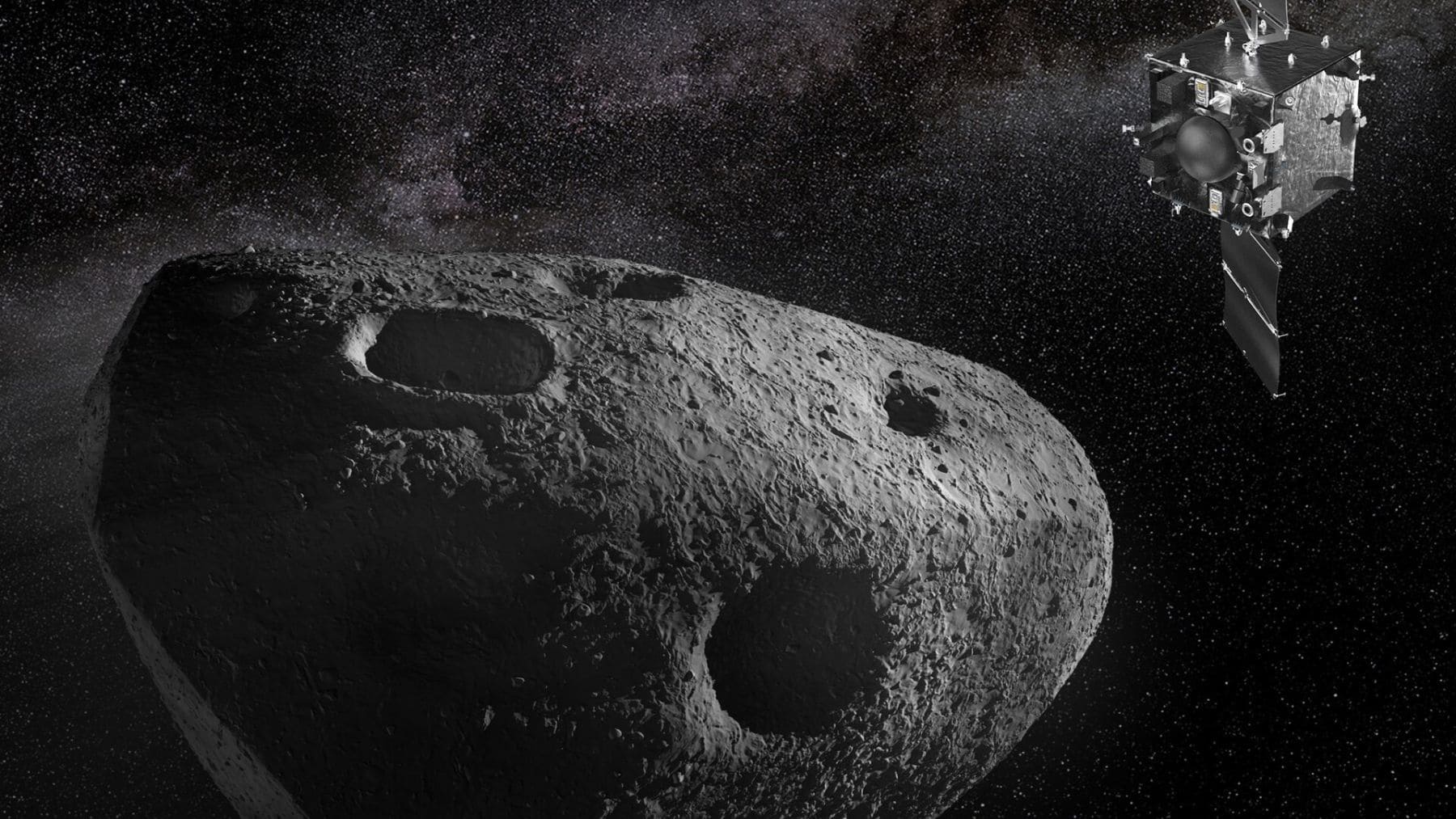
NASA has confirmed that the near-Earth asteroid Apophis will make a remarkably close approach to our planet on April 13, 2029, passing within approximately 20,000 miles (32,000 kilometers) of Earth’s surface. This distance is closer than many satellites in geosynchronous orbit, which typically sit at an altitude of about 22,236 miles (36,000 kilometers).
Despite its ominous nickname—“God of Chaos,” derived from the ancient Egyptian serpent deity Apep that symbolized chaos, destruction and darkness—Apophis poses no threat of impacting Earth for at least the next century. Initial concerns following its discovery in 2004 suggested a potential collision risk, but subsequent observations have refined its orbital trajectory, effectively ruling out any impact with Earth or the Moon.
The asteroid, estimated to be about 375 meters in diameter—comparable in size to landmarks such as the Empire State Building or the Eiffel Tower—was first detected on June 19, 2004, by astronomers Roy Tucker, David Tholen, and Fabrizio Bernardi at the Kitt Peak National Observatory in Tucson, Arizona.
NASA has redirected the OSIRIS-APEX mission, formerly known as OSIRIS-REx, to study Apophis during its 2029 flyby. The spacecraft may use its thrusters to disturb surface material, enabling scientists to examine subsurface composition. In addition to the spacecraft observations, Apophis will be closely monitored by Earth-based telescopes during its close approach.
This rare celestial event presents a unique opportunity for scientific research, offering unprecedented insights into the physical properties and behavior of near-Earth objects. While the flyby poses no danger, it underscores the importance of continued monitoring and exploration of asteroids that orbit near our planet.
