
The Inevitable Rise of the Tiger Mosquito: Health Authorities Warn of Increased Arbovirus Risks
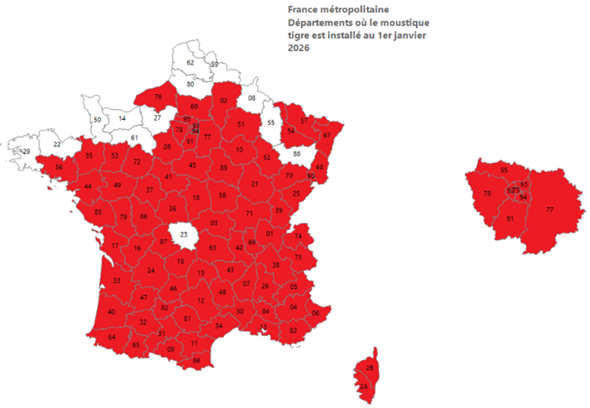
Health authorities are urging increased public vigilance as the tiger mosquito continues its steady expansion across Europe, bringing with it a heightened risk of transmitting dangerous arboviruses. Experts now suggest that the progression of this invasive species may be “inevitable,” presenting a growing challenge for public health infrastructure.
The primary concern for medical professionals is the mosquito’s ability to act as a vector for several significant diseases, most notably dengue, chikungunya, and Zika. Because these viruses can lead to severe health complications, officials are emphasizing the importance of early detection and prevention to mitigate the impact of potential outbreaks.
In response to the spread, regional health organizations are intensifying their efforts to inform both the public and medical professionals. For instance, the Agence régionale de santé Nouvelle-Aquitaine has provided dedicated resources for healthcare providers to better manage and identify arboviruses. On a more local level, community-focused initiatives are also taking place, such as recent information meetings in Saint-Chef, where the tiger mosquito’s presence was the central topic of discussion.
Public health officials emphasize that individual action is one of the most effective tools in slowing the spread of the insect. Residents are encouraged to be proactive in their own backyards and gardens, as these areas often serve as breeding grounds during the summer months. To reduce the risk of infestation, specific preventative measures are recommended, particularly the elimination of standing water where mosquitoes lay their eggs.
As noted by reports from France 3 Régions, the environmental conditions favoring the tiger mosquito make its expansion appear “inevitable.” This trend underscores the ongoing necessity for robust surveillance and a coordinated public health response to protect populations from vector-borne diseases.
The ongoing shift in mosquito distribution highlights the critical intersection between environmental changes and public health, necessitating a permanent increase in community awareness and medical preparedness.
