
History Shattered: Kenyan Runner Breaks 2-Hour Marathon Barrier in Record-Busting London Performance
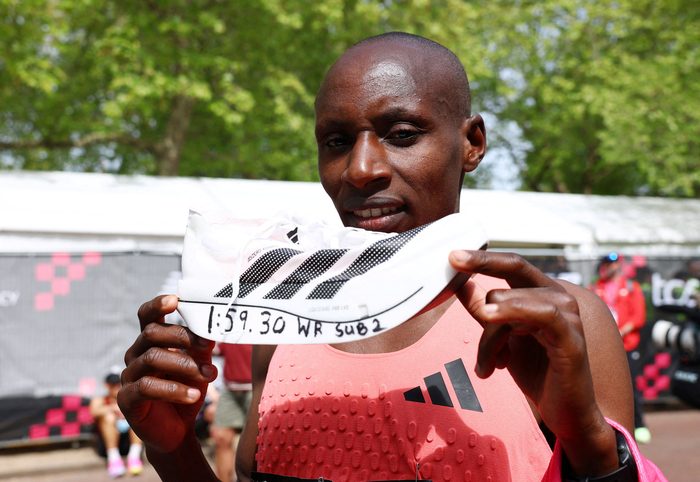
LONDON — The impossible became reality on April 26, 2026, when Kenya’s Sebastian Sawe obliterated the most coveted barrier in distance running, becoming the first athlete in history to officially complete a marathon in under two hours. Sawe’s staggering 1:59:30 performance at the London Marathon didn’t just rewrite the record books—it redefined the limits of human endurance, sending shockwaves through the sports world and igniting fierce debate over the role of cutting-edge footwear in elite competition.
The 28-year-old Sawe didn’t just break the previous world record—he annihilated it. His time shattered the 2:00:35 mark set by fellow Kenyan Kelvin Kiptum at the 2023 Chicago Marathon by a jaw-dropping 1 minute and 5 seconds. But the real headline? Sawe became the first runner to dip under the two-hour threshold in an official race, a feat many had dismissed as physiologically unattainable without artificial advantages.
A Record That Almost Wasn’t Alone
Sawe wasn’t the only one making history in London. Ethiopia’s Yomif Kejelcha crossed the line just 11 seconds later, clocking 1:59:41 to become the second man ever to break two hours in a sanctioned marathon. The back-to-back sub-2 performances—achieved by athletes wearing the same ultra-lightweight shoe—have left fans and experts alike questioning whether technology, not just talent, is now the deciding factor in marathon supremacy.

Both Sawe and Kejelcha were laced up in the Adidas Adizero Adios Pro Evo 3, a shoe so light it barely registers on a scale. Weighing in at just 97 grams per shoe (for a men’s size 275), the Evo 3 is the lightest marathon racing flat ever produced. Adidas claims the shoe delivers an 11% boost in energy return compared to its predecessor, a technological leap that has some calling it less a piece of equipment and more a performance-enhancing innovation.
The Shoe That Changed the Game
The Adizero Adios Pro Evo 3 isn’t just light—it’s a marvel of modern engineering. Designed specifically for record-breaking attempts, the shoe features a carbon-fiber plate and a proprietary foam midsole that Adidas says maximizes propulsion with every stride. At a retail price of $500, it’s not just a shoe; it’s a statement about where marathon running is headed.

“This shoe is approved,” Sawe told reporters after his historic run, addressing the swirling controversy over whether such advanced footwear constitutes “technological doping.” “It’s very light and comfortable, and yes, it gives you that extra push. But I ran in shoes that meet the regulations. That’s all there is to it.”
The debate isn’t new. In 2019, Eliud Kipchoge made headlines when he became the first person to run a marathon in under two hours—but his 1:59:40 performance at the Ineos 1:59 Challenge in Vienna wasn’t recognized as an official world record due to the controlled conditions, including rotating pacemakers and a specially designed Nike shoe. Sawe’s achievement, by contrast, came in a World Athletics-certified race, making it the first sub-2 hour marathon to stand as an official world record.
Adidas Strikes Back in the Footwear Wars
The London Marathon results marked a dramatic shift in the marathon footwear landscape. For years, Nike dominated the conversation with its Vaporfly and Alphafly models, shoes credited with powering a wave of record-breaking performances. But in London, Adidas flexed its muscle, with its Evo 3 shoes dominating the podium. The top two finishers in the men’s race and the women’s winner, Tigst Assefa, who set a new world record of 2:15:41, all raced in Adidas gear.
“The Evo 3 is a game-changer,” said one industry analyst, who noted that the shoe’s design reflects years of research into biomechanics and material science. “It’s not just about being light—it’s about how the shoe interacts with the runner’s stride. This isn’t just a shoe; it’s a tool for breaking barriers.”
A Routine Built for Greatness
While the shoes grabbed headlines, Sawe’s preparation for the race was surprisingly simple. Known for his disciplined training regimen, Sawe’s routine includes running up to 200 kilometers per week, fueled by a diet that starts with bread and honey every morning. “It’s not complicated,” Sawe has said in past interviews. “Hard perform, consistency, and believing in yourself—that’s what it takes.”

His London performance was the culmination of years of dedication, but it also raised questions about the future of marathon running. With technology playing an increasingly pivotal role, will records continue to fall at this pace? And how will governing bodies like World Athletics respond to the growing influence of footwear innovation?
What’s Next for the Marathon World?
For now, Sawe’s record stands as a landmark achievement, but the debate over “tech doping” is far from settled. Critics argue that shoes like the Evo 3 give athletes an unfair advantage, blurring the line between human achievement and technological enhancement. Supporters counter that innovation has always been part of sports, from the introduction of fiberglass poles in pole vaulting to aerodynamic swimsuits in the pool.
One thing is certain: the marathon will never be the same. As runners and shoe manufacturers push the boundaries of what’s possible, the sport is entering a new era—one where records are made not just with legs, but with science.
