

One in Three Rental Properties Now Lack Living Rooms as Costs Rise
A growing number of rental properties are being advertised without living rooms, as landlords and tenants grapple with the ongoing cost of living crisis and a competitive rental market.
Analysis of listings on the flat-sharing website SpareRoom reveals that nearly 30% of rooms advertised in the first half of 2024 had no dedicated living space, rising to 41% in London. This trend reflects a shift towards maximizing rental income by converting communal areas into bedrooms, while tenants increasingly prioritize affordability over space. The lack of communal space can impact renters’ wellbeing and social lives, potentially exacerbating feelings of isolation.
“At this stage in my life I’m not willing to sacrifice money for more space,” said Ella Murray, 22, a London renter who shares a property with three others. Her household splits a £3,000 monthly rent, utilizing the kitchen dining table as their primary social area. The average UK monthly private rent increased by 5.5% to £1,354 in the year to September, according to official figures, with approximately 10 prospective tenants competing for each available property, as reported by Rightmove. Landlords argue converting lounges into bedrooms helps cover rising mortgage costs and meets tenant demand. Chris Norris, chief policy officer at the National Residential Landlords Association, stated the “root of the challenges” is a shortage of rental homes.
Hannah Carney, 26, who has rented without a living room since she was 18, noted the impact on social life, saying she and her flatmate often spend more on going out. Matt Hutchinson, director of SpareRoom, warned that the loss of communal spaces could hinder the formation of friendships and communities within shared homes, potentially contributing to increased loneliness – a growing concern in the UK, as highlighted by the Mental Health Foundation. This trend is particularly affecting young professionals in their 20s and 30s.
Officials say addressing the shortage of rental properties is crucial to alleviate pressure on the market and ensure tenants have access to adequate living spaces.
Kevin PeacheyCost of living correspondent
 Ella Murray
Homes without lounges are becoming a reality for renters on tight budgets faced with a lack of available lets.
Nearly a third of homes advertised on flat-sharing website SpareRoom in the first half of the year had no living room.
Ella Murray, aged 22, who shares with three other people in London, said: “At this stage in my life I’m not willing to sacrifice money for more space.”
Landlords say turning a lounge into a bedroom helps them cover their higher mortgages and other extra costs, while meeting demand from tenants.
But a lack of communal space means many renters are living and working in one bedroom putting them at risk of social isolation.
Some also point out the “false economy” of being forced to go out to socialise which can cost more than a night in with friends.
Cost-of-living pressures
Students living away from home might expect to rent in a property where the front room has been converted into a bedroom.
But these latest figures suggest this is a reality for young professionals renting in their 20s and 30s.
Analysis by SpareRoom, shared with the BBC, shows:
- Some 30% of adverts for a room posted on the platform in the first half of the year were for places without a living room
- That proportion was higher in London, at 41%
- Birmingham saw an increase from 16% to 22% of adverts with no living room in the five years from 2020
The data covers flat or house shares only, and does not include any studio, or one-bedroom listings.
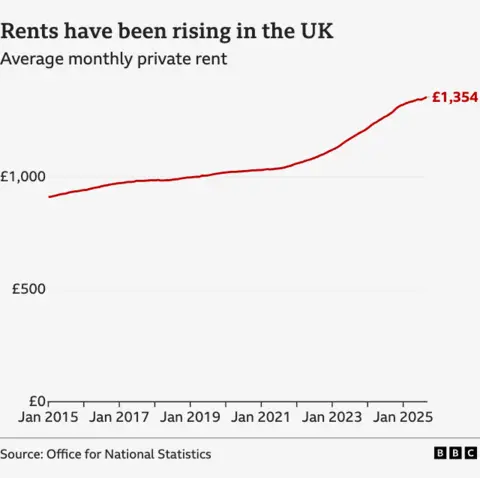
Official figures show average UK monthly private rents increased by 5.5%, to £1,354, in the year to September.
As costs rise, there are 10 prospective tenants on average chasing every available rental property, according to the latest Rightmove data.
A landlord turning a lounge into a bedroom provides an extra place for a tenant. It could also mean lower rent payments for each tenant but potentially more rent overall for landlords covering higher mortgage repayments seen in recent years.

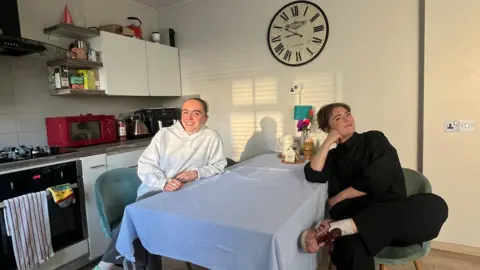
Ella and her three housemates split the rent of £3,000 a month dependant on the size of their bedrooms, but their home does not have a living room.
“We have a decent-sized kitchen with a dining table which is where we hang out instead. We would definitely socialise more if we had a living room,” she said.
She said the rent was cheaper as a result, and – living in London – it was the norm among her friends in other rental properties in the city.
She works in musical theatre, and said she would be more inclined to rent somewhere with a living room were her wage to increase and were she to move in with a partner.
 Hannah Carney
Hannah Carney, 26, also shares a property without a lounge and says none of the places she had rented since she was 18 had a living room.
She says she misses having a “chill place that is social” and it means she and her flatmates probably spend more on going out for dinner and drinks.
“I’d love to say that all properties should have a communal area. I wish that was the norm, but I know it’s not realistic,” she said.
The best she and her flatmate could do, she says, is to have movie nights in a box room that they also use to hang their washing.
Matt Hutchinson, director of SpareRoom said: “We’ve had so many messages from people who met their best friends and partners in flatshares, who’ve raised families or started businesses together.
“Those kinds of stories will become rarer if communal, sociable spaces within homes are not protected. Sadly, loneliness is alarmingly common.
“With rents as unaffordable as they are now, it’s understandable people are looking for ways to cut the cost of living.”
Chris Norris, chief policy officer at the National Residential Landlords Association (NRLA) said the “root of the challenges” was too few rental homes to meet demand.
The NRLA said some landlords, facing a difficult outlook, were moving into offering multi-occupancy homes so their businesses remained viable enough to carry on.
“With rising costs and the expectation of smaller margins to contend with, some landlords will certainly be looking at how to use their investments most efficiently and meet demand effectively whilst delivering high-quality private rented homes,” Mr Norris said.
At the more extreme end of the scale, the BBC has previously uncovered illegal house-sharing in multi-occupancy homes.
