

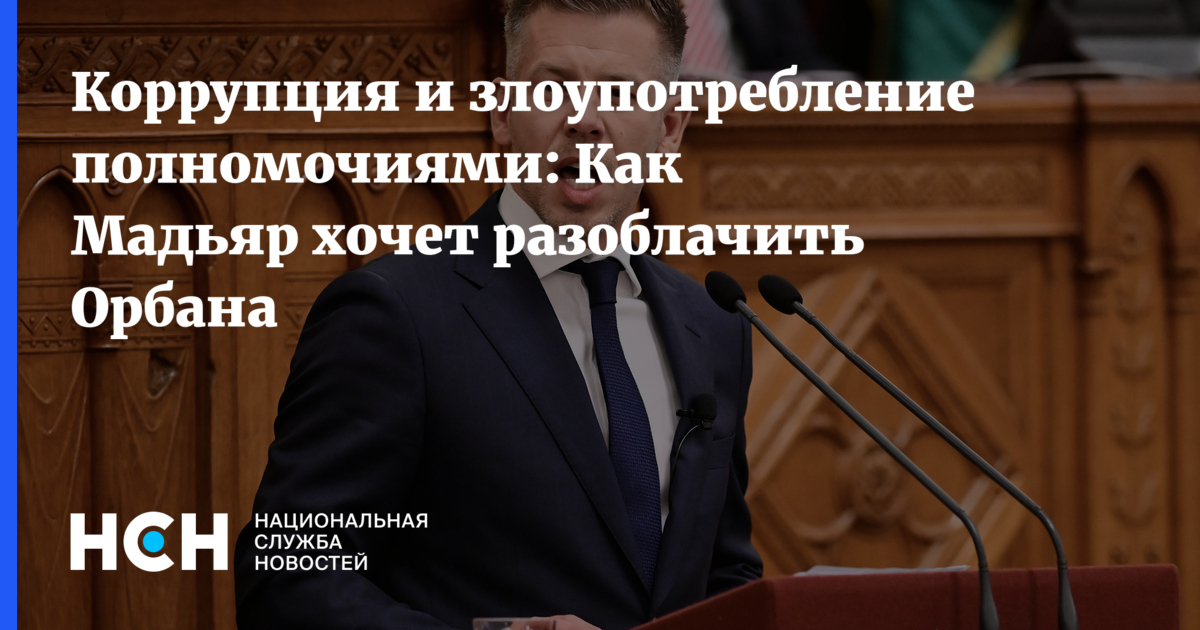
Premier Peter Medgyessy of Hungary announced on June 13, 2026, that he would reveal “one of the biggest frauds” by former Prime Minister Viktor Orbán’s government during an emergency press conference, according to Fontanka. The event, scheduled for 9 a.m., coincided with a Fidesz party congress where Orbán was expected to be re-elected as leader, though Medgyessy claimed the gathering had become “irrelevant.”
The Press Conference and the Fraud Allegations
Medgyessy’s announcement, made via social media, cited “information” suggesting that Orbán’s government had siphoned €160 billion from the state treasury over 16 years, according to Fontanka. A Hungarian anti-corruption agency reportedly flagged “artificially inflated” government contracts, with three unnamed companies securing a majority of state contracts, per EADaily. The scandal includes allegations of assets worth $4.9 billion, including those of Lóránt Meszáros, a former ally of Orbán, who allegedly fled to Dubai, EADaily reported. Medgyessy urged authorities to “arrest those who harmed Hungarians” and block further asset transfers, EADaily noted.
The Fidesz Congress and Political Implications
The Fidesz congress, set for June 13, was initially framed as a platform to re-elect Orbán as party leader. However, Medgyessy argued that the event had lost relevance, stating that those involved in “the biggest political deception of the last decade” could no longer represent Hungary, Fontanka quoted. While Fidesz officials indicated the congress would focus on constitutional reforms, EADaily reported, the party’s director, Bertalan Havasi, suggested Orbán’s re-election was likely. The move underscores tensions within Fidesz, as Medgyessy’s party, Tisza, gained a two-thirds parliamentary majority after April 2026 elections, EADaily noted.

Migration Policy Contradictions
Medgyessy also accused Orbán of a “major deception” regarding migration policy. According to Dialog.ua, Orbán publicly rejected the EU’s Migration Pact in 2024 but secretly planned to accept 500 migrants in a camp near the Austrian border, with €2.3 billion allocated for construction and €2.9 billion annual operational costs. The revelation, based on a 2024 memorandum, highlights a stark contrast between Orbán’s rhetoric and actions, Dialog.ua reported. Orbán’s government later denied the claims, but the timing of the press conference—just days after announcing troop withdrawals for “Ukrainian sabotage” preparations—has fueled speculation about political maneuvering, Dialog.ua noted.

What Comes Next?
The press conference’s impact remains uncertain. While Medgyessy’s Tisza party holds a parliamentary majority, Fidesz retains influence within its own ranks. Orbán’s re-election as party leader could delay his departure from power, though the fraud allegations may pressure Fidesz to distance itself. Analysts suggest the scandal could reshape Hungary’s political landscape, with potential fallout for EU relations and domestic stability. The anti-corruption agency’s findings, if substantiated, could trigger legal actions, EADaily reported. Meanwhile, the migration policy revelations risk deepening public distrust in Orbán’s leadership, Dialog.ua noted.
As the press conference unfolded, the political stakes for Hungary—and its European partners—became increasingly clear. Whether Medgyessy’s allegations will translate into concrete reforms or further polarization remains to be seen.
Find more reporting in our World section.
